15 Tire Vegetable Garden Ideas for Easy DIY Gardening
Discover 15 tire vegetable garden ideas for easy DIY gardening that recycle old tires into productive, budget-friendly growing spaces today.
Old tires sitting in your garage or stacked behind the shed represent untapped gardening gold that most people completely overlook when planning their vegetable growing spaces. Have you ever considered that those dusty rubber rings could become thriving garden beds producing fresh tomatoes, herbs, and peppers? That transformation happens faster and easier than you might expect. Think of recycled tires as ready-made raised bed frames that nature forgot to label as gardening equipment, perfectly shaped for containing soil and protecting roots. These fifteen creative tire garden ideas prove that growing your own vegetables requires zero fancy equipment and just a little resourceful imagination.
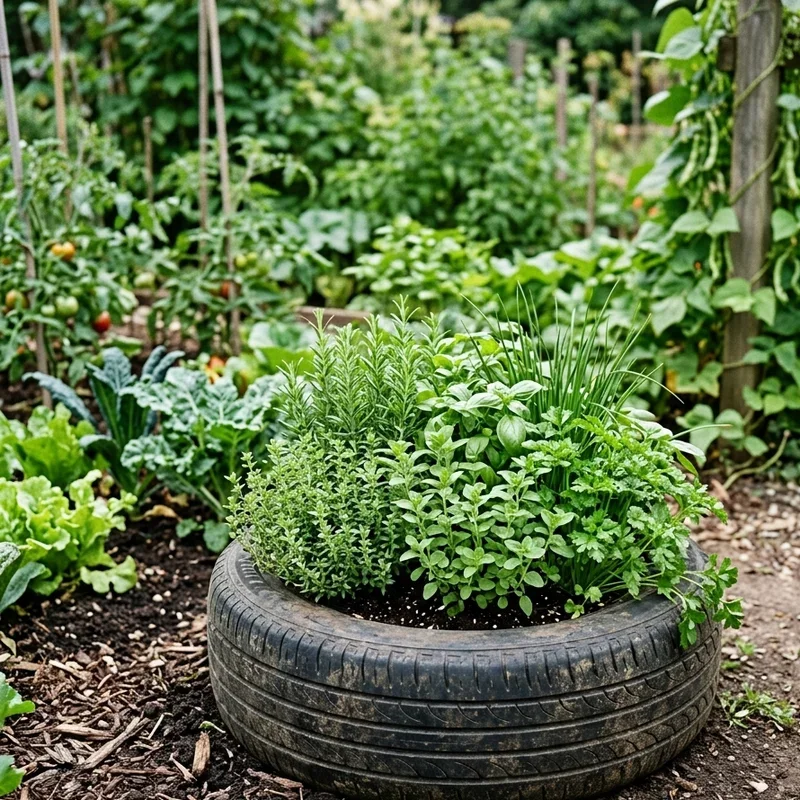
1. Single Tire Raised Herb Planter
A single tire raised herb planter places one standard car tire flat on the ground, fills it with quality potting mix and compost, and instantly creates a self-contained growing space perfectly sized for cultivating basil, parsley, cilantro, rosemary, and mint without any construction skills or expensive materials required whatsoever. Single tire planters work like giving each herb its own private apartment with built-in walls that retain moisture and warmth throughout the growing season. Drill four drainage holes through the bottom sidewall before filling with soil to prevent waterlogging that damages herb roots. Position your tire planter near the kitchen door for convenient harvesting access that genuinely encourages daily cooking use.
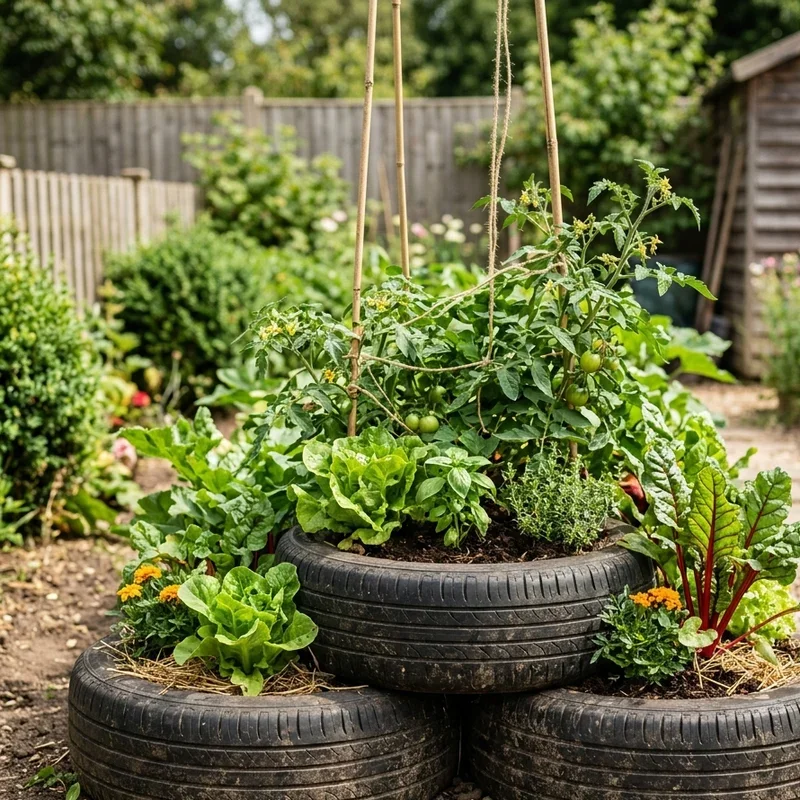
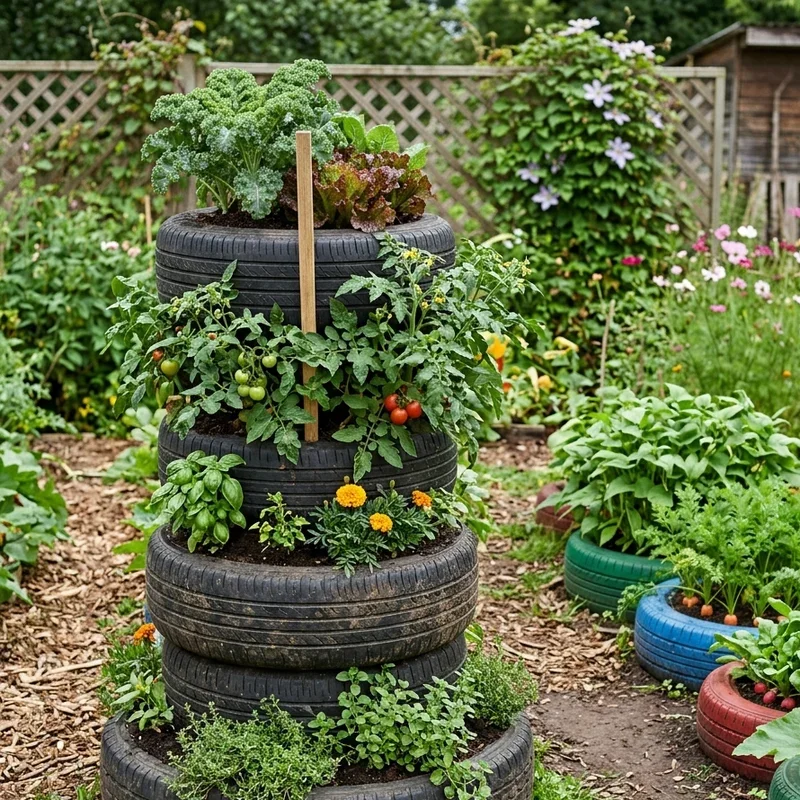
2. Stacked Tire Tower Garden
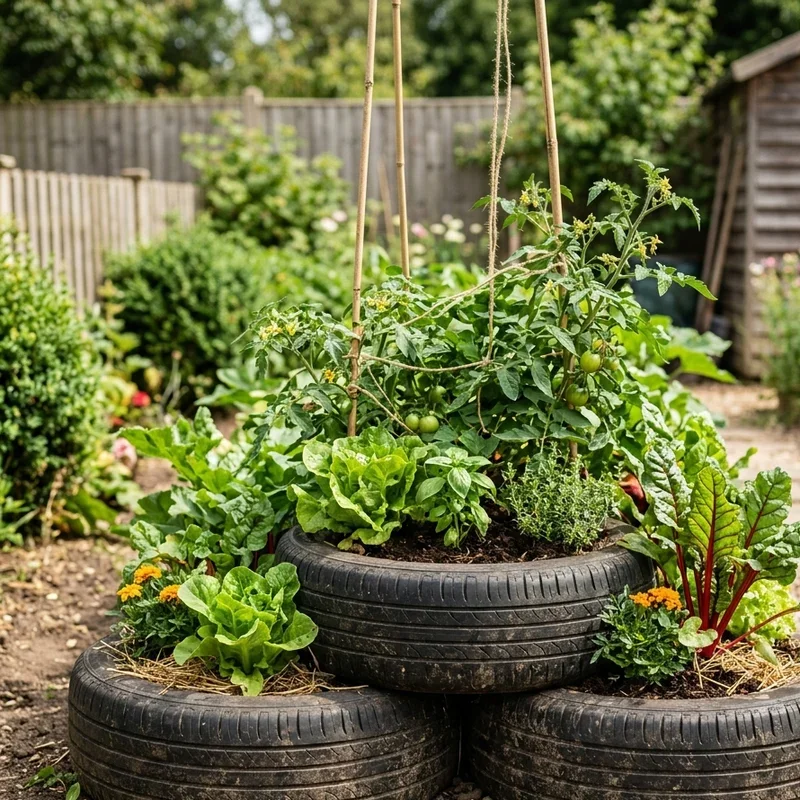
A stacked tire tower garden layers three to five tires vertically, filling each level with soil progressively to create a columnar growing structure that maximizes planting area within a minimal ground footprint, making this approach ideal for small patios, balconies, and tight urban backyards where horizontal space remains extremely limited. Stacked towers work like building a vegetable skyscraper where every floor houses different tenants, tomatoes on top, peppers in the middle, and lettuce enjoying ground-level shade comfortably. Stagger each tire slightly off-center creating exposed soil pockets along the sides for additional planting opportunities. Secure tires together using exterior construction adhesive preventing shifting during strong winds or heavy watering sessions.
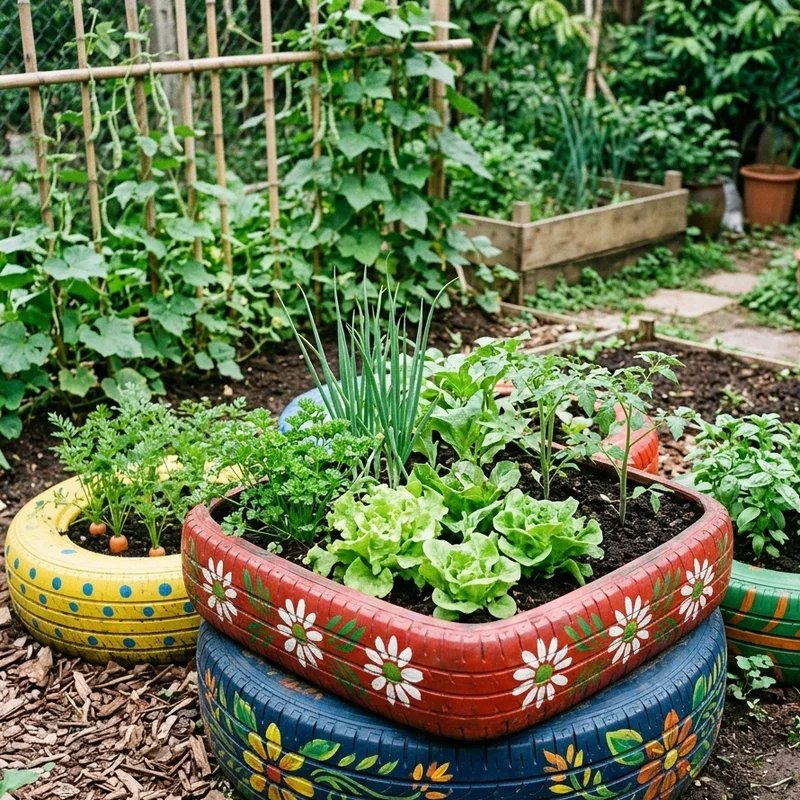
3. Painted Decorative Tire Veggie Bed
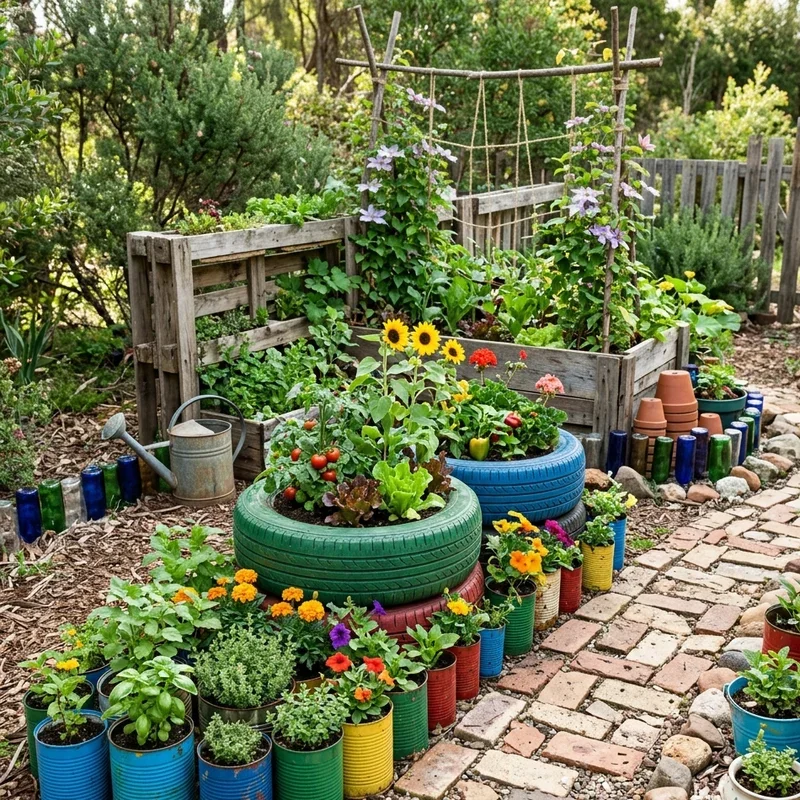
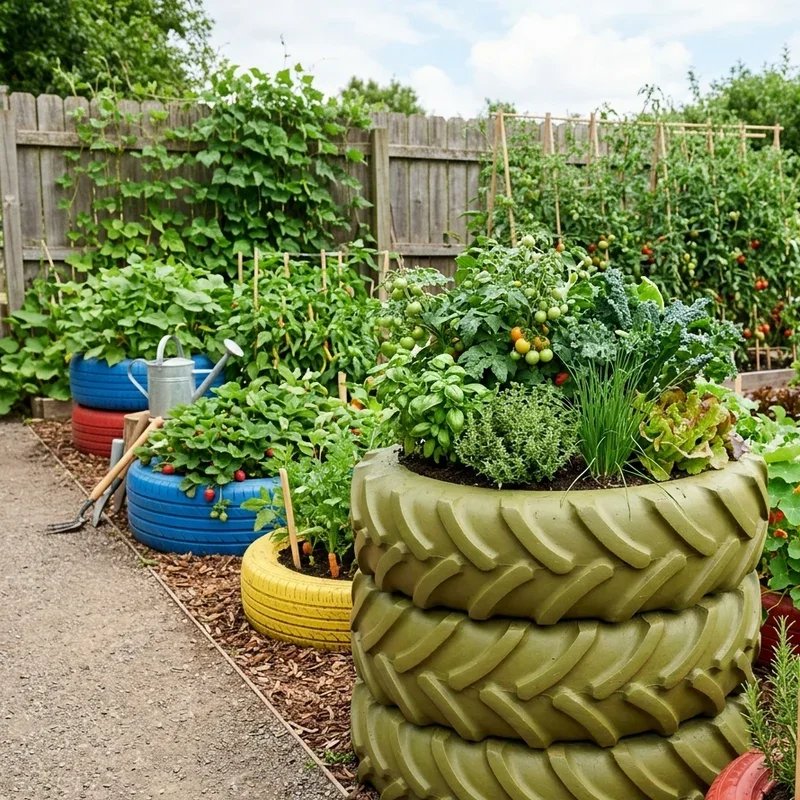
A painted decorative tire veggie bed transforms plain black rubber into vibrant garden art by applying exterior-grade spray paint or brush-on latex paint in bold colors before planting, creating eye-catching vegetable growing containers that contribute genuine aesthetic value to your outdoor living space beyond simple food production. Painted tire beds work like dressing your garden in its Sunday best, suddenly those utilitarian rubber circles become conversation starters that happen to grow incredible tomatoes simultaneously. Use non-toxic exterior paint and allow full curing for 48 hours before adding soil and plants. Group multiple painted tires in complementary color schemes creating organized rainbow garden arrangements that neighbors genuinely admire and frequently ask about curiously.
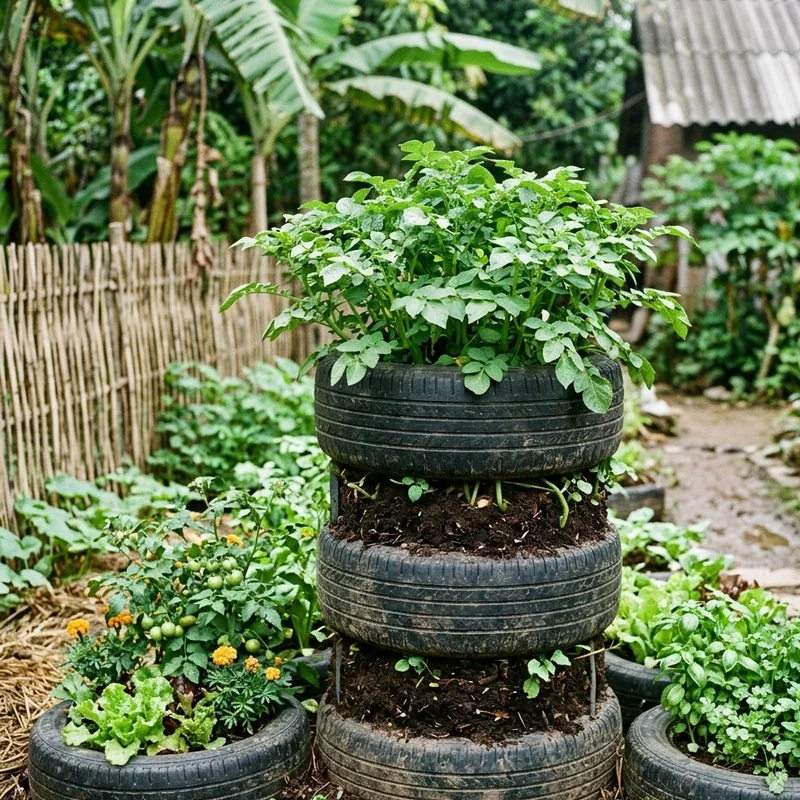
4. Tire Potato Growing Column
A tire potato growing column starts with one tire planted with seed potatoes at ground level, then adds additional tires and soil progressively as the potato plants grow upward, effectively burying the lengthening stems repeatedly to encourage continuous tuber formation along the entire buried stem length producing remarkably generous potato harvests. Potato columns work like tricking your plants into producing underground treasure at every level of a multi-story building, multiplying yields dramatically within one small circular footprint. Begin with four seed potato pieces in the first tire, covering with fifteen centimeters of soil and straw. Add the next tire when green shoots reach approximately twenty centimeters tall, backfilling with soil and compost mixture around the stems carefully.
5. Horizontal Half Tire Wall Planter
A horizontal half tire wall planter cuts a tire in half vertically, then mounts each half flat-side against a fence, wall, or wooden pallet with the open curved section facing outward, creating a wall-mounted growing pocket perfect for lettuce, spinach, trailing herbs, and compact cherry tomato varieties in spaces with zero available ground area. Half tire wall planters work like installing living grocery shelves directly onto your fence, picking fresh salad ingredients without ever bending down toward the ground. Secure halves using heavy-duty screws through a backing board into solid fence posts ensuring weight support when soil becomes saturated after watering. Line the inside with landscape fabric preventing soil loss through drainage gaps.
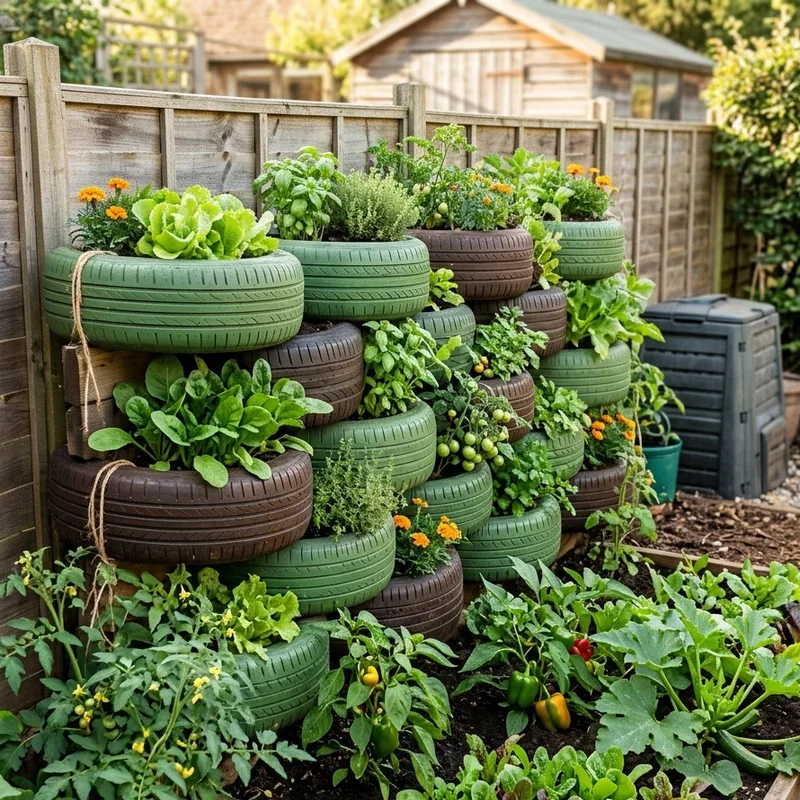
6. Tiered Tire Strawberry Pyramid
A tiered tire strawberry pyramid stacks three progressively smaller tires, placing the largest at the base and smallest on top, filling each level and planting strawberry runners around the exposed soil edges of every tier creating a productive vertical berry garden occupying less than one square meter of ground space. Strawberry pyramids work like constructing a wedding cake your family actually eats from daily, every tier producing sweet, sun-warmed berries from spring through autumn continuously. Use a large truck tire for the base, standard car tire for middle, and compact tire for the top level. Plant six to eight strawberry crowns per tier around the outer edge where they receive maximum sunlight and natural rainfall drainage working with gravity.
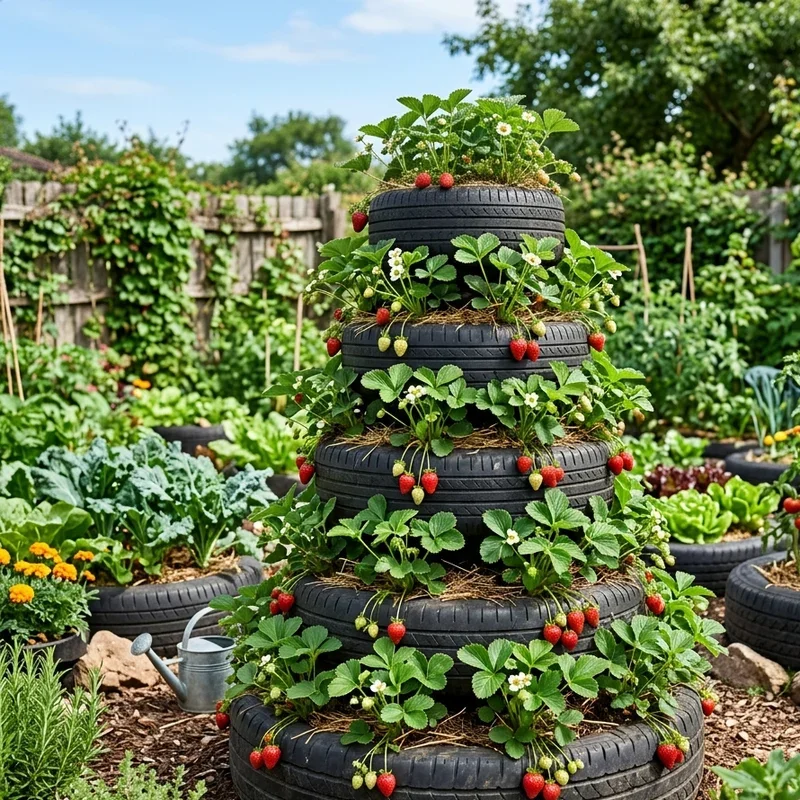
7. Large Tractor Tire Raised Bed
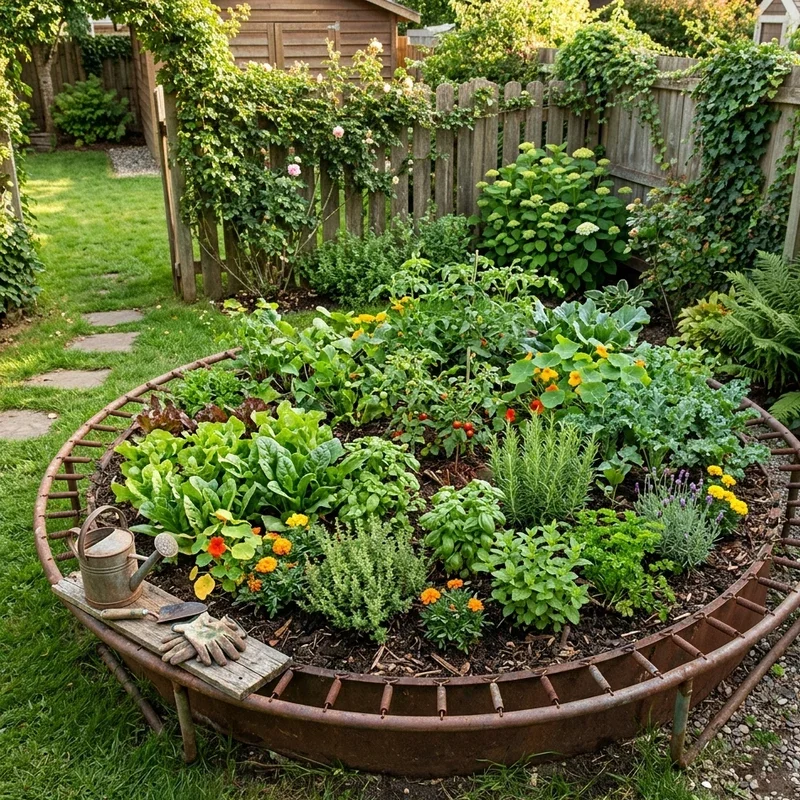
A large tractor tire raised bed repurposes a single massive agricultural tire into an impressively spacious circular raised garden bed capable of growing multiple vegetable varieties simultaneously, offering depth and diameter that standard car tires simply cannot match while creating a dramatic garden centerpiece from completely free recycled material. Tractor tire beds work like inheriting a ready-built above-ground swimming pool that somebody conveniently forgot to fill with water, leaving you the perfect container for serious vegetable production instead. Fill with layered organic matter using the hugelkultur method, placing logs and branches at the bottom, then compost, then quality topsoil on the surface. One tractor tire comfortably grows eight tomato plants or a complete salad garden including lettuce, radishes, and herbs together.
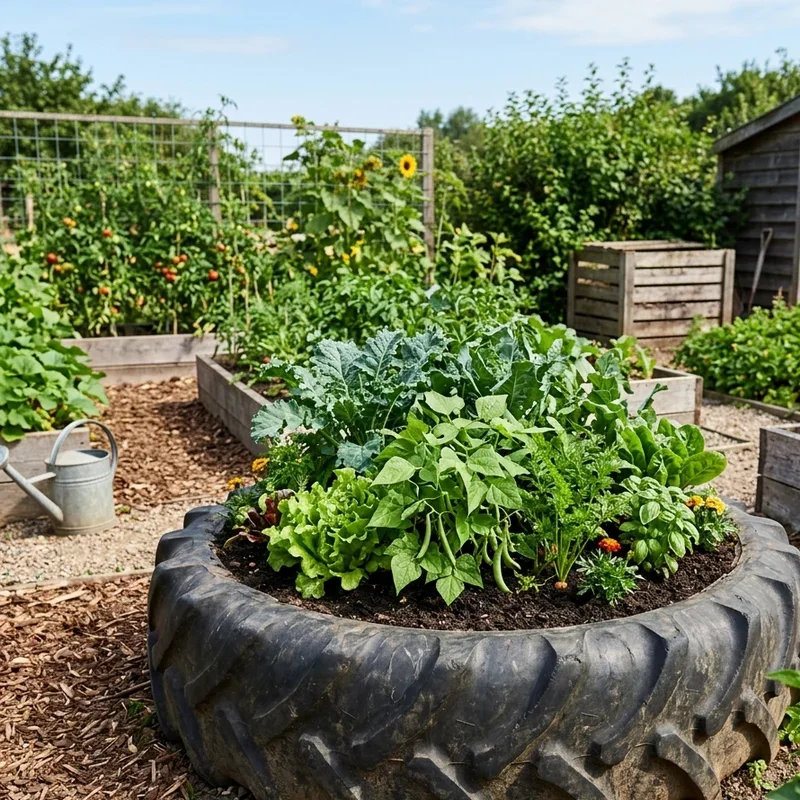
8. Tire Rim Succulent and Herb Display
A tire rim succulent and herb display removes the rubber tire completely, keeping only the metal or alloy wheel rim as a decorative container frame that showcases drought-tolerant herbs like thyme, oregano, and lavender in a modern industrial aesthetic that bridges the gap between rustic gardening and contemporary outdoor design sensibilities. Tire rim displays work like framing your herbs inside circular picture frames where the living plants become the artwork and the metallic rim becomes the gallery border beautifully. Clean rims thoroughly, removing brake dust and road grime before painting with rust-resistant metallic spray paint. Place landscape fabric across the rim's interior, fill with well-draining sandy potting mix, and plant Mediterranean herbs that thrive in the excellent drainage these shallow containers naturally provide.
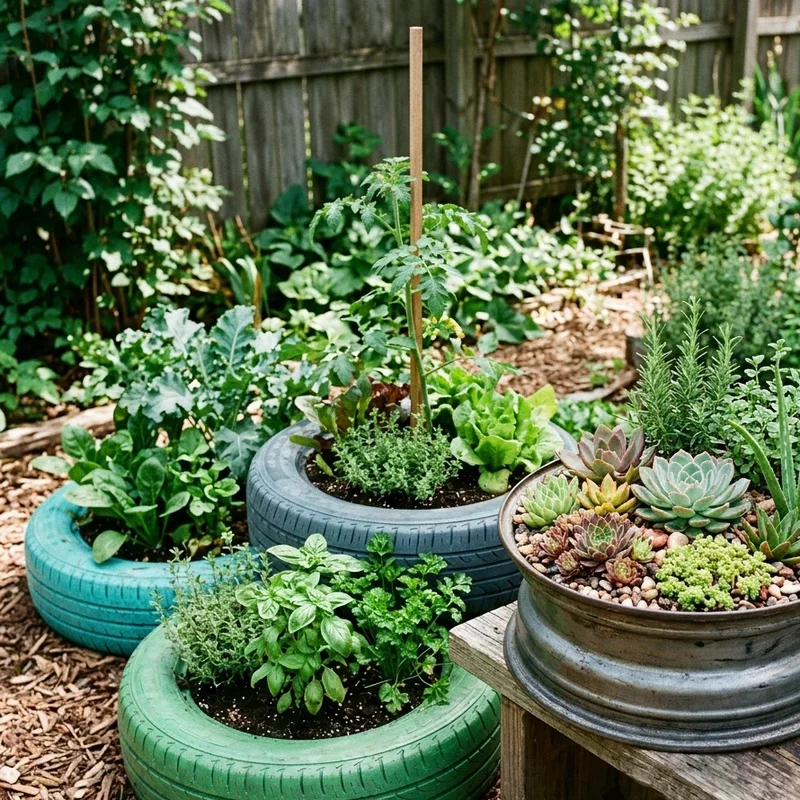
9. Hanging Tire Planter for Trailing Vegetables
A hanging tire planter suspends a standard tire horizontally from three or four evenly spaced chains attached to a sturdy overhead beam, pergola, or tree branch, creating an elevated growing vessel where trailing vegetable varieties like cherry tomatoes, strawberries, and cascading herbs spill beautifully over the edges far above ground-dwelling pests. Hanging tire planters work like installing a floating garden island that hovers above your patio, producing food in airspace you previously considered completely useless for anything productive. Wrap the tire's interior with coconut coir liner or heavy landscape fabric creating a soil-retaining basket within the rubber frame. Ensure your hanging structure supports at least forty kilograms when the tire contains saturated soil after thorough watering sessions.
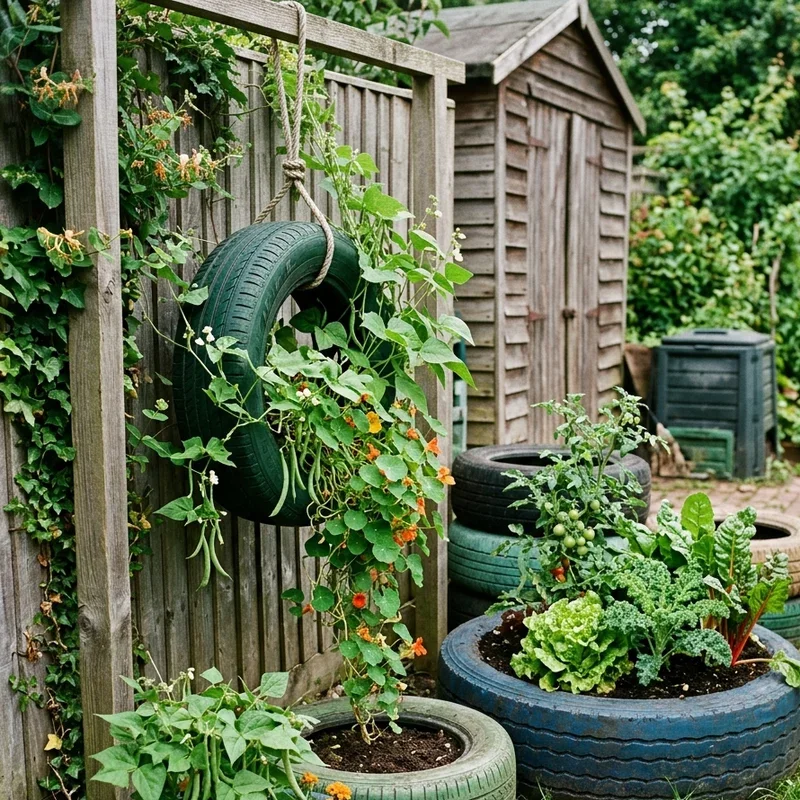
10. Tire Edging Border Vegetable Garden
Tire edging border vegetable gardens bury tires halfway into the ground along garden perimeters, creating a continuous raised border that defines growing zones, prevents grass invasion, retains mulch effectively, and adds approximately fifteen centimeters of elevation around existing in-ground vegetable beds without requiring lumber, stone, or any purchased edging materials whatsoever. Tire edging works like installing a permanent rubber fortress wall around your vegetable kingdom, keeping unwanted grass invaders firmly outside while your crops flourish safely within the protected growing territory. Dig a trench matching tire diameter, set tires vertically at consistent intervals, and backfill firmly. Plant trailing herbs like creeping thyme along the tire tops softening the visual transition between rubber edging and growing beds attractively.
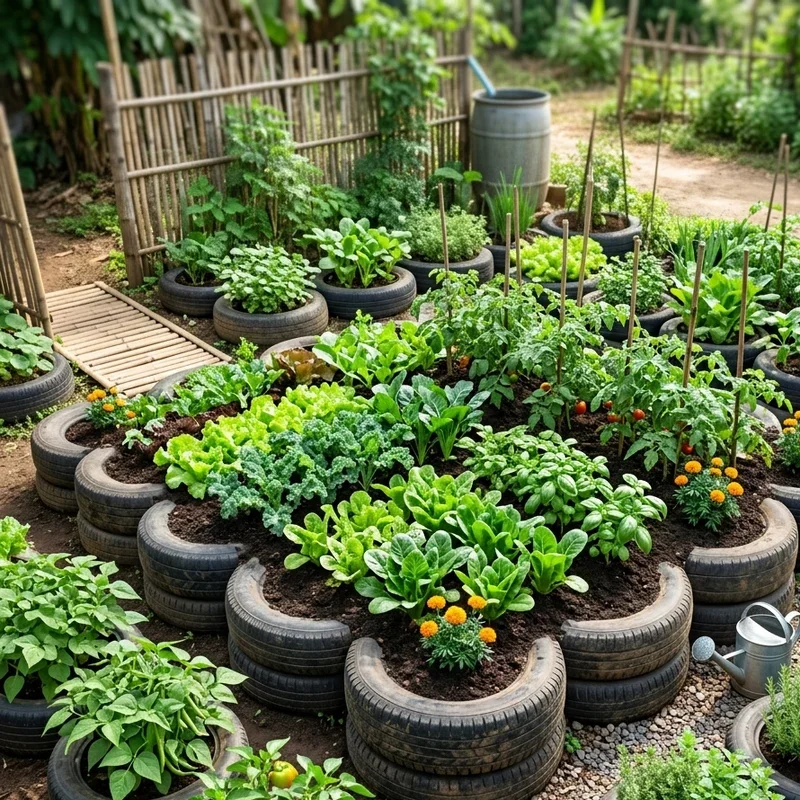
11. Cut and Flipped Tire Flower Pot Style
A cut and flipped tire flower pot style cuts along the upper sidewall of the tire, then flips the cut section inside out creating a scalloped-edge decorative planter that looks remarkably like a commercially manufactured garden urn, disguising the tire's original identity so completely that most visitors never realize they admire a recycled rubber container. Flipped tire pots work like performing a magic trick on ordinary garbage, transforming something destined for the landfill into an elegant planter that genuinely fools people into thinking you purchased it from an upscale garden center. Use a sharp utility knife or jigsaw to cut zigzag patterns along the sidewall before flipping. The flipping process requires considerable effort but produces a dramatically professional-looking finished product worth every minute invested.
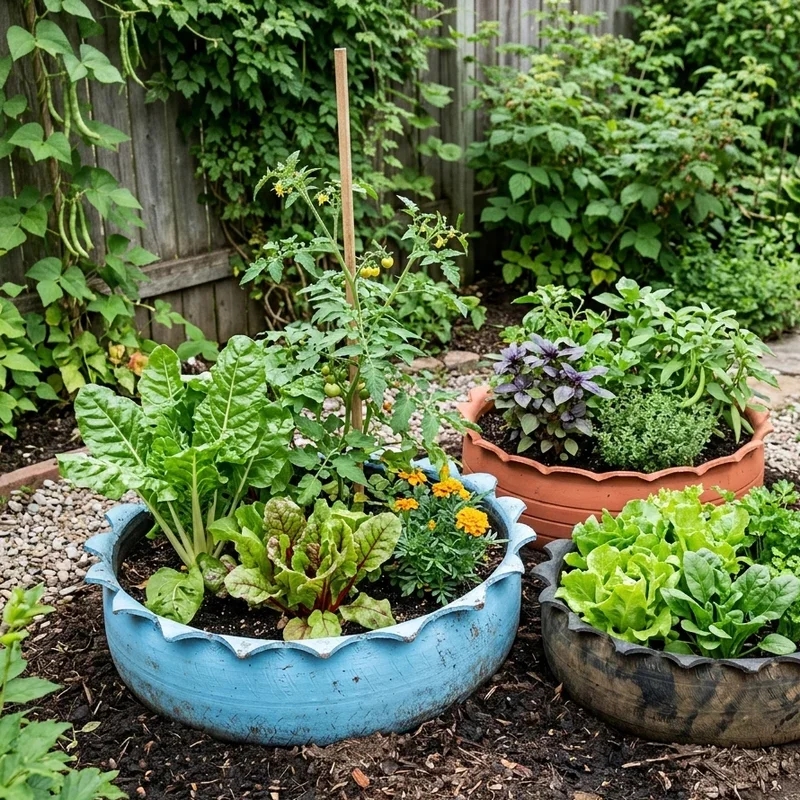
12. Tire Compost Bin for Garden Soil
A tire compost bin stacks three to four tires without bottoms into a vertical column creating an enclosed composting chamber where kitchen scraps, garden waste, and organic materials decompose into rich, fertile compost that feeds your tire vegetable gardens with completely free, nutrient-dense growing medium produced entirely from household waste materials. Tire compost bins work like building a dedicated kitchen for your garden where raw organic ingredients get slowly cooked into the rich, dark soil food every vegetable plant craves desperately. The black rubber absorbs solar heat accelerating decomposition rates significantly compared to open pile composting methods. Remove the top tire periodically to turn compost contents and monitor moisture levels maintaining the damp sponge consistency that beneficial decomposing organisms require for optimal activity.
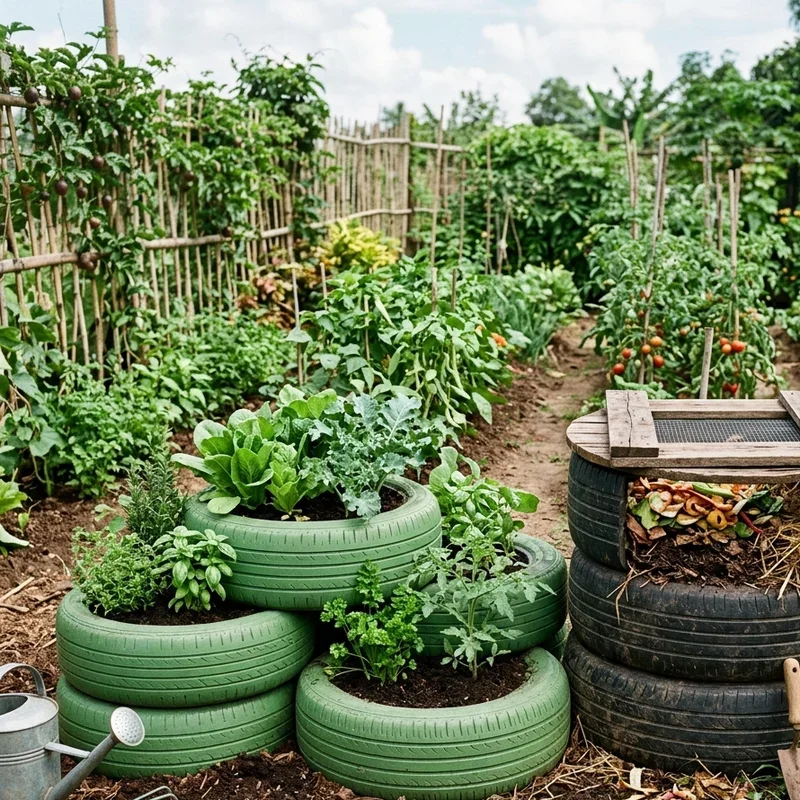
13. Wheelchair Accessible Tire Garden Bed
A wheelchair accessible tire garden bed stacks tires atop a sturdy raised platform or table-height framework, positioning the growing surface at a comfortable arm-reach height that eliminates bending, kneeling, and ground-level access barriers, making fresh vegetable gardening genuinely inclusive for wheelchair users, elderly gardeners, and anyone managing mobility limitations. Accessible tire gardens work like raising the earth itself to meet gardeners exactly where they sit, removing physical barriers that unfairly separate people from the therapeutic joy of growing their own food. Build the supporting platform from pressure-treated lumber or welded metal frames ensuring structural stability under the considerable weight of soil-filled tires. Position these raised beds along accessible pathways with adequate turning radius for wheelchair approach.
14. Kids Tire Garden Learning Station
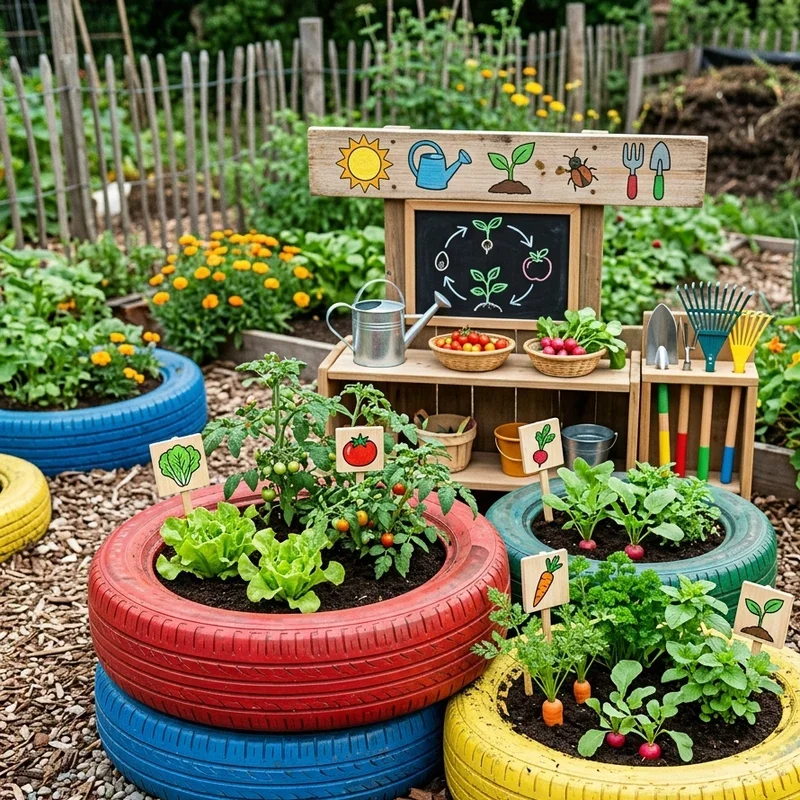
A kids tire garden learning station creates a dedicated child-sized growing area using brightly painted small tires arranged at ground level, where children plant fast-growing vegetables like radishes, lettuce, cherry tomatoes, and sunflowers, learning fundamental botanical concepts through hands-on experience within their own clearly defined, personal garden spaces. Kids tire gardens work like giving every child their own science laboratory where the experiments taste delicious and the results grow taller than the scientists conducting them enthusiastically. Assign each child one personally decorated tire, letting them choose paint colors creating ownership and genuine emotional investment in their garden's success. Select fast-germinating vegetable varieties maintaining children's engagement through quick visible results that sustain excitement throughout the entire growing season consistently.
15. Tire Greenhouse Cold Frame Setup
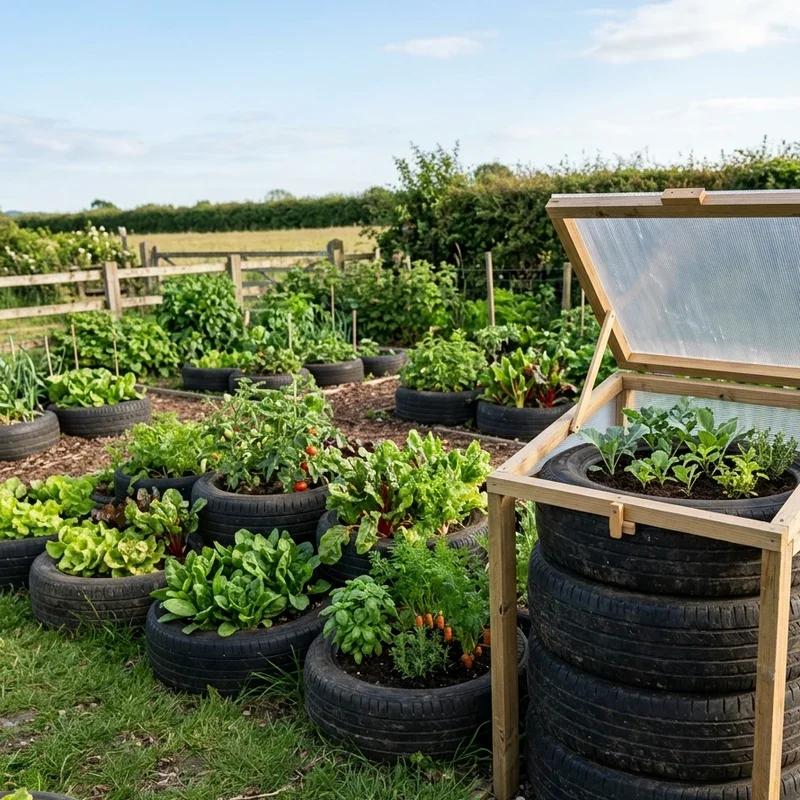
A tire greenhouse cold frame setup stacks two tires, fills them with soil, and tops the structure with a clear glass window, polycarbonate sheet, or heavy transparent plastic stretched across the opening, creating a miniature greenhouse environment that extends growing seasons by protecting tender seedlings and cold-sensitive vegetables from frost, wind, and temperature fluctuations. Tire cold frames work like building each plant its own personal heated apartment with a skylight, trapping solar warmth inside the dark rubber walls that absorb and radiate heat long after sunset. The black rubber mass absorbs daytime solar energy radiating gentle warmth throughout cold nights protecting root zones effectively. Prop the clear cover open during warm afternoons preventing overheating, then close it before evening temperatures drop below comfortable growing ranges.
Conclusion
Tire vegetable gardens transform free, readily available materials into productive growing systems that prove you absolutely do not need expensive raised bed kits or professional landscaping to grow abundant fresh food at home. From simple single tire herb planters to impressive tractor tire garden beds and creative strawberry pyramids, these fifteen ideas demonstrate that resourceful gardening rewards creativity over budget every single time. Always prepare tires properly, use quality soil, and position your tire gardens where they receive adequate sunlight, because even the cleverest container means nothing without the fundamentals supporting genuine plant success.
Frequently Asked Questions
Q1: Are old tires safe to use for growing vegetables we plan to eat?
A: Use food-grade liners inside tires and avoid extremely degraded tires leaching chemicals into soil.
Q2: How many drainage holes should I drill in each tire planter?
A: Drill four to six evenly spaced holes through the bottom sidewall for adequate drainage.
Q3: What vegetables grow best in tire container gardens throughout the season?
A: Tomatoes, peppers, lettuce, herbs, potatoes, and strawberries thrive exceptionally well in tire planters.
Q4: How long do tire planters typically last before needing replacement outdoors?
A: Tires withstand outdoor garden use for approximately eight to ten years before significant deterioration.
Q5: Can I use tire gardens on apartment balconies or rooftop spaces safely?
A: Verify weight capacity first, as soil-filled tires become surprisingly heavy when fully saturated.