15 Plant Support Ideas for Stronger Healthy Growth
Explore 15 plant support ideas for stronger healthy growth that keep stems upright, boost yields, and transform your garden beautifully.
Plant supports do far more than simply propping up floppy stems because they fundamentally shape how your plants grow, breathe, and produce throughout every stage of their lifecycle. Have you ever watched a thriving tomato vine collapse under its own weight and wondered what went wrong? That heartbreaking moment disappears completely when you choose the right support system from the beginning. Think of plant supports as the invisible backbone giving your garden its posture, structure, and confidence to reach skyward without apology. These fifteen clever support ideas turn wobbly, underperforming plants into strong, productive showstoppers that make your entire garden look professionally designed.
1. Classic Wooden Stake Support
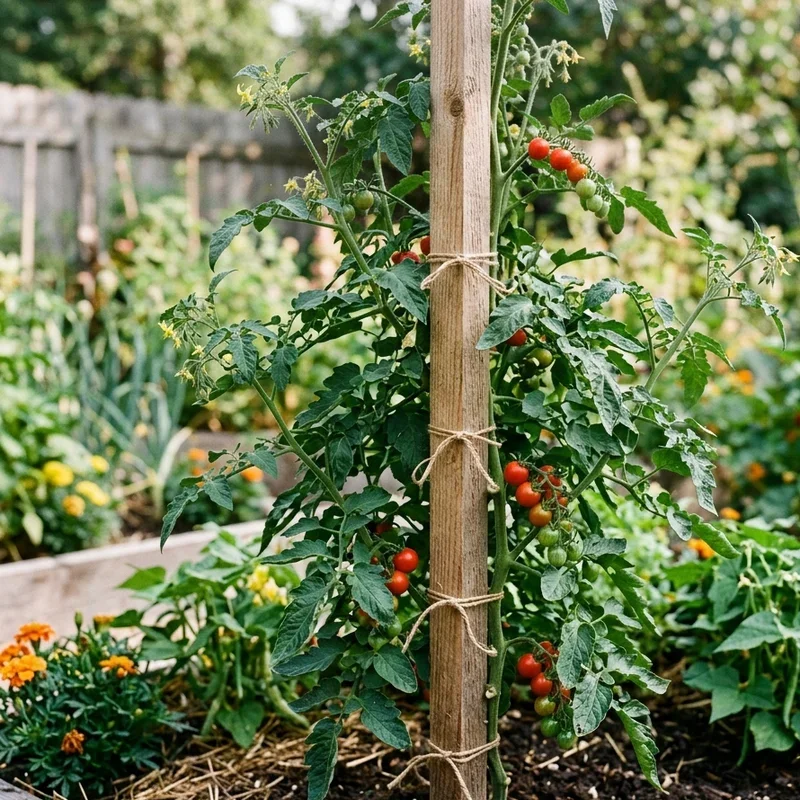
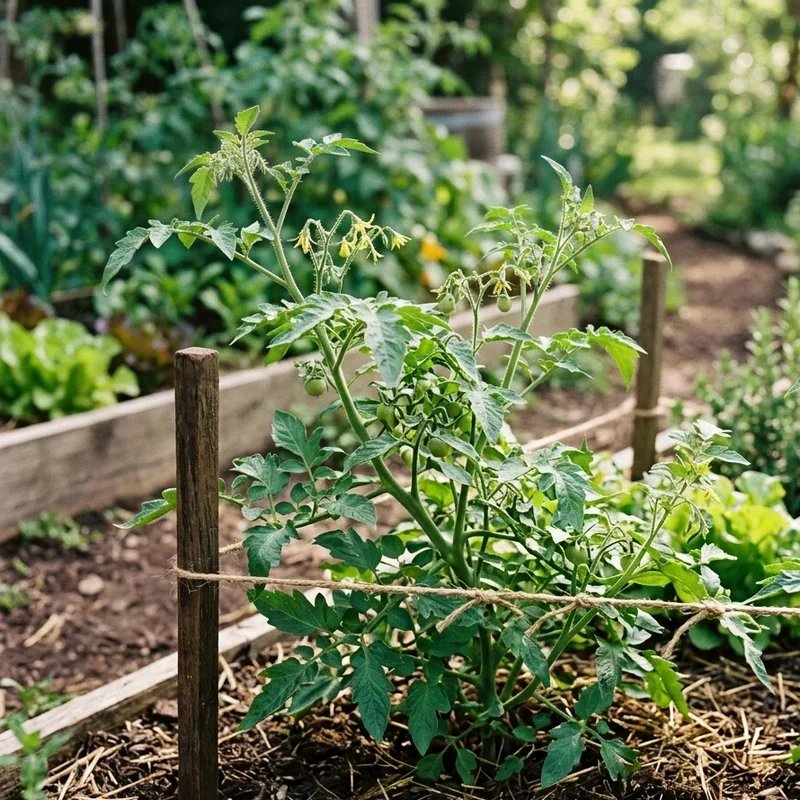
The classic wooden stake support drives a sturdy hardwood or bamboo pole directly beside the plant's main stem, providing simple vertical guidance that prevents wind damage, stem breakage, and ground contact while encouraging upright growth patterns ideal for tomatoes, peppers, dahlias, and sunflowers throughout the growing season. Wooden staking works like giving your plant a reliable best friend who always stands right beside them offering quiet, steady encouragement during tough weather. Push stakes at least fifteen centimeters into soil before the plant grows tall enough to need support. Tie stems loosely using soft garden twine in figure-eight patterns that cushion the stem against the stake without restricting natural growth movement.
2. Wire Tomato Cage System
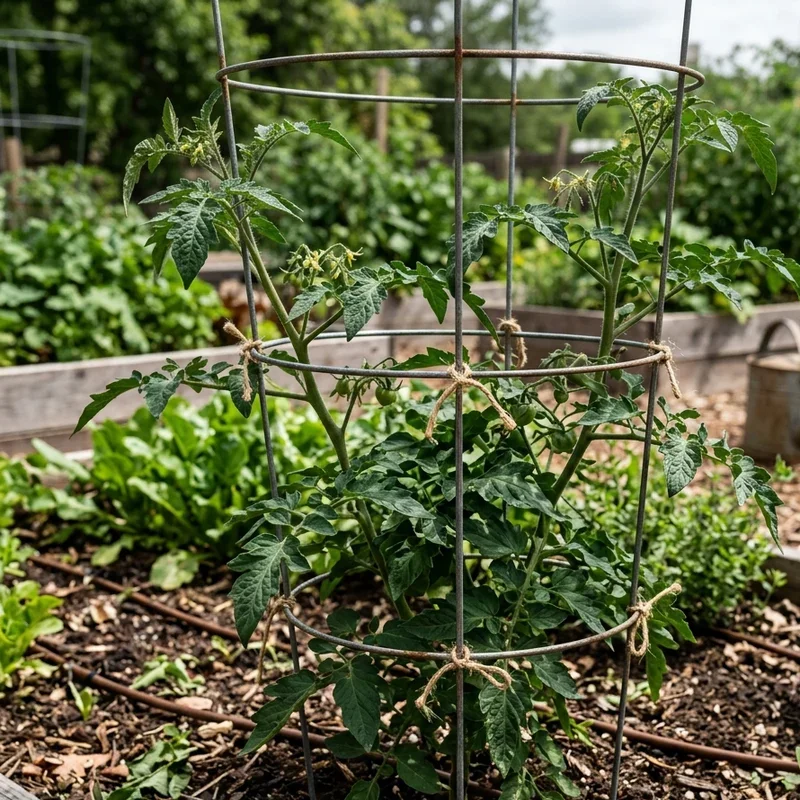
Wire tomato cage systems surround plants with a cylindrical metal framework that supports multiple branching stems simultaneously from all directions, eliminating the constant retying that single stakes demand while providing three-dimensional structural containment keeping heavy fruit-bearing branches from snapping under their own productive weight throughout harvest season. Tomato cages work like placing an invisible exoskeleton around your plant that grows alongside it, catching every wayward branch before gravity causes real problems. Choose heavy-gauge cages at least 120 centimeters tall for indeterminate tomato varieties, since shorter commercial cages consistently prove inadequate once midsummer growth kicks into full production. Anchor cages firmly using additional stakes preventing toppling during storms.
3. DIY Bamboo Teepee Trellis
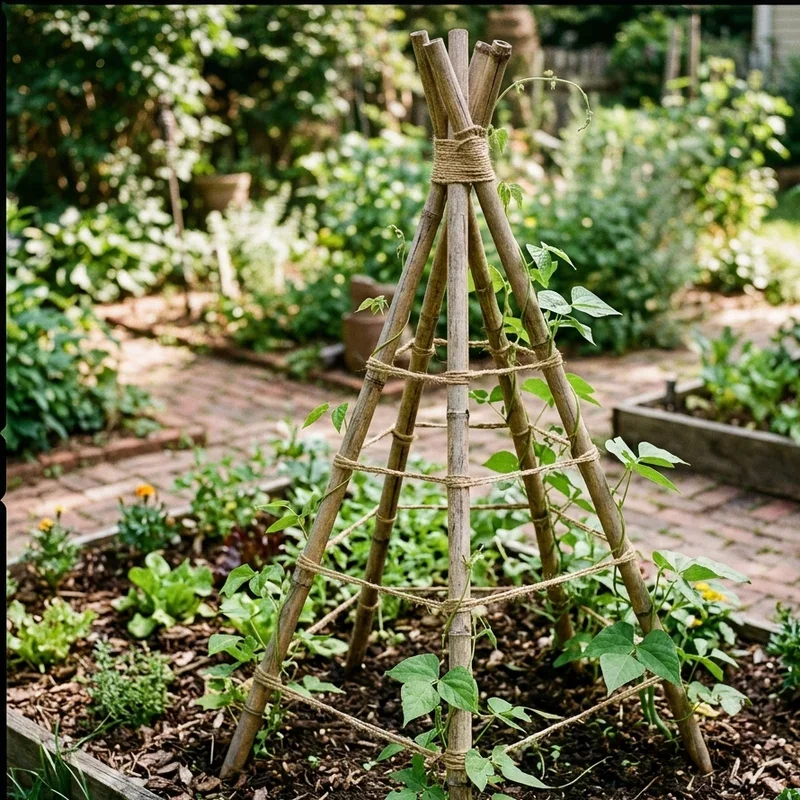
A DIY bamboo teepee trellis arranges four to six bamboo poles in a conical formation tied securely together at the top, creating an elegant climbing structure perfectly suited for pole beans, sweet peas, morning glories, and lightweight cucumbers that wrap their tendrils naturally around the angled supports without any additional training effort whatsoever. Bamboo teepees work like building a small cathedral your plants worship inside, spiraling upward toward the light with genuine architectural grace. Space poles evenly around a sixty-centimeter diameter circle, then bind the top intersection using strong garden wire or natural jute twine securing everything tightly. Plant two seedlings at each pole base and watch them race each other upward competitively.
4. Adjustable Metal Plant Rings
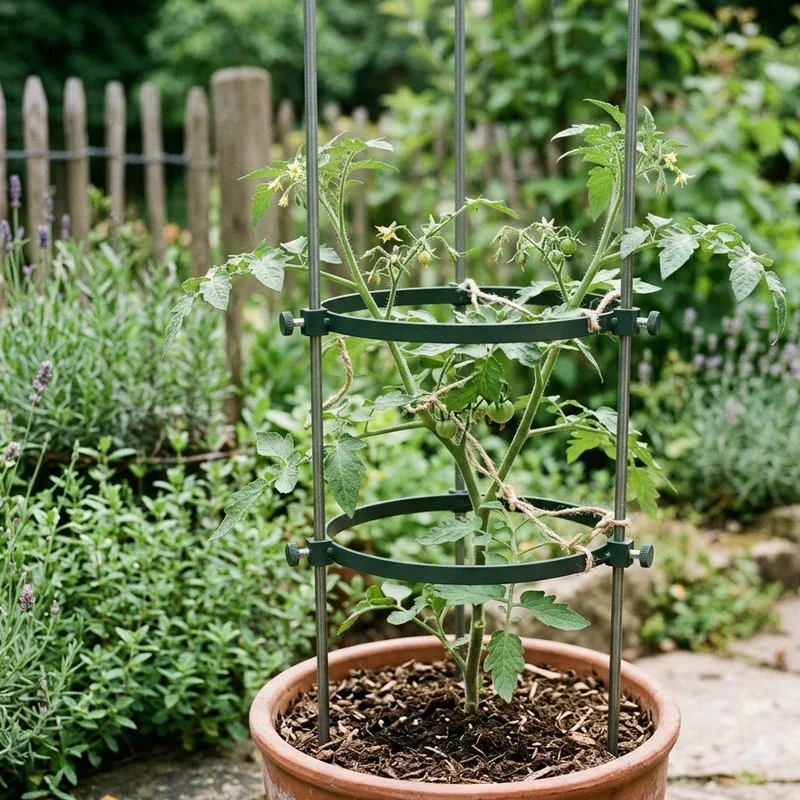
Adjustable metal plant rings feature a horizontal circular support connected to vertical legs that push into the soil, holding bushy plants like peonies, hydrangeas, and ornamental grasses in attractive upright formations preventing the sprawling collapse that heavy blooms and rain-soaked foliage inevitably cause without structural intervention throughout the flowering season. Plant rings work like installing a fashionable belt around your plant's waistline, maintaining a polished silhouette without anyone noticing the support mechanism underneath. Position rings early in the season while plants remain small enough to grow naturally through and around the ring's framework. Choose dark green coated metal rings that disappear visually into the surrounding foliage creating completely invisible structural support.
5. String and Twine Training Method
The string and twine training method suspends strong garden twine vertically from overhead structures down to the plant's base, allowing climbing and vining plants to wrap naturally around the string as they grow, creating incredibly space-efficient vertical growing columns popular in greenhouses and intensive vegetable production systems worldwide. String training works like providing your plant a personal elevator cable that carries it smoothly from ground level straight toward maximum sunlight exposure without detours. Attach twine to overhead beams, horizontal wires, or pergola structures using secure knots that handle the full weight of mature fruiting plants. Gently twist the plant's growing tip around the twine weekly, guiding the climbing pattern consistently upward without forceful bending.
6. Lattice Panel Wall Trellis
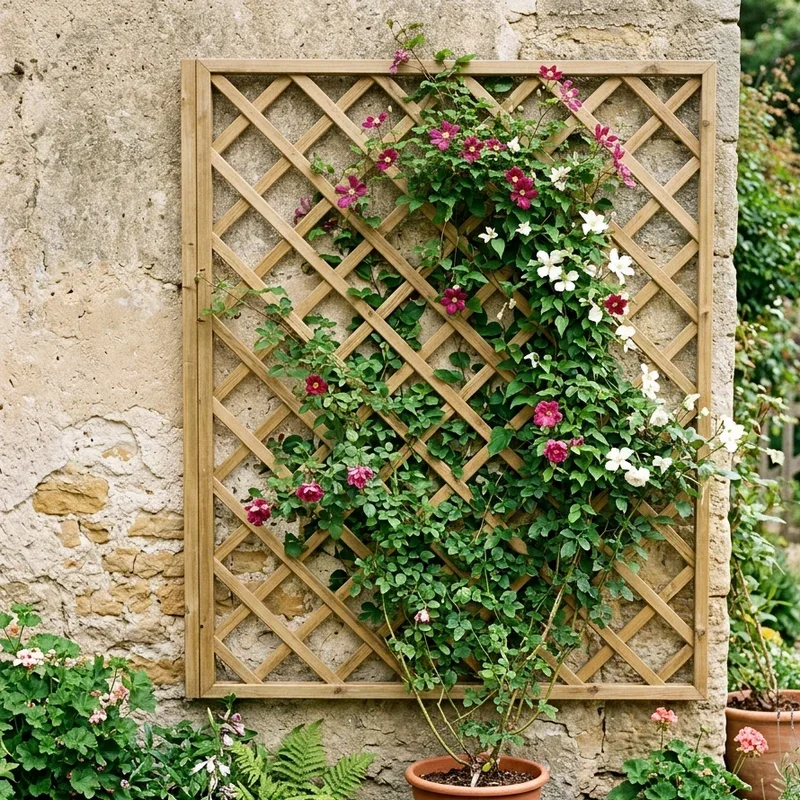
Lattice panel wall trellis mounting secures wooden or vinyl lattice frameworks against walls, fences, or freestanding posts, creating expansive flat climbing surfaces where roses, jasmine, clematis, and espaliered fruit trees spread their branches across organized grid patterns producing stunning vertical garden displays. Lattice trellising works like giving your climbing plants a perfectly organized bookshelf where every branch finds its designated space and nothing gets overcrowded or tangled chaotically. Mount panels at least five centimeters away from solid walls using spacer blocks that allow air circulation behind the plant canopy, preventing moisture-related disease problems. Choose lattice opening sizes matching your specific plant's tendril or stem thickness for natural attachment without supplemental ties.
7. Obelisk Tower Support Structure
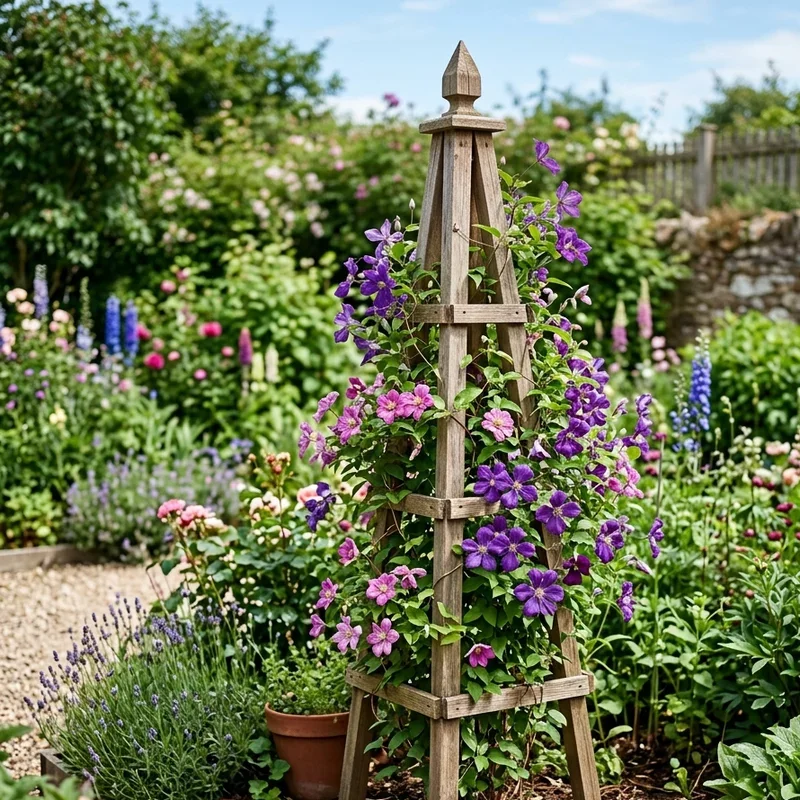
An obelisk tower support structure provides a tall, tapering four-sided framework typically crafted from metal or wood that combines functional climbing support with genuinely decorative garden architecture, creating focal points where flowering vines transform structural supports into living pillars of cascading color throughout the growing season. Obelisks work like placing elegant columns from a secret garden inside your own backyard, instantly elevating the entire landscape's sophistication without requiring professional design consultation. Position obelisks in border centers, along pathways, or flanking garden entrances for maximum visual impact. Train climbing roses, sweet peas, or black-eyed Susan vines around the framework, weaving stems through the structure's crossbars to create dense, bloom-covered towers that genuinely stop visitors mid-conversation with admiration.
8. Florida Weave Stake and String System
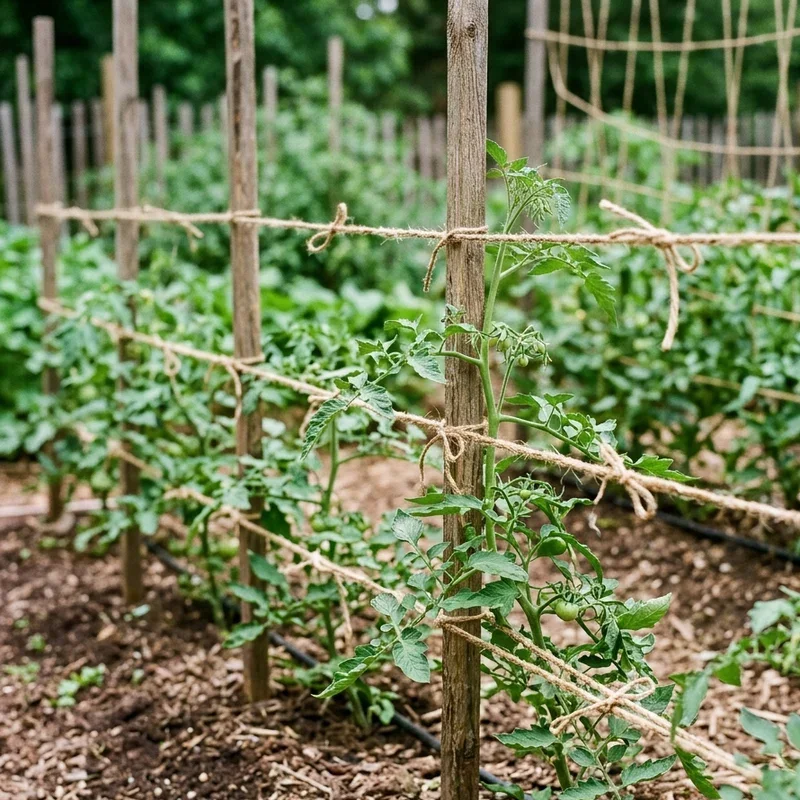
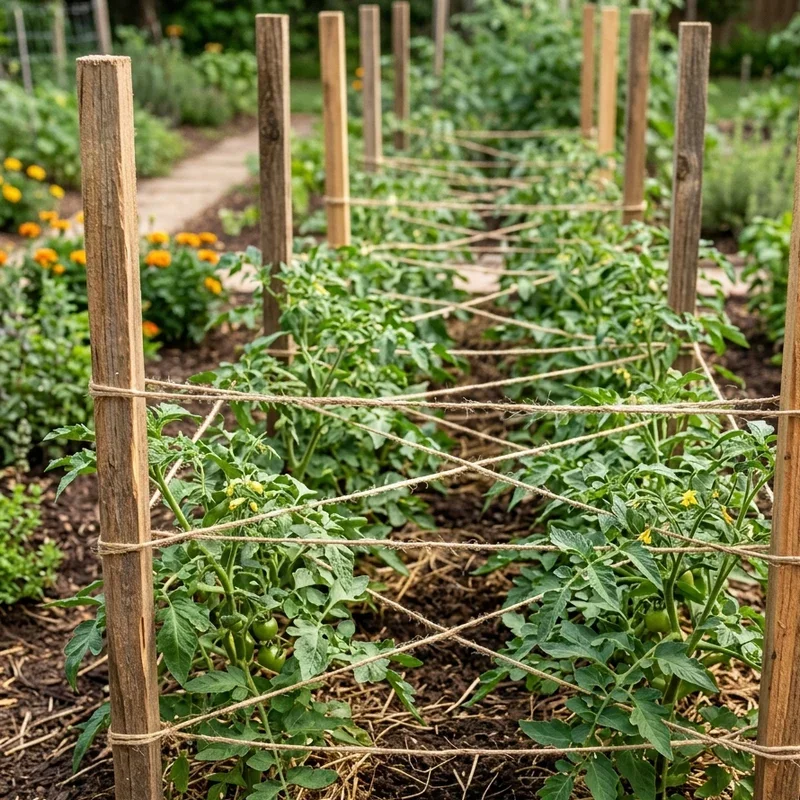
The Florida weave stake and string system drives sturdy wooden stakes between every two or three plants along a row, then weaves strong twine horizontally along both sides of the plants creating a sandwiching effect that holds entire rows upright simultaneously using minimal materials and maximum efficiency throughout the production season. The Florida weave works like lacing a corset around your entire garden row, providing firm support from both sides keeping everything perfectly structured under heavy fruit loads. Drive stakes at least thirty centimeters deep for stability before plants reach knee height. Add new horizontal twine lines every fifteen to twenty centimeters of growth, always weaving on alternating sides of each stake to maintain balanced tension across the row.
9. Moss Pole for Climbing Houseplants
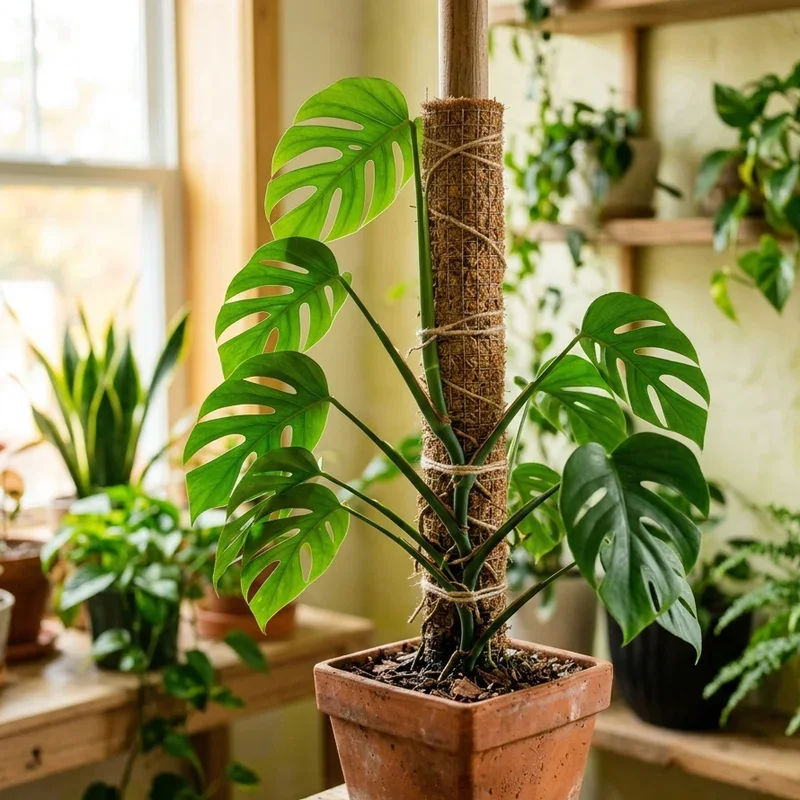
A moss pole for climbing houseplants provides a vertical column wrapped in sphagnum moss or coco coir that mimics the natural tree trunks tropical climbers like Monsteras, Pothos, and Philodendrons instinctively attach their aerial roots to in rainforest environments, dramatically improving leaf size, fenestration development, and overall plant health indoors. Moss poles work like recreating a tiny slice of tropical jungle inside your living room, giving your houseplant the climbing surface it has literally evolved to seek throughout millennia. Keep the moss consistently moist by misting regularly or installing a simple drip system that maintains humidity around the aerial root zone. Secure young stems to the pole using soft plant ties until aerial roots establish independent attachment naturally.
10. Cattle Panel Arch Trellis
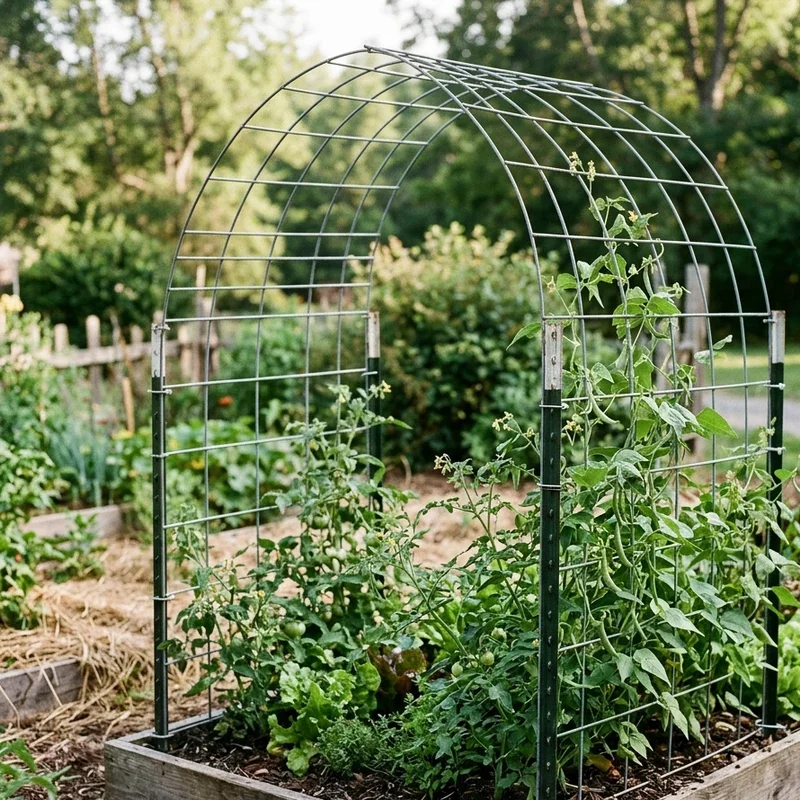
A cattle panel arch trellis bends a heavy-gauge welded wire cattle panel into a graceful arch shape secured to sturdy posts or raised bed sides, creating a walk-through tunnel structure where squash, cucumbers, melons, and gourds hang dramatically overhead while simultaneously saving considerable ground-level garden space for companion planting underneath. Cattle panel arches work like building a productive garden tunnel where you literally walk through your harvest, plucking vegetables hanging at eye level without ever bending down. Use sixteen-foot panels bent between raised beds positioned approximately 120 centimeters apart for comfortable walking clearance. The rigid wire grid supports remarkably heavy fruit loads while providing excellent air circulation reducing disease pressure significantly throughout the growing season.
11. Pegging and Low Horizontal Support
Pegging and low horizontal support techniques bend flexible plant stems downward and secure them horizontally using landscape pins or low wire frameworks, encouraging lateral branching and dramatically increased flower production in roses, fruit trees, and ornamental shrubs that naturally concentrate energy toward vertical dominant shoots when left completely unsupported. Pegging works like convincing your plant to stop reaching for the sky and start building outward instead, multiplying blooming points exponentially through strategic redirection. This technique redirects the plant's hormonal response, breaking apical dominance and triggering dormant lateral buds along the entire bent stem length. Peg climbing roses along horizontal wires to transform a single long cane into a wall of blooms.
12. Living Plant Support Companions
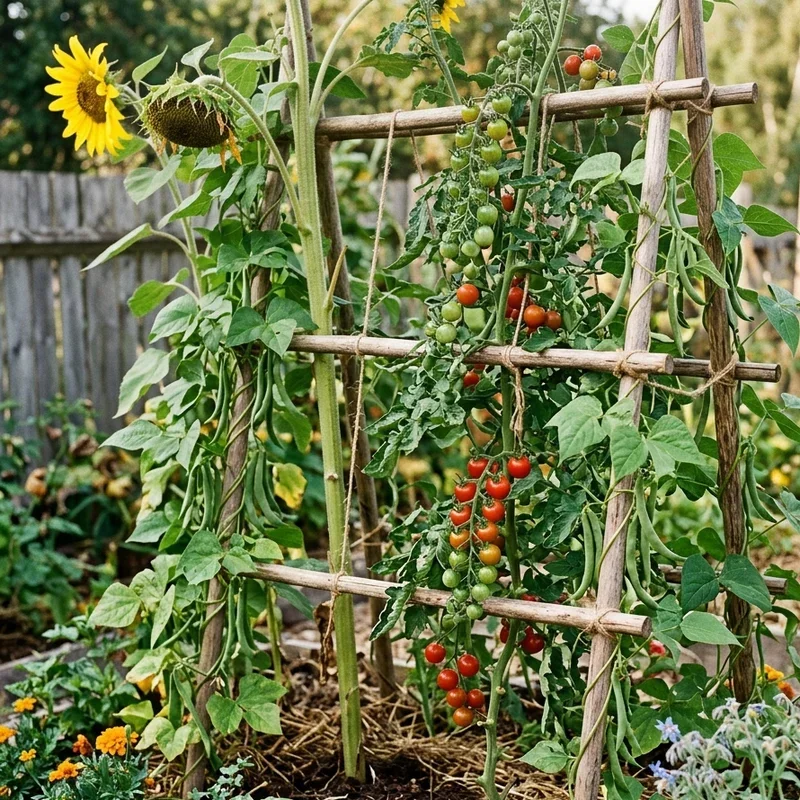
Living plant support companions use tall, structurally strong plants as natural supports for shorter climbing or vining neighbors, recreating the traditional Three Sisters planting method where corn stalks support climbing beans while squash shades the ground, creating mutually beneficial growing partnerships without any artificial materials whatsoever. Living supports work like introducing your plants to their perfect roommates, everyone contributes something valuable and the arrangement benefits the entire household cooperatively. Sunflowers support lightweight climbers like morning glories beautifully in ornamental beds. In vegetable gardens, plant corn or sorghum two weeks before beans, allowing the structural support plant to establish sufficient height and stem strength before the climbing partner begins its upward journey enthusiastically.
13. DIY Copper Pipe Plant Frame
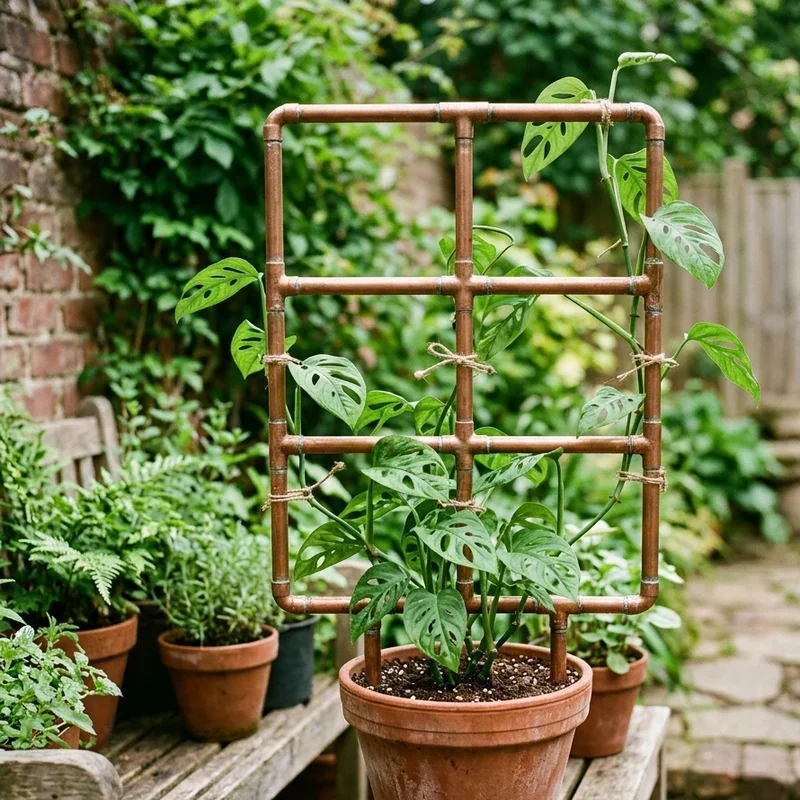
A DIY copper pipe plant frame uses standard plumbing copper tubing and fittings to create custom geometric plant support structures that develop a gorgeous natural green patina over time, combining functional stem support with stunning decorative metalwork that elevates container gardens and border plantings into genuine design statements. Copper frames work like installing miniature industrial sculptures throughout your garden that happen to also keep your plants standing perfectly upright and looking absolutely magnificent simultaneously. Cut copper tubing using a standard pipe cutter and connect sections using tee and elbow fittings without soldering for easy seasonal disassembly. The natural antimicrobial properties of copper provide minor fungal resistance benefits where stems contact the support frame directly.
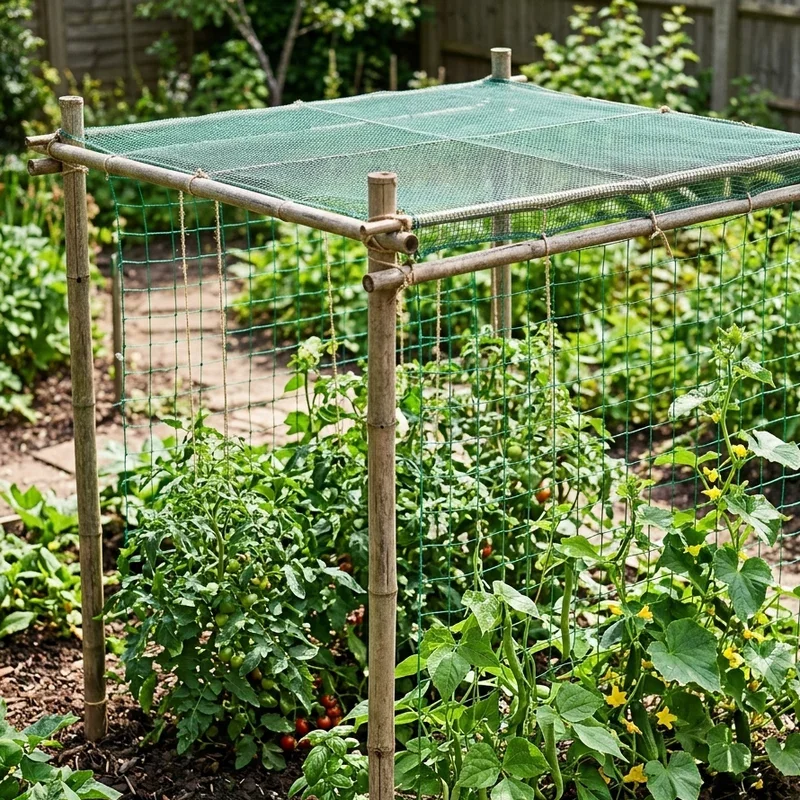
14. Netting and Mesh Canopy System
A netting and mesh canopy system stretches horizontal or angled garden netting between posts or framework above growing plants, creating a supportive ceiling that climbing and sprawling plants grow up through, distributing their weight across the entire mesh surface rather than concentrating stress on individual stems or single attachment points. Netting systems work like providing your garden a safety net at exactly the right height, catching every stem before it falls and spreading the load evenly across the growing area. Use netting with ten to fifteen centimeter grid openings for most vegetable applications, allowing easy hand access for harvesting while providing sufficient support density. Lower the netting close to plant tops initially, then raise it as plants grow through the mesh squares naturally.
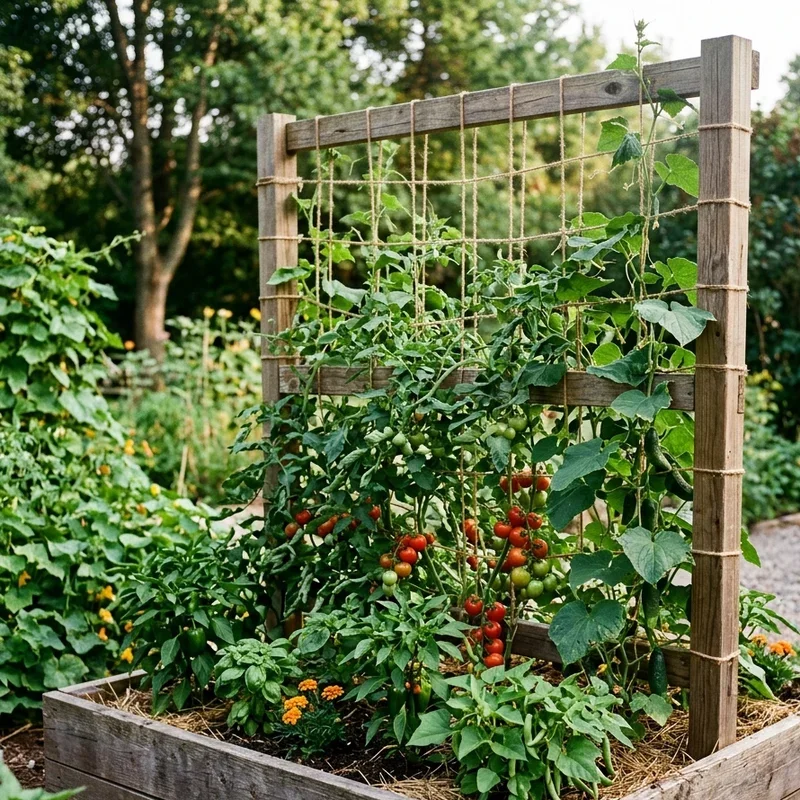
15. Raised Bed Integrated Trellis Design
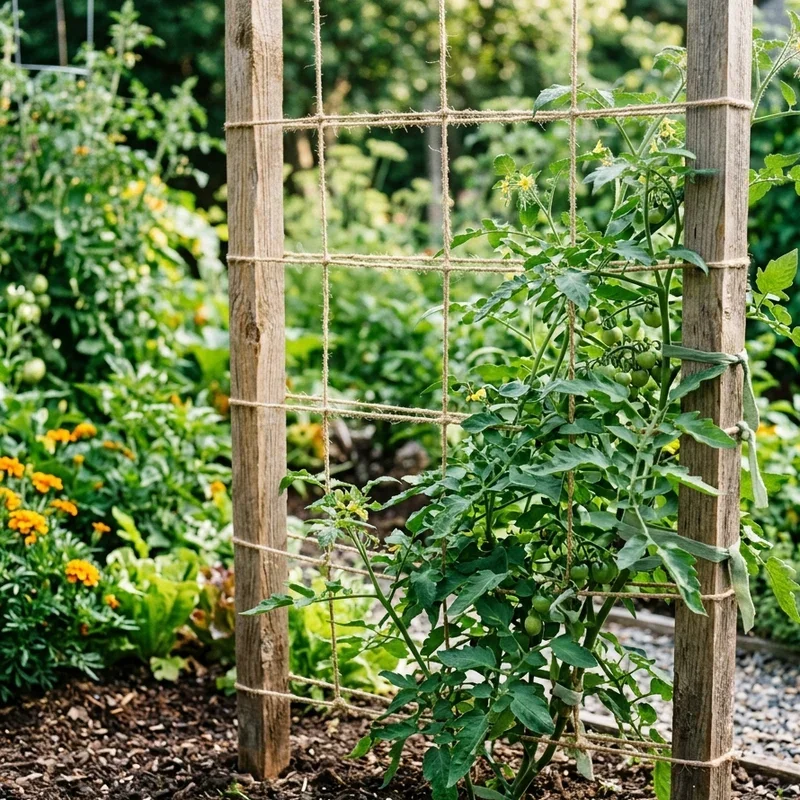
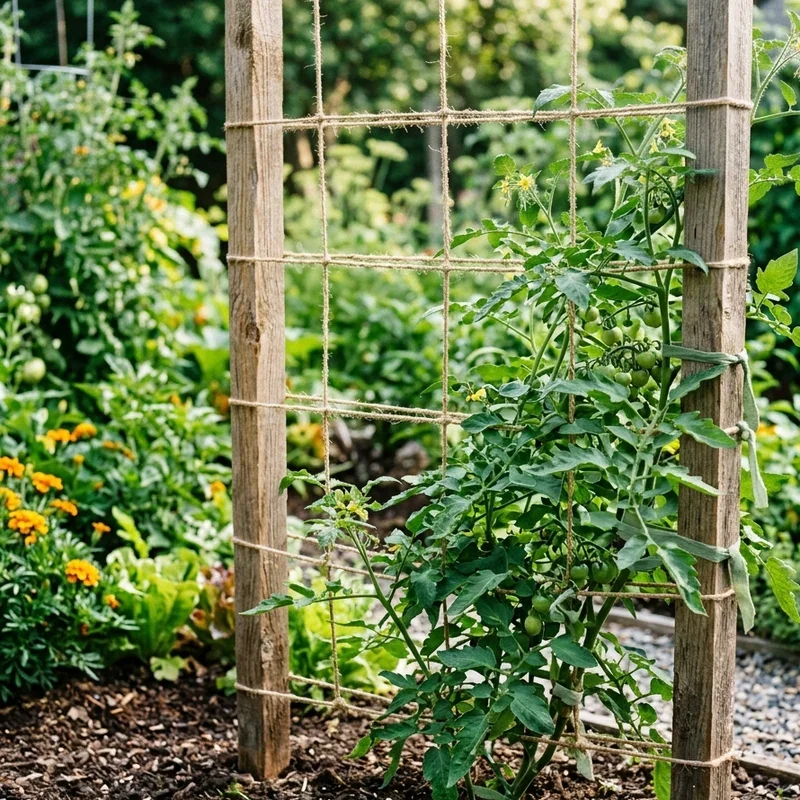
A raised bed integrated trellis design builds permanent vertical support structures directly into the raised bed framework during construction, creating unified growing systems where the planting surface and climbing support function as one connected unit eliminating the instability problems that freestanding supports in loose raised bed soil consistently experience throughout the season. Integrated trellising works like building a house with the furniture already installed, everything fits perfectly because the support structure and growing space share the same architectural blueprint from day one. Attach metal conduit or wooden uprights directly to the bed's corner posts using bolts or brackets creating rock-solid vertical frames. String horizontal wires between uprights at regular intervals providing permanent attachment points for any climbing crop you choose.
Conclusion
Plant supports transform struggling, sprawling gardens into structured, productive growing spaces where every stem reaches its full potential through proper guidance and strategic structural assistance. From simple wooden stakes to elaborate cattle panel arches and elegant copper frames, these fifteen ideas prove that supporting your plants properly delivers dramatically stronger growth, healthier harvests, and genuinely beautiful garden aesthetics. Always match your support choice to your specific plant's growth habit, weight requirements, and climbing method, because the right support system makes the critical difference between a garden that merely survives and one that truly thrives magnificently.
Read next: 15 Plant Nursery Advertising Ideas to Attract More Local Buyers
Frequently Asked Questions
Q1: When is the best time to install plant supports in the garden?
A: Install supports at planting time before roots establish to avoid damaging the root system.
Q2: Can I reuse plant supports from season to season safely?
A: Clean and inspect supports annually, replacing any damaged or rusted components before each season.
Q3: What support works best for heavy fruiting plants like melons and squash?
A: Cattle panel arches and strong horizontal netting handle heavy fruiting crops most effectively.
Q4: Do indoor houseplants really benefit from moss poles and climbing supports?
A: Tropical climbers produce significantly larger, healthier leaves when given vertical climbing support structures.
Q5: How do I attach plants to supports without damaging their stems?
A: Use soft fabric ties in loose figure-eight loops allowing natural stem movement and growth.