How to Safely Manage Tree Growth Near Driveways, Retaining Walls, and Foundations
Learn how to safely manage tree growth near driveways, retaining walls, and foundations with practical tips for pruning, roots, damage prevention, and maintenance.

A tree may appear healthy above ground, but it could be causing damage to a driveway, retaining wall, or foundation slab. This damage occurs below the surface long before it becomes visible. The roots pose a threat long before you realize it at eye level. Knowing how roots interact with nearby hardscaping is key to a simple pruning job versus a costly repair.
Why Roots Reach Further than You Think
Most people picture roots mirroring the canopy - spreading roughly as wide as the branches above. That's wrong, and it's the single biggest reason trees end up damaging things they weren't planted near.
Around 80-90% of a tree's root mass sits in the top 60cm of soil, and that root system typically extends two to three times wider than the canopy itself. A tree with a modest 5-metre-wide crown can easily have roots reaching 10-15 metres in every direction. That means a tree planted well clear of a driveway when it was young can have roots undermining that same driveway a decade later, long after anyone stopped thinking about it as a risk.
This is also why "it's a small tree, it'll be fine" is such a common and costly mistake. Size above ground tells you very little about what's happening underneath.
Three Ways Trees Damage Structures (and why pruning alone won't fix all of them)
Pruning is often treated as the catchall solution for tree-related structure troubles. It does some good, but it doesn't apply to everything. There are three different causes in play, and each requires a different action:
1. Moisture extraction: The quiet one. Trees suck up a lot of water from the soil, which makes clay soil shrink. That shrinkage causes differential settlement under footings and slabs - one part of the footing or slab settles a bit while another part remains in the same place, and the structure above cracks right along that boundary. This can be a big deal in reactive clay soil regions, where wet and dry seasons cause the soil to expand and contract.
2. Direct root pressure: This is the one that people think of. Big roots physically push against a slab, wall footing, or the edge of pavement until something gives. Lifted driveways or retaining walls that start to bulge out at the bottom are usually this type of problem.
3. Canopy-driven runoff: The one nobody ever hears about. A dense canopy concentrates rainfall into heavy drip points. Over the years, that concentrated flow of water can erode the soil around a footing or wash the fines out from behind a retaining wall. This undermines the support of the structure, and not a single root has come into play.
Warning signs worth taking seriously
The majority of serious tree-related property damage begins as a relatively minor issue, but one that is easily identifiable. Unfortunately, the 'minor' warning signs are too frequently ignored because they appear, at first glance, just that - minor.
A diagonal crack running between pavers or in a concrete path or driveway can be a hint that an invading root is forcing the surfacing apart. Hairline cracking in a retaining wall - especially one positioned only a spade's head from a large tree - signals that tree root influence (or occasionally tree root moisture depletion) is at work 'somewhere' on the wall's other side. Heaving or rise in the level of a paver, usually in direct response to root encroachment, is regularly overlooked by a simple assumption that one of the pavers has moved.
Doors that 'stick' or won't properly close; new fine cracking steps developing in a plasterboard wall; windows that require unusual trimming to open or close; or the reflection in the bathroom mirror showing a wall not quite true, can all indicate tree-induced foundation movement. The list can go on.
None of the symptoms are conclusive evidence of tree activity of course, but when a few are observed in close proximity to a large, long-established tree, then the pattern is complete and the tree's environment is worth investigating sooner than later.
The cheapest fix is choosing the right tree in the first place
Listen to any tree doctor and they'll share this piece of advice with you: forestalling trouble is far cheaper than fixing it. When it comes to trees, the most important decision a homeowner can make on this front - the decision that costs hundreds or thousands depending on which way they go - costs nothing beyond a bit of research time at planting time: species selection and setback distance.
Species differ immeasurably in root aggressiveness and size at maturity. Fast-growing, large-canopy species with intrusive roots require large setback distances for foundations, often 8-10 m, because the root area shaded by the canopy extends well past the branch area. Smaller-statured, non-invasive-rooting species can be planted much closer. A quick look at the right chart at the time of planting, rather than the chainsaw and grinding machine later, saves a small fortune and eliminates the worry and hazard for generations to come.
For established trees already planted too close, the calculus shifts from prevention to management - which is where tree lopping toowoomba and root management techniques come in.
Crown reduction vs topping: one protects the tree, one guarantees future problems
This is where a lot of self-service tree work gets off on the wrong foot. To the untrained eye, crown reduction and topping can appear to have the same result, but they are polar opposites.
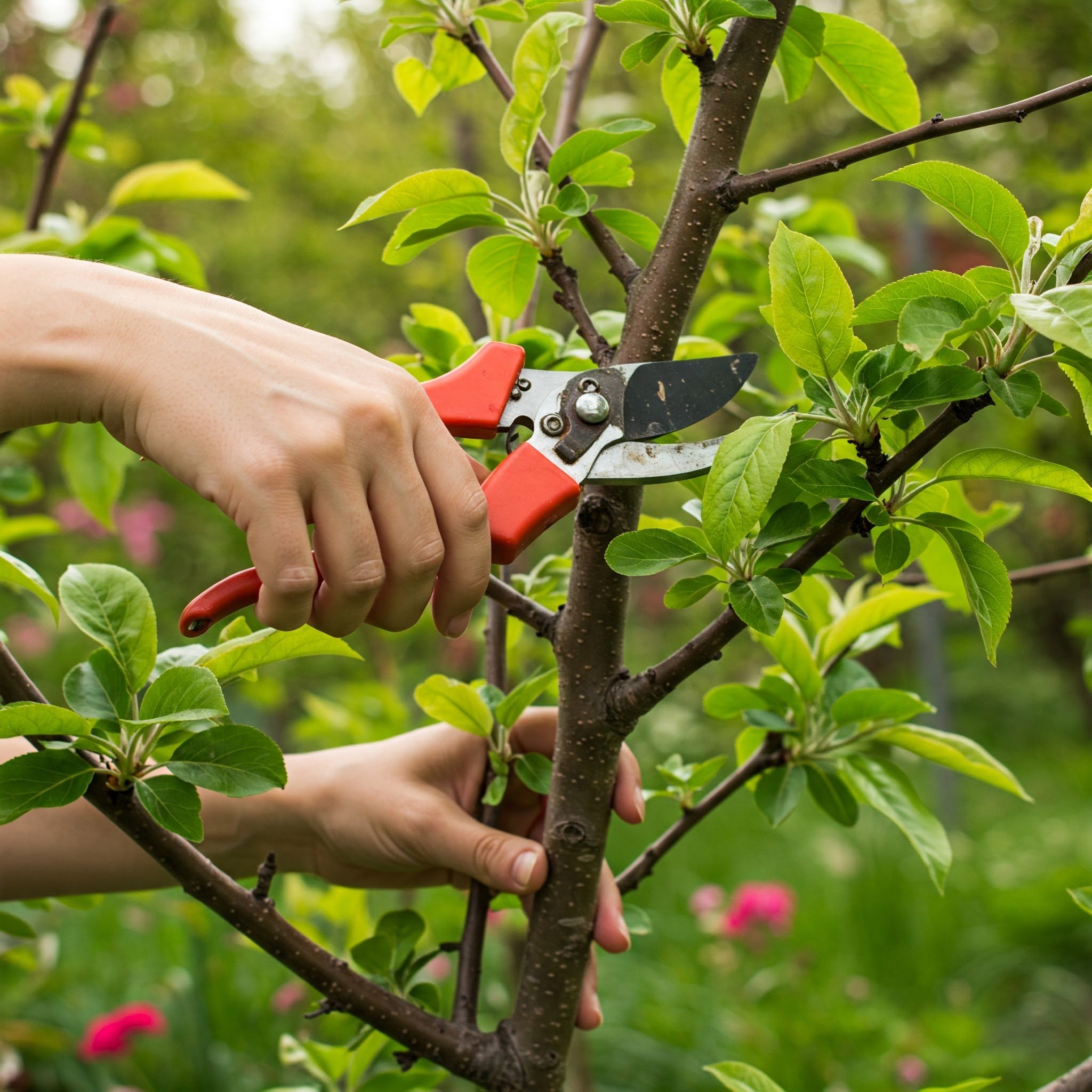
Crown reduction is a precise art that lowers a tree's height and spread by selectively cutting back to lateral branches that are capable of taking over the growth, in line with the tree's natural branch pattern. When properly executed, this reduces wind resistance, the tree's demand for moisture, and the concentration of canopy runoff near a building while maintaining the tree's health.
Topping, which involves hacking the main branches or even the trunk back to a few stubs, does the exact opposite of what people are hoping to achieve. It stimulates a flush of weak, rapid, poorly integrated regrowth directly at the points of the cuts. When you're working close to a building, that's a terrible result: you get more leaves, more weight, and many more times the branches likely to fail in the wind, all now closer to the structure than they were previously. Topping near drives, walls, or roofs doesn't decrease risk. It simply manufactures new risk on a shorter schedule.
Root pruning has hard limits
Cutting roots poses more danger than cutting branches since roots anchor and nourish the tree. There are rules not to break regardless of how appealing it might be to get rid of an intrusive root.
More than 25-30% of a tree's critical root zone should never be eliminated in a single operation. Also, all roots on one side of a tree should never be pruned - this results in an unsteady support system and significantly raises the risk of the tree falling in the wind, especially on the side that lost its stabilization. Cuts must always be neat and sharp, not ragged, since a torn root will easily become a target for rot and disease to spread to the tree's core.
If the root doing the damage is substantial, close to the tree's base, or on the side exposed to the wind, root pruning might not be the solution. Someone experienced will be able to assess the situation and offer advice.
Root barriers: useful, but only if installed properly
Root barriers are physical sheets placed underground in an effort to direct root growth in a different direction from a building's foundation, without directly cutting roots, like root pruning. Root barriers are a kind of 'compromise' solution. If not installed correctly, for example, by resting the barrier sheets directly on the soil, they won't have any effect at all.
For unimpeded growing of roots under the barrier - given a tree 3 meters away from a house having a barrier only 40cm deep - roots will reach the other side of the barrier within a few years. And roots growing underneath a sheet can raise a pavement just as effectively as roots growing straight up against it.
It's most effective if you create a kind of barrier at a location roots aren't yet. That is, adding a root barrier in the dirt between a tree and a wall (when the roots are not yet there) is a helpful preventive strategy. Adding a barrier around the roots that are already pressing against the wall is a lot less certain.
Tree protection zones and construction near trees
Any digging, trenching, or building work close to an existing tree needs to be scheduled based on where its root system is, not just where its trunk is. In Australia, AS 4970-2009 outlines the Tree Protection Zone which is a radius calculated around a tree based on the diameter of its trunk. Soil disturbance, compaction, or cutting roots should be managed with extreme care or avoided completely inside this zone.
Soil compaction is an often underestimated killer of mature trees. Construction vehicles driving over root zones or even negligently parked on a tree's root plate can compact the soil to levels a tree will decline from in one to two years. Worse, this is insidious decline. You won't instantly associate that lovely renovation you did last year with the dying tree this year.
When it's time to call a professional
There are some jobs a capable homeowner with the right tools can reach. And some that really aren't, as pretending otherwise near a structure is how small problems turn into insurance claims.
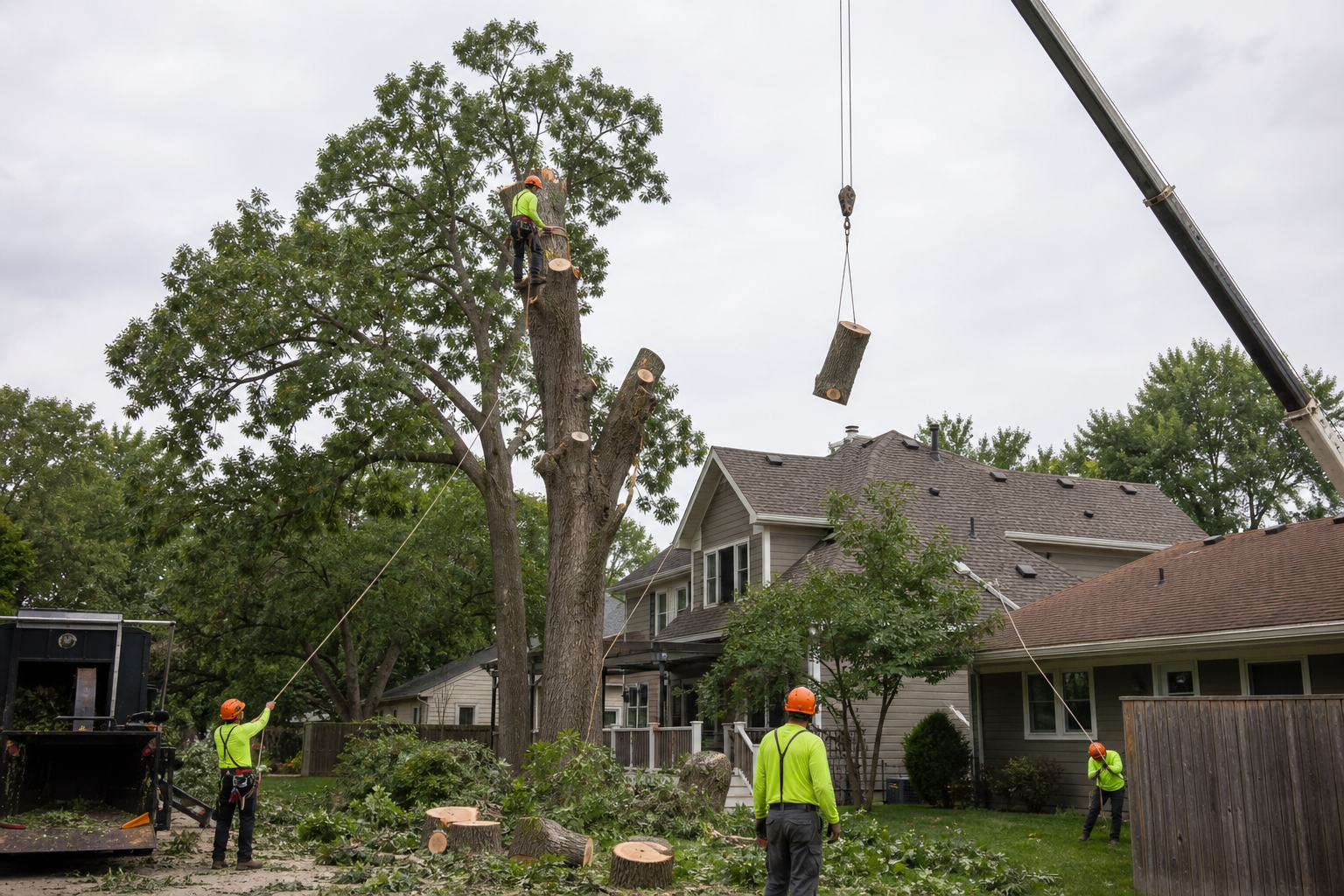
Any tree over 6 metres tall. Any work within 3 metres of power lines. Any excavation within a 1 metre radius of the base. All professional tree territory. So too anything for which you'd ever need to provide a formal risk assessment for insurance purposes or as part of a property sale, and that has to come from a certified arborist, not a guess. Homeowners without the training, rigging, or insurance to safely manage large specimens near a driveway, a wall or a house are better off getting a licensed local operator to do it than having a crack. The cost of getting it wrong - a damaged structure, an injury, a tree that fails in the wrong direction - dwarfs the cost of paying someone qualified to do it once, correctly.
Keeping ahead of it
Most emergency tree situations near structures didn't start as emergencies. They started as a small crack that got ignored for three years.
Deep, infrequent watering encourages roots to grow down rather than sideways along the surface where they cause the most hardscape damage. A yearly layer of mulch over the root zone protects shallow feeder roots and reduces moisture stress, which in turn reduces how hard a tree needs to push its roots outward searching for water. Keeping vehicles and heavy equipment off the root zone prevents the compaction that quietly kills roots from below. And a yearly inspection - walking the driveway, checking the base of retaining walls, glancing at door and window frames - catches the hairline crack while it's still just cosmetic.
None of this is complicated. It's just easy to skip until the concrete's already lifted.
A tree near a driveway, wall, or foundation isn't automatically a problem. Left unmanaged, with the wrong species in the wrong spot and no maintenance routine behind it, it's really only a matter of time.