Not Every Tree That Worries You Needs to Come Down
Learn when a worrying tree may not need removal, how to spot common risks, and which pruning, monitoring, or maintenance options can help preserve it.

Drive past a property a year or two after a big tree has come down, and the change is usually obvious, even without knowing what stood there. The light falls differently across the lawn. There's a patch of sky where there used to be a canopy, and it looks less like an improvement than an absence, the way a room looks after a piece of furniture that had been there for decades is finally gone. Somewhere under the grass is a stump ground down to below mower height, already forgotten. Nobody who lives there now goes back and asks whether the tree actually had to go. Once it's down, the question has no answer left to give it.
Worry is not evidence, though it rarely feels that way in the moment. The trees that frighten their owners and the trees that are actually failing are two circles that overlap less than most people assume. A tree can be perfectly sound and still look like a threat every time the wind picks up. A tree can also be failing quietly, from the inside, while giving its owner no reason at all to suspect it. Confusing the two is understandable. It is also how a lot of healthy, decades-old trees end up as firewood.
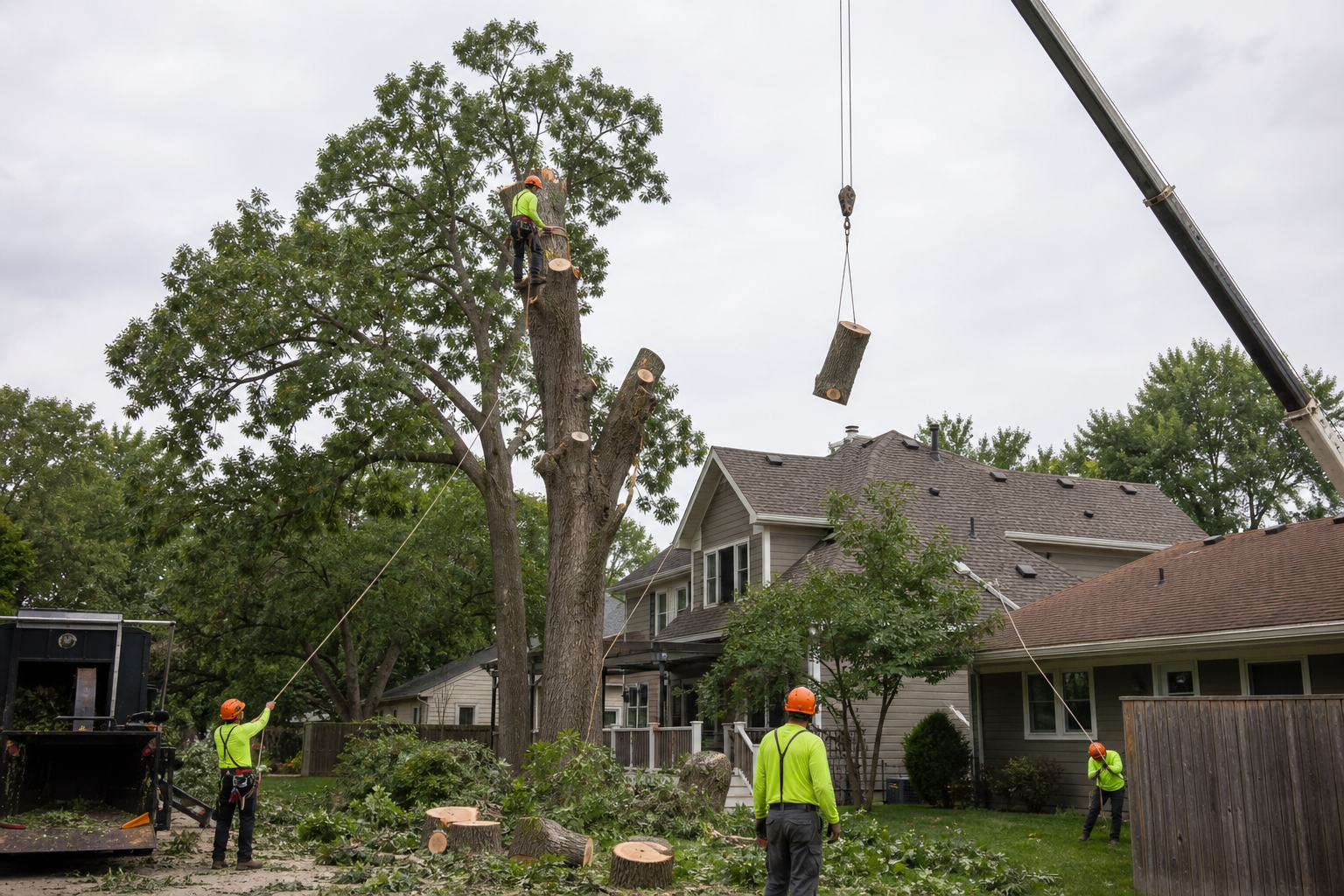
Some trees genuinely do have to come down, and honesty about what that looks like matters more than sentiment. Substantial decay at the trunk base or root collar. A root plate that has visibly heaved or cracked the soil around it. A crown that's lost more than half its living wood. Structural failure already in progress — a trunk that's split, not just cracked in the bark. The Arbor Day Foundation offers a rough rule of thumb here: a tree more than about half dead or damaged is usually past saving, and calling in the work is the responsible choice rather than the sentimental one. It's a rule of thumb, not a law of physics, but a reasonable one — it draws a boundary around what real danger looks like instead of leaving it to imagination.
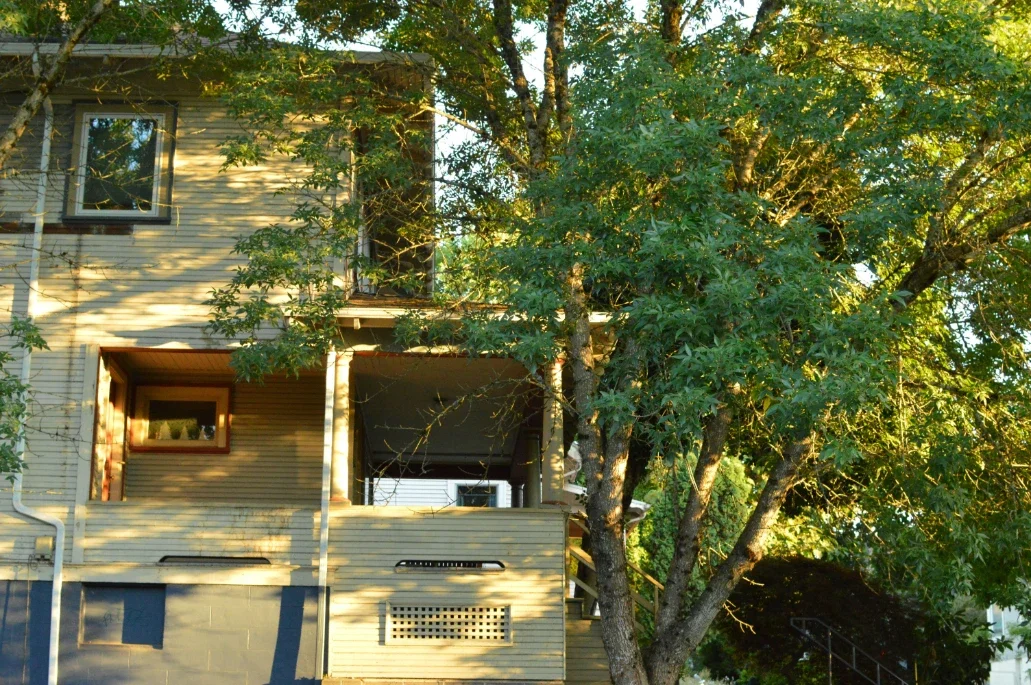
Then there's the far larger group: the alarming tree that is fine. The lean that's been there since long before the current owner moved in, growing at the same angle every year because it's simply how that tree has always grown. Surface roots that look dramatic and are just how a shallow-rooted species anchors itself. A hollow in the trunk that isn't load-bearing.
A season of unusually heavy seed drop, mistaken for a tree in decline. A big limb over the roof that has held its own weight for forty years and shows no reason to stop. The tree that "moved" more than usual in a storm that moved every tree on the street.
The third kind, and by far the most common, is the tree nobody can call correctly just by looking at it. Decay is often internal, invisible from outside until it isn't. Roots are underground, doing whatever they're doing where no one can see.
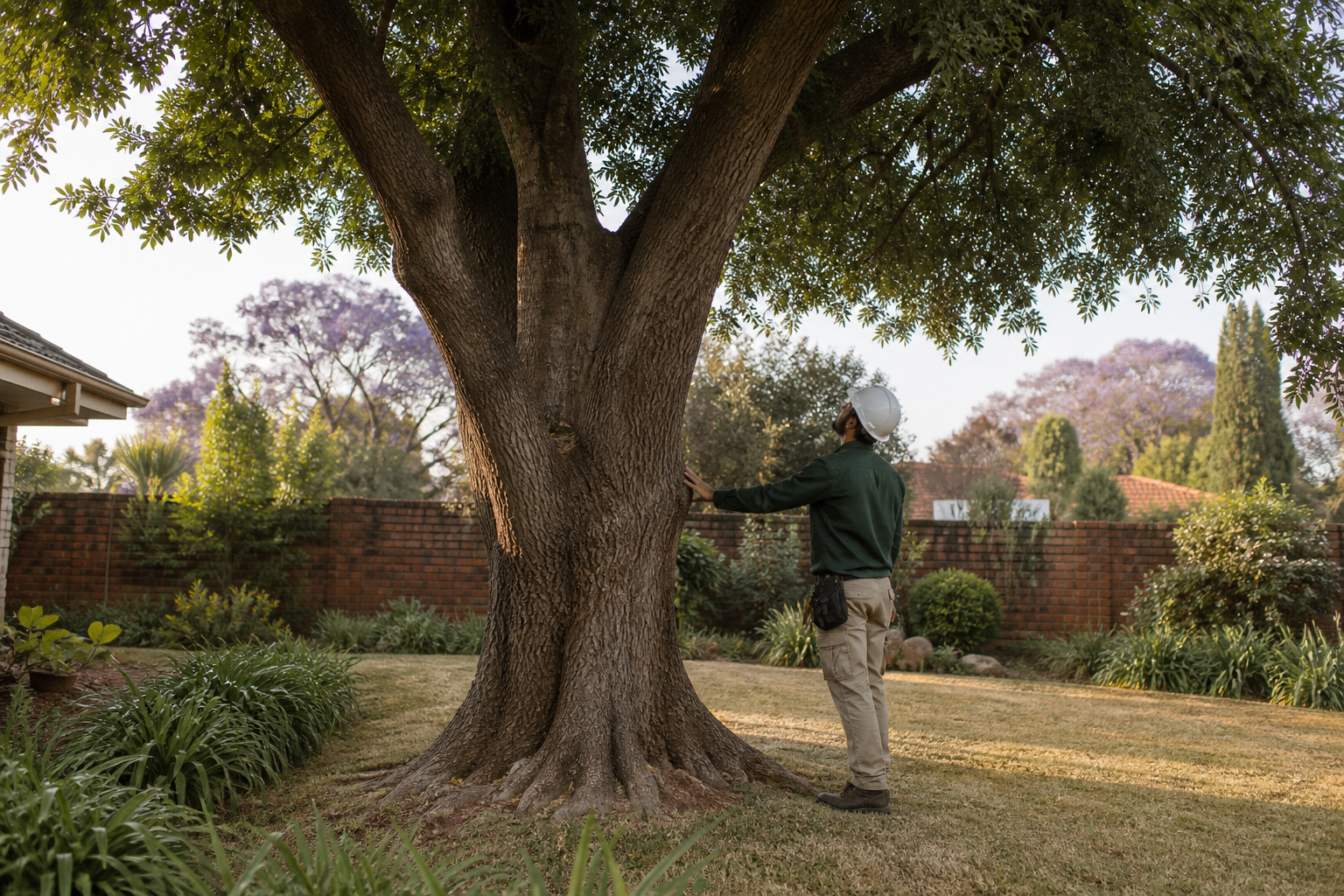
A proper look means sounding the trunk for the hollow note that gives decay away, checking the root collar by hand rather than by eye, and going up into the crown instead of squinting at it from below — sometimes with a drill that reads density. The part of the crown most likely to fail is sixty feet up and backlit, no more visible from a sidewalk than from a ladder. The University of Maryland Extension publishes a decision framework along these lines for homeowners working through exactly this uncertainty — and its existence says something on its own: this isn't a judgment call most people are equipped to make from the ground, on the strength of a look.

Which is where the real problem starts. Most owners can't sort their own tree into one of these three groups with any confidence, and I've never met a stranger who could do it either, in five minutes, from a driveway. That isn't a failure of intelligence on anyone's part. It's a failure of vantage point. Nobody can see root-collar decay through soil, and nobody can see internal decay through bark, no matter how many trees they've looked at before.
Most people in tree work are honest, careful, and good at what they do. But the first person a worried owner asks is usually someone whose business grows if the answer is "remove it," and no one's judgment, however good their intentions, survives that structure perfectly every time. The issue is the incentive, not the character of the person doing the assessment.
The closest thing to a safeguard isn't expertise the homeowner doesn't have. It's a second look from someone accountable for what they say. Ideally, that means an assessment from someone with no financial stake in the outcome at all — a consulting arborist on a flat fee, or a university extension service; the ones I've watched go well started there. At minimum, it means a second opinion, plus some way of knowing who that second opinion really belongs to. Liability insurance that can be verified rather than just claimed. Finished work that can be checked with the people it was done for.
The International Society of Arboriculture maintains a directory of arborists for exactly this reason. Verifying any of it is tedious — a phone call to an insurer, a call to the last homeowner who used them — which is why almost nobody bothers. In South Africa there is at least one version where the checking happens further upstream: a South African example where insurance and references are checked before anyone is sent out to a job, matching homeowners to contractors only once that vetting is already done, not left to be sorted out under pressure. That's the general shift: checking moves off the worried owner and onto whoever does the matching.
When two opinions genuinely disagree, the useful move is to ask each person what they actually saw, not what they'd charge to fix it. One arborist's case for removal usually rests on something specific — a probe that sank further than expected, a crack that's widened since last season — and asking for that evidence in plain terms is more useful than accepting a verdict on its own. A tree one person wants gone and another wants to monitor through the next growing season is usually, in practice, a tree worth watching for a season rather than removing on the spot. Two answers that far apart are themselves a finding: the tree sits closer to the line than either opinion says on its own.
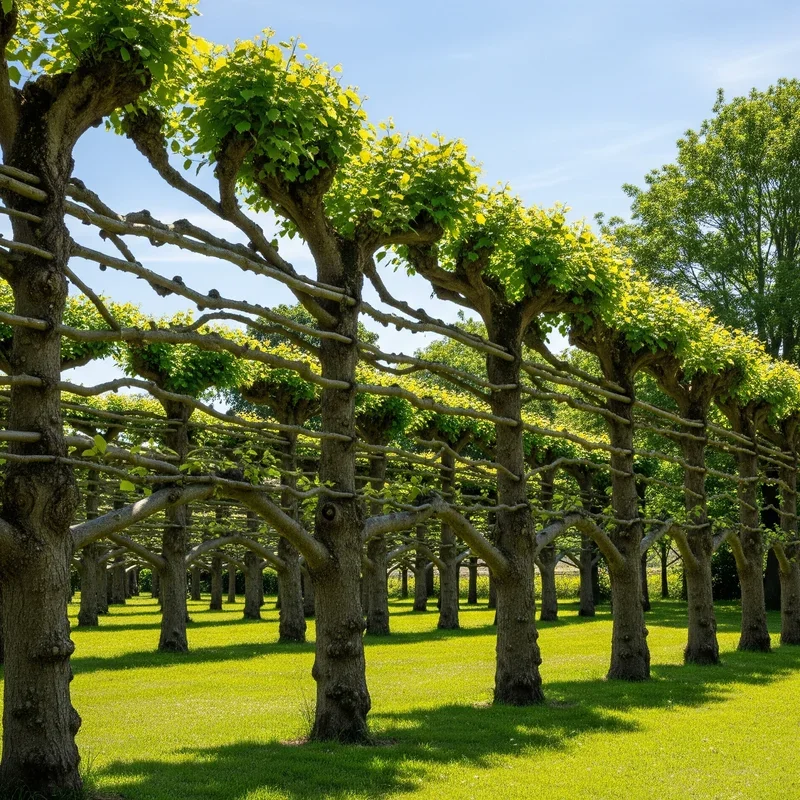
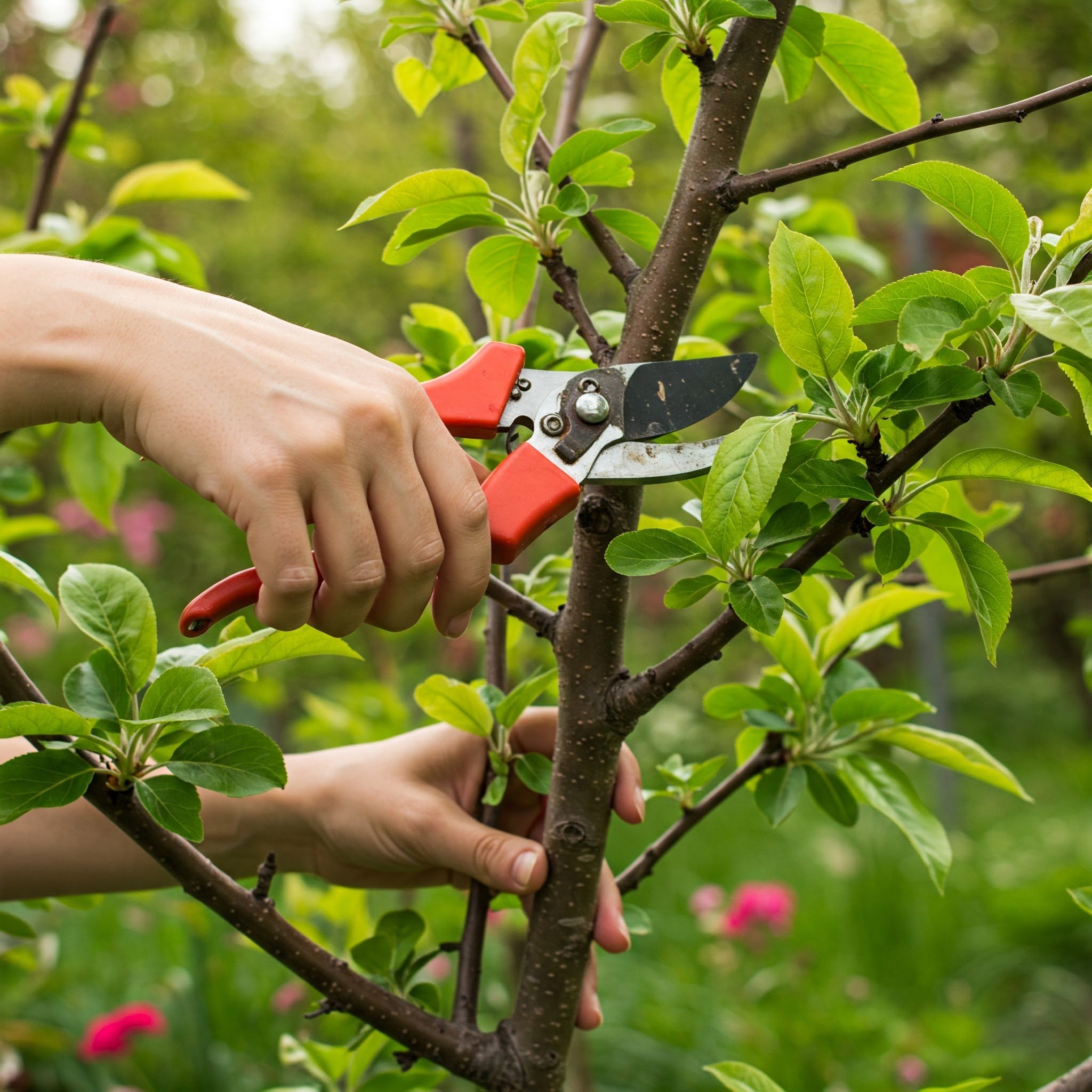
Removal also gets treated as the only real option because it's the simplest thing to describe and the easiest thing to sell. But most worrying trees land somewhere short of the stump. Crown reduction takes weight off a tree that's structurally sound but carrying more canopy than its root system comfortably supports. Cabling and bracing give a questionable limb something to lean on instead of removing it outright. Selective pruning can shift load away from a weak union without touching the rest of the crown. And sometimes the honest answer is simply to watch a tree for a year before deciding anything at all. Each of these is a legitimate outcome on its own terms.
A mature tree can't be undone and replaced on any timescale that matters to the person who made the call. What replaces it is a sapling and several decades. Every other yard decision can be revisited. This one can't. Waiting a season costs nothing but time; a tree that took longer to grow than most people live in the house doesn't come back at all.
The empty patches of sky are the part nobody goes back to. Behind most of them is a worried owner who asked one person, got one answer, and never got a second look. Worry is a reasonable thing to feel about a tree. It's a reason to ask. It was never, on its own, a reason to cut.