15 Woodland Garden Path Ideas for a Magical Outdoor Space
Transform your garden with enchanting woodland path ideas featuring natural materials, stepping stones, and whimsical designs for magical spaces.
Have you ever wandered through a forest and felt that unmistakable sense of wonder as sunlight filters through the canopy above? Creating a woodland garden path brings that same enchantment right to your backyard, transforming ordinary outdoor spaces into magical retreats. These pathways do more than just guide your feet from one point to another; they tell stories, create atmosphere, and invite exploration into nature's embrace. Whether you're working with a sprawling garden or a cozy corner, woodland paths offer endless possibilities for creativity and connection with the natural world. From moss covered stepping stones to bark mulch trails, each design choice adds character and charm. The beauty lies in how these paths seamlessly blend functionality with aesthetics, making every stroll through your garden feel like an adventure.
1. Rustic Bark Mulch Pathway
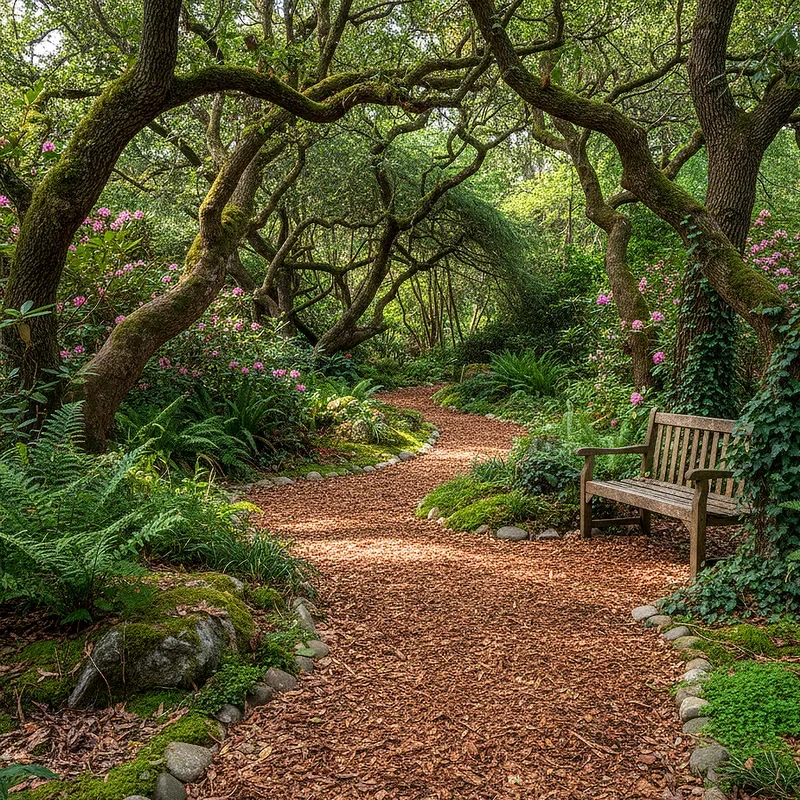
Bark mulch creates one of the most authentic woodland experiences you can bring to your garden space. This natural material cushions every footstep while releasing that wonderful earthy scent that instantly connects you with nature. You'll find bark mulch incredibly forgiving on the budget and remarkably simple to install yourself. The texture provides excellent drainage during rainy seasons and gradually decomposes to enrich your soil over time. Consider edging your bark path with fallen logs or large rocks to maintain clean boundaries and prevent the mulch from spreading into surrounding garden beds. The warm brown tones complement virtually any planting scheme, from vibrant hostas to delicate woodland wildflowers. Refresh your bark mulch annually to maintain its appearance and functionality, creating a perpetually welcoming pathway through your garden sanctuary.
2. Moss Covered Stepping Stones
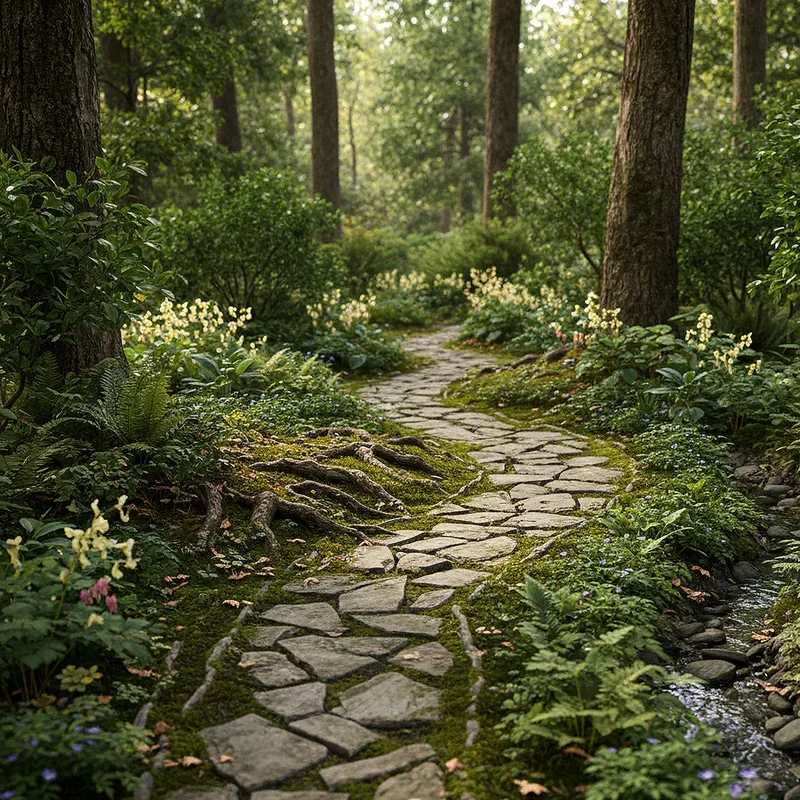
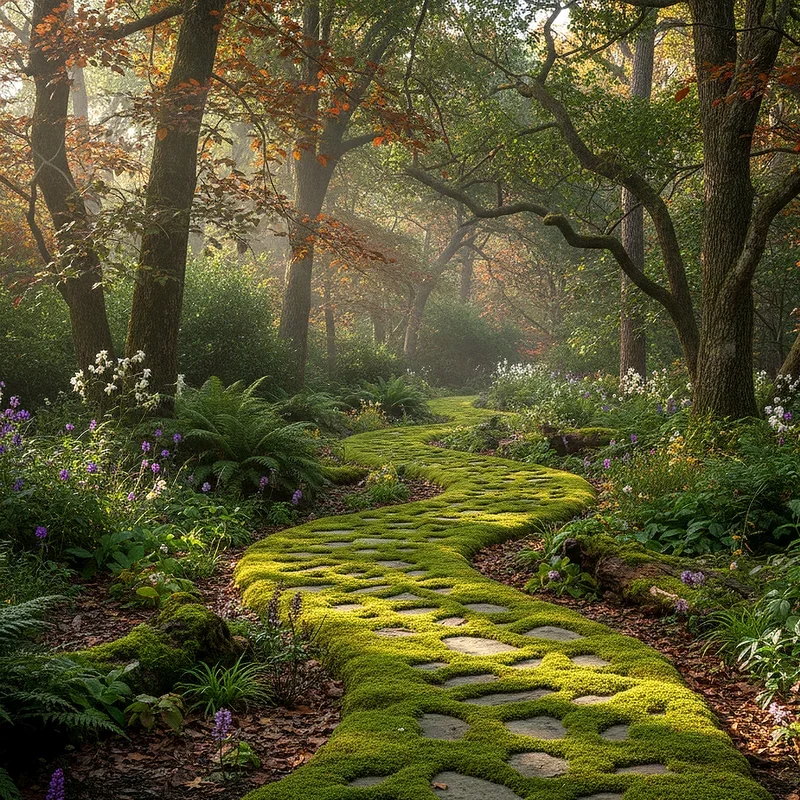
Nothing captures woodland magic quite like stepping stones embraced by velvety moss growth. These stones create natural focal points while the moss weaves between them like nature's own living carpet. Select flat stones with interesting shapes and textures, then position them strategically to create a meandering journey through your garden. The spacing between stones invites a slower, more mindful pace as you navigate from one to another. Moss thrives in shaded, moist conditions, making this design perfect for areas beneath tree canopies where grass struggles to grow. You can encourage moss growth by keeping stones damp and applying buttermilk or yogurt mixtures to accelerate colonization. The contrast between solid stone and soft moss creates visual poetry that changes beautifully with the seasons and weather conditions throughout the year.
3. Reclaimed Wood Plank Walkway
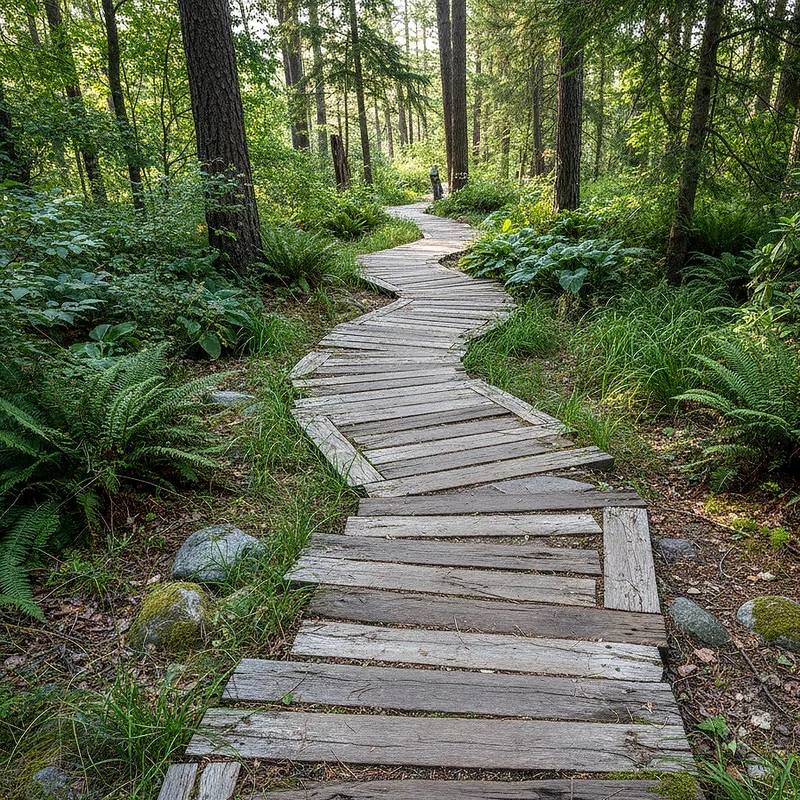
Reclaimed wood planks bring rustic character and sustainable beauty to your woodland garden path design. These weathered boards tell stories of their previous lives while creating sturdy, attractive walkways through your outdoor space. The varied patina and grain patterns of aged wood add instant character that new materials simply cannot replicate. Installing planks over a gravel base ensures proper drainage and extends the lifespan of your wooden pathway significantly. You might arrange planks lengthwise for a traditional boardwalk feel or crosswise for visual interest and textural variety. The natural silvering process that occurs as wood ages adds to the authentic woodland aesthetic over time. Mixing different wood widths creates a more organic, collected over time appearance that feels perfectly at home among the trees and ferns.
4. Natural Stone Gravel Trail
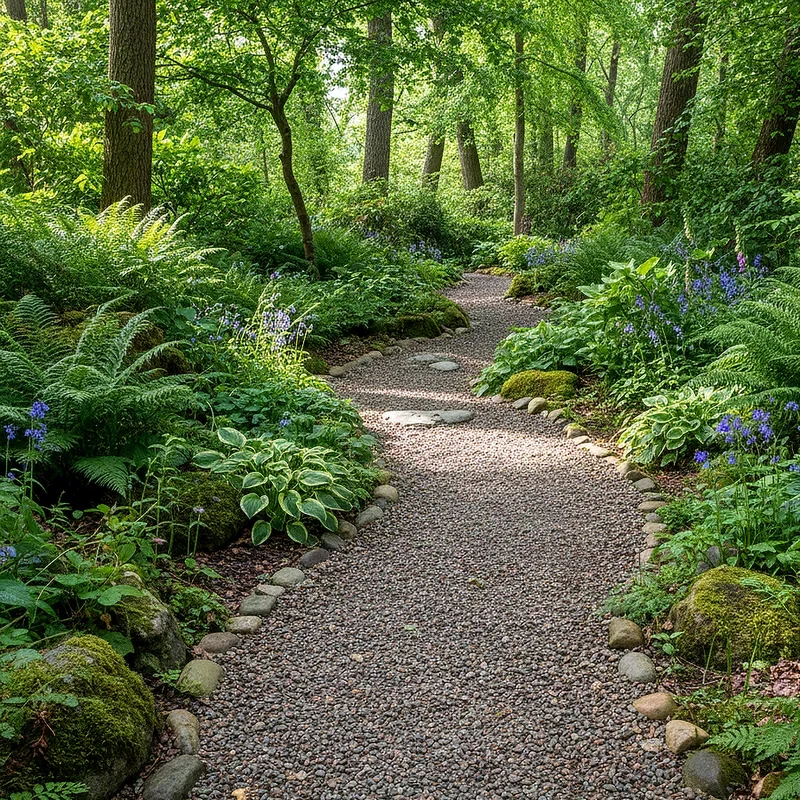
Crushed stone gravel offers a classic woodland path solution that crunches satisfyingly beneath your feet with every step. This permeable material handles drainage beautifully while deterring weeds and providing a neutral backdrop for surrounding plantings. Choose from various stone colors ranging from warm honey tones to cool gray hues that complement your existing landscape palette. The informal texture of gravel paths suits winding routes that curve naturally around trees, boulders, and garden features. Edge your gravel trail with larger stones, bricks, or metal edging to maintain crisp boundaries and prevent stones from migrating. This low maintenance option requires occasional raking to maintain an even surface and periodic additions to replace settled material. The simplicity of gravel paths allows your plantings to take center stage while providing reliable all weather accessibility.
5. Flagstone and Fern Combination
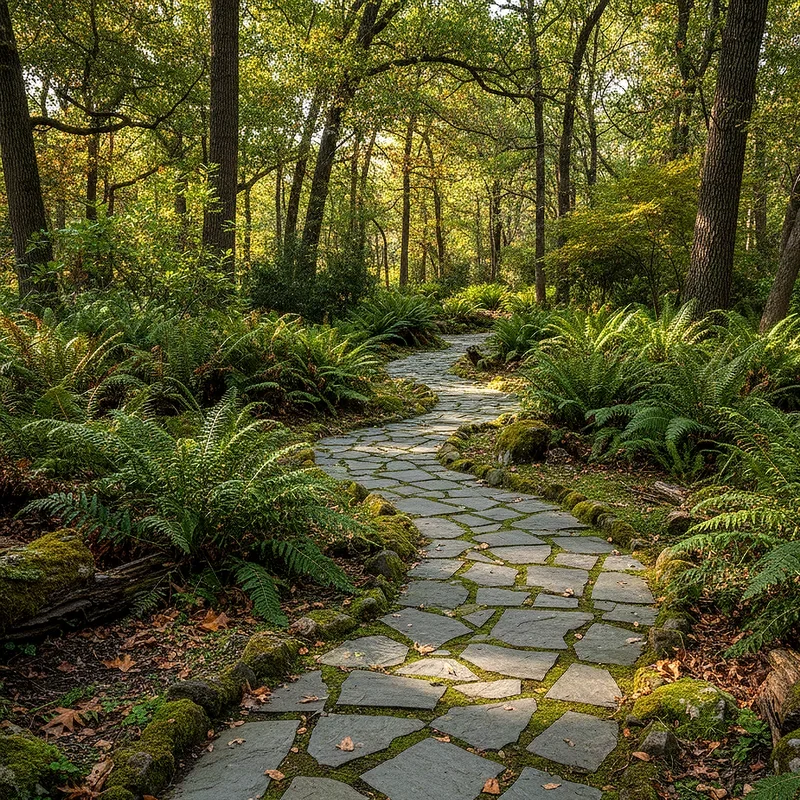
Large irregular flagstones interspersed with delicate ferns create a stunning study in contrasts along woodland garden paths. The solid permanence of stone plays beautifully against the soft, feathery texture of fern fronds swaying gently. Position flagstones with generous gaps between them, allowing ferns and other shade loving plants to colonize the spaces naturally. This living path design changes with the seasons as ferns unfurl in spring, flourish through summer, and fade gracefully in autumn. The varied sizes and shapes of flagstones add visual interest while creating a puzzle like pattern that draws the eye forward. Choose local stone varieties whenever possible to ensure your path feels rooted in the regional landscape and natural geology. This design works particularly well in partially shaded areas where ferns receive the dappled light they love most.
6. Pine Needle Carpet Path
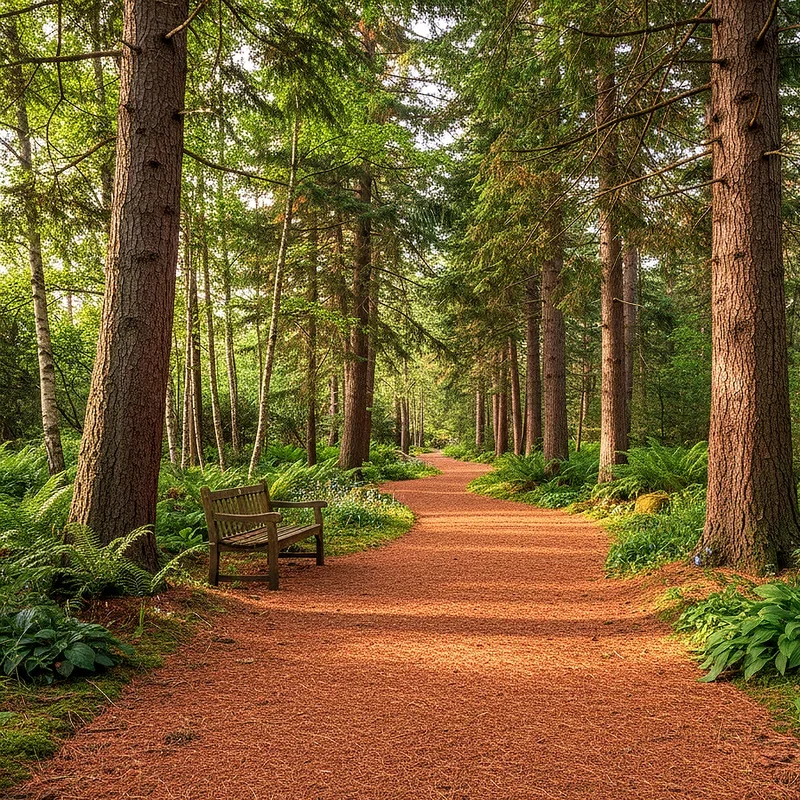
Pine needles create an extraordinarily soft, fragrant pathway that epitomizes the woodland walking experience perfectly. This free material accumulates naturally beneath pine and conifer trees, providing ready made path surfacing that requires minimal processing. The acidic nature of pine needles benefits acid loving plants like azaleas, rhododendrons, and blueberries growing alongside your path. Rake needles into a thick layer for maximum cushioning and weed suppression throughout your walking trail. The golden brown color glows beautifully when sunlight filters through the tree canopy above your pathway. Pine needle paths require regular replenishment as the material decomposes relatively quickly, enriching your soil in the process. This organic option costs absolutely nothing if you have access to pine trees and creates authentic woodland ambiance instantly.
7. Log Slice Stepping Stones
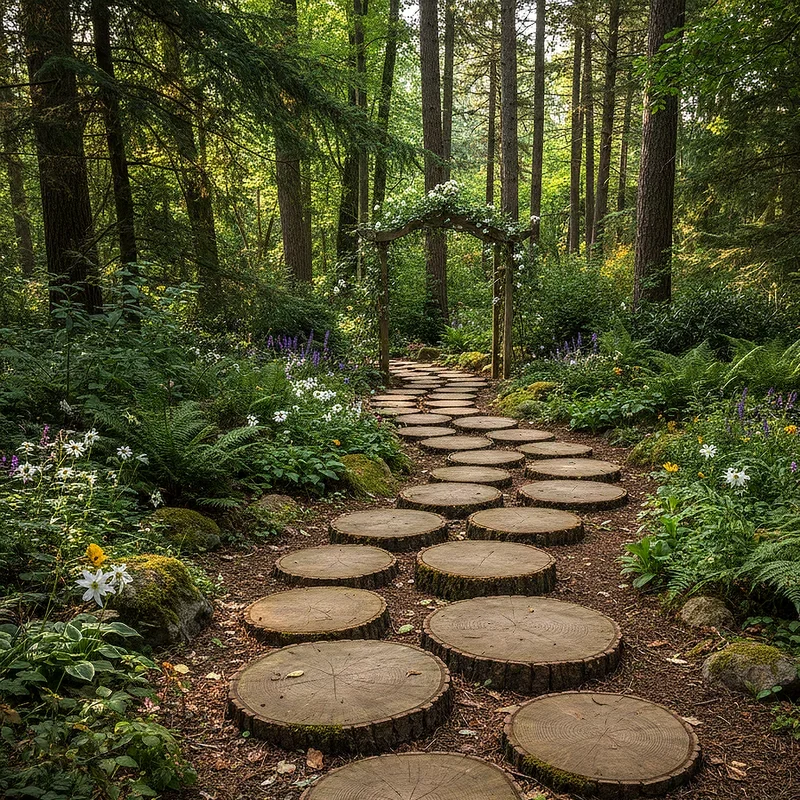
Cross cut log slices arranged as stepping stones bring whimsical charm and natural beauty to woodland garden designs. Each round displays unique growth rings that tell the tree's history while creating functional path elements. Treat log slices with natural sealers to extend their lifespan and prevent rapid decomposition in wet conditions. Vary the sizes of your log rounds to create visual rhythm and accommodate different stride lengths comfortably. Set slices slightly into the ground to prevent wobbling and ensure stable footing in all weather conditions. The circular shapes create pleasing organic patterns that contrast beautifully with angular plantings or straight garden bed edges. Fill gaps between log slices with pea gravel, moss, or low growing groundcovers for a cohesive, finished appearance.
8. River Rock Dry Creek Bed
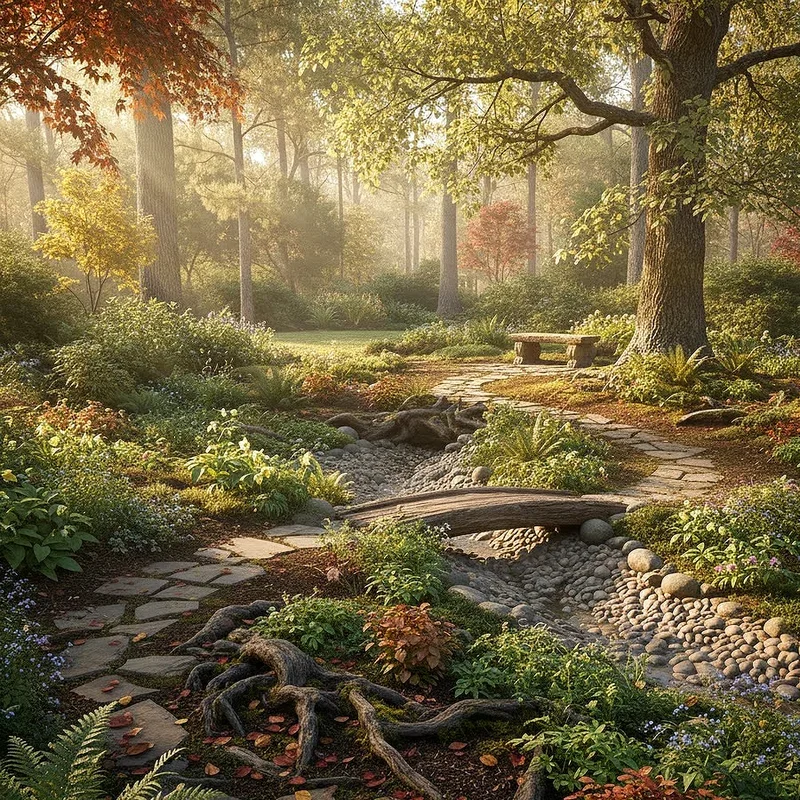
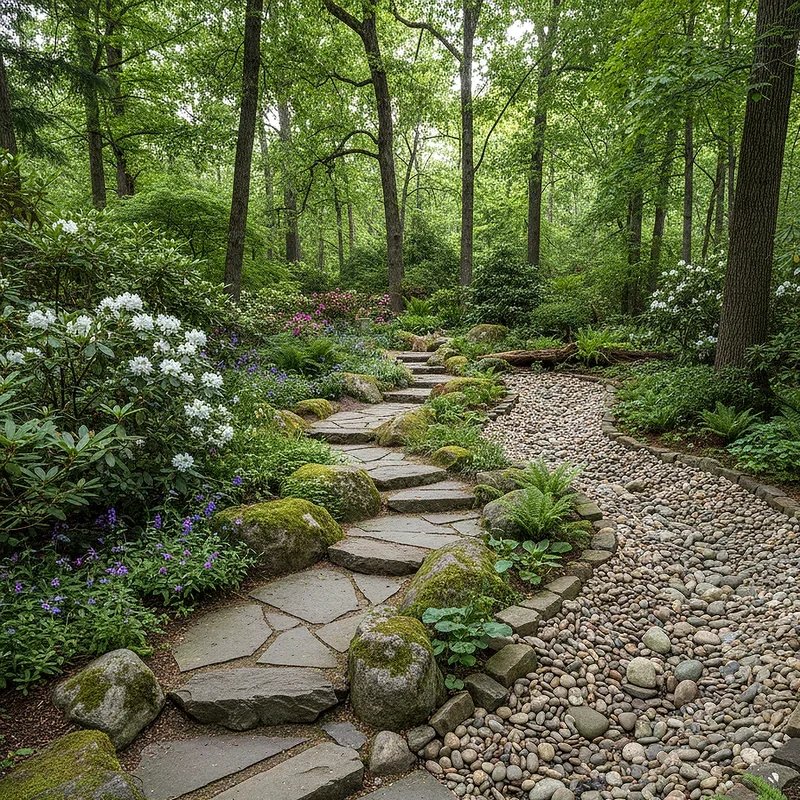
River rocks arranged to mimic a dry creek bed transform ordinary paths into naturalistic water features without actual water. This design technique adds movement and flow to your garden while providing excellent drainage during heavy rainfall. Select smooth rounded stones in various sizes, arranging larger boulders along the edges and smaller pebbles in the center. The undulating curves of a creek bed path create visual interest and encourage meandering exploration through your space. Plant moisture loving species along the edges to enhance the illusion of a sometimes flowing watercourse. This pathway style works brilliantly for managing runoff while creating striking visual appeal in your woodland garden. The varied textures and colors of river rocks catch light beautifully, adding sparkle and dimension to shaded areas.
9. Winding Brick Herringbone Pattern
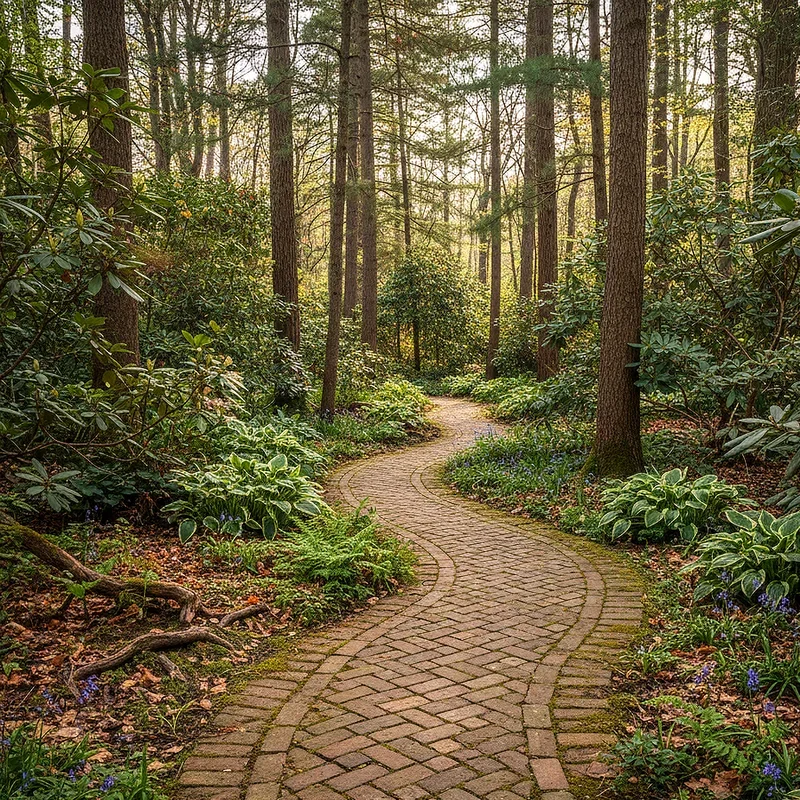
Traditional brick laid in classic herringbone patterns brings formal elegance to informal woodland garden settings beautifully. The repetitive zigzag design creates strong visual interest while guiding the eye along the pathway's journey. Reclaimed bricks add instant age and character, their weathered surfaces blending seamlessly with natural surroundings. The interlocking pattern provides excellent stability without requiring mortar, allowing for flexibility as ground shifts with seasons. Curved brick paths require careful planning and cutting but reward you with graceful lines that soften the geometric pattern. Allow moss to colonize brick joints naturally, creating that coveted aged appearance that enhances woodland authenticity. This durable option withstands heavy foot traffic while maintaining its beauty for decades with minimal maintenance required.
10. Woodland Chip and Edging Design
Wood chips combined with defined edging creates clean lined paths that feel both natural and intentionally designed. Choose edging materials like steel, stone, or thick branches to contain chips and create strong visual boundaries. Fresh wood chips release pleasant forest scents while providing cushioned walking surfaces that feel gentle on joints. The light color of new chips brightens shaded areas, gradually darkening as they age and decompose naturally. Layer chips generously to suppress weeds effectively and create substantial cushioning underfoot for comfortable walking. This economical option allows you to create extensive pathway systems without breaking your budget or back. Refresh wood chips annually or biannually to maintain appearance and functionality as older material breaks down.
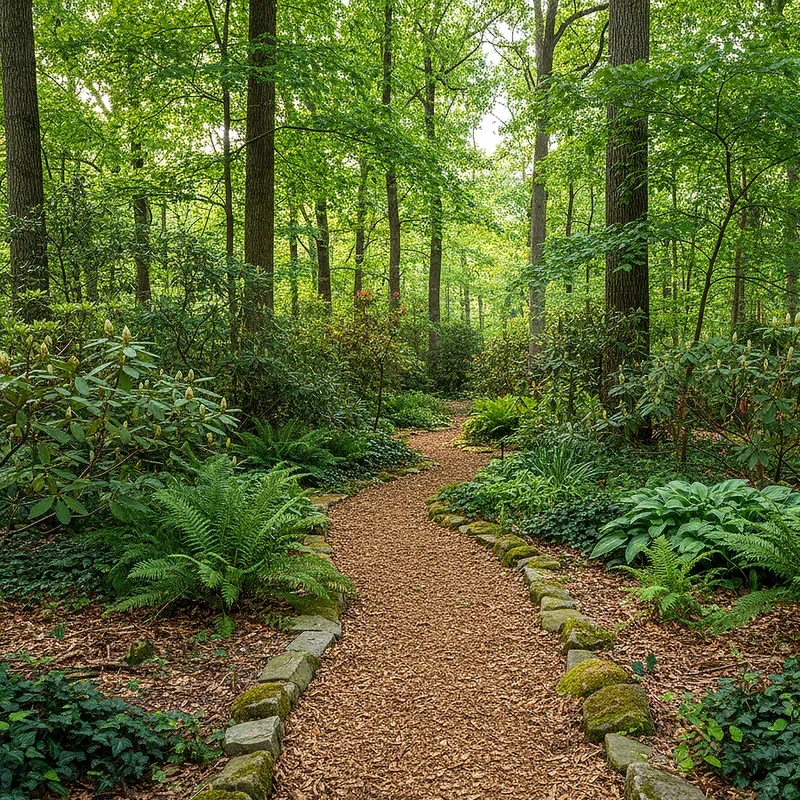
11. Cobblestone and Groundcover Mix
Traditional cobblestones paired with creeping groundcovers create timeless paths with living mortar between the stones. This combination offers durability and beauty while softening the hardscape with organic plant material throughout. Select drought tolerant groundcovers like creeping thyme or sedum that withstand occasional foot traffic without constant damage. The irregular surfaces of cobblestones add textural interest and historical character to contemporary garden spaces effectively. Install cobblestones on a sand base for proper drainage and easier future adjustments if needed. As groundcovers establish and spread, they'll create a tapestry of colors and textures that changes seasonally. This design works particularly well for paths that receive moderate traffic in partially sunny woodland garden areas.
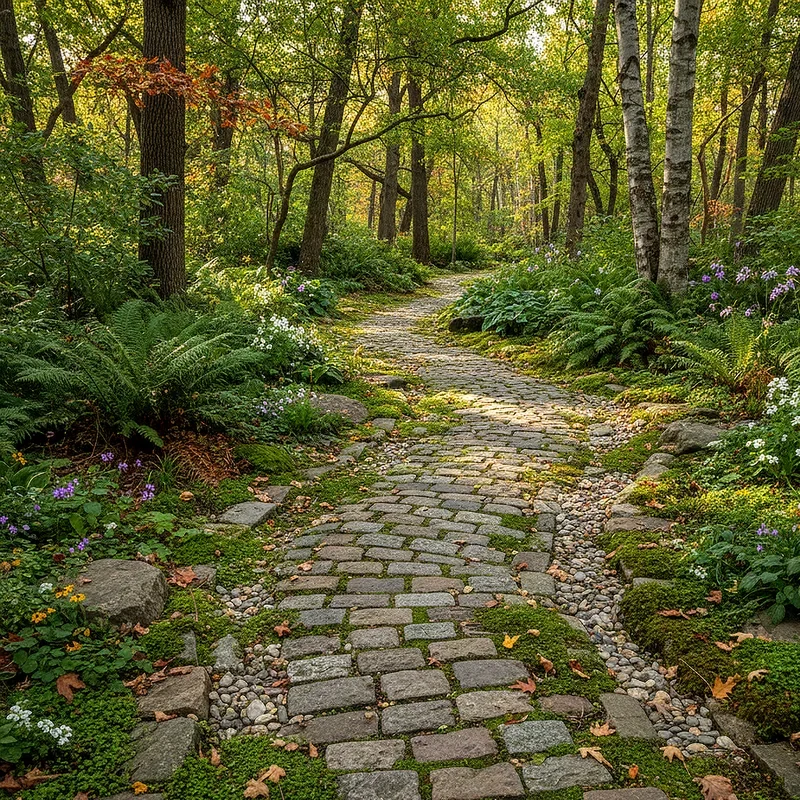
12. Sunken Stone Slab Pathway
Large stone slabs set flush with the surrounding ground level create sophisticated paths that flow seamlessly through gardens. This installation technique requires more initial effort but produces remarkably clean, elegant results that last indefinitely. Choose thick slabs that won't crack under weight and won't shift once properly bedded in place. The smooth surfaces make these paths accessible for all abilities while maintaining visual interest through natural stone variations. Sunken slabs allow lawn mowers to pass over easily, simplifying maintenance in areas where grass meets pathway. Fill joints between slabs with sand, gravel, or allow moss and tiny plants to colonize naturally. This professional looking option elevates your woodland garden's overall design while providing practical, durable pathways for daily use.
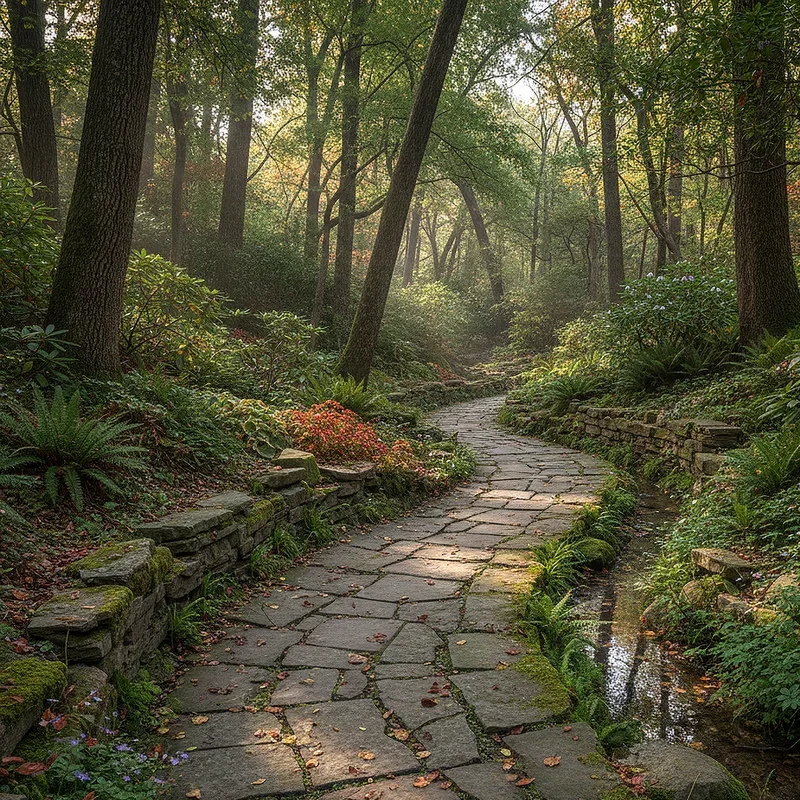
13. Crushed Shell Forest Trail
Crushed shells create luminous pathways that seem to glow in shaded woodland gardens, reflecting available light beautifully. This coastal material brings unexpected elegance to forest settings while offering excellent drainage and weed suppression. The white or cream tones brighten dark corners where sunlight struggles to penetrate dense tree canopies. Shells compact nicely underfoot, creating firm surfaces that resist rutting and erosion better than loose materials. The calcium rich composition benefits surrounding plants as shells gradually break down and enrich your soil. Edge shell paths clearly to maintain their striking appearance and prevent shells from scattering into surrounding areas. This unique material choice adds unexpected sophistication while maintaining the natural, organic feel essential to woodland garden design.
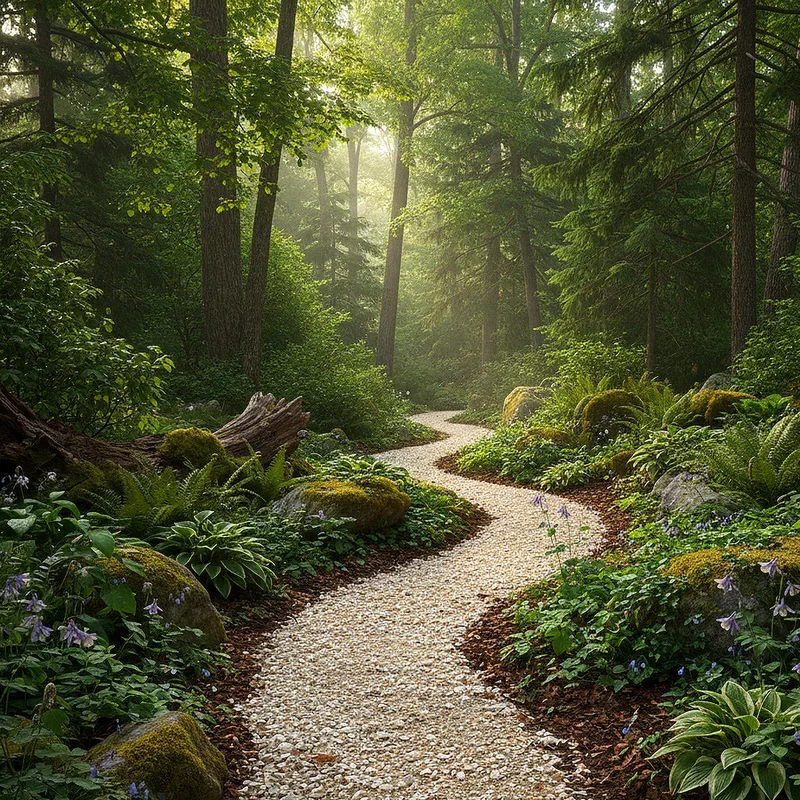
14. Mixed Material Mosaic Path
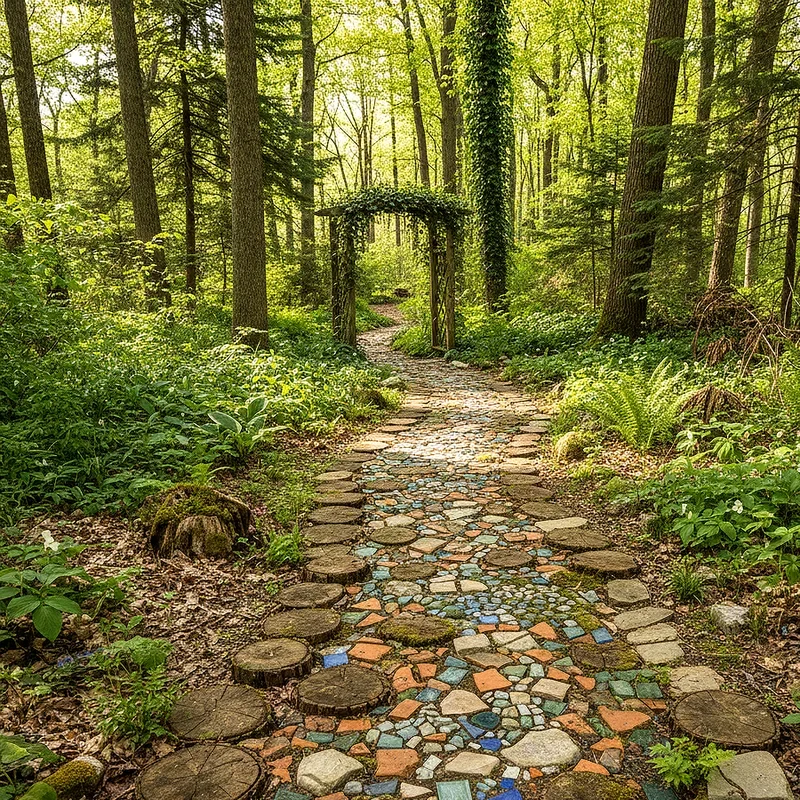
Combining various materials into mosaic style patterns creates artistic pathways that function as garden sculpture and walkway simultaneously. Experiment with combinations like stone, brick, tile, pebbles, and glass to create unique designs impossible with single materials. This approach allows you to incorporate salvaged and repurposed materials, adding personal history and sustainable practices to your design. Plan your patterns carefully or embrace spontaneous creativity, letting the path evolve organically as you build. Mixed material paths become conversation pieces that showcase your personality and artistic vision throughout your garden space. The varied textures provide sensory interest while colors and patterns guide visitors along your carefully crafted route. This labor intensive option rewards you with truly one of a kind pathways that express your individual style perfectly.
15. Living Grass and Stone Combination
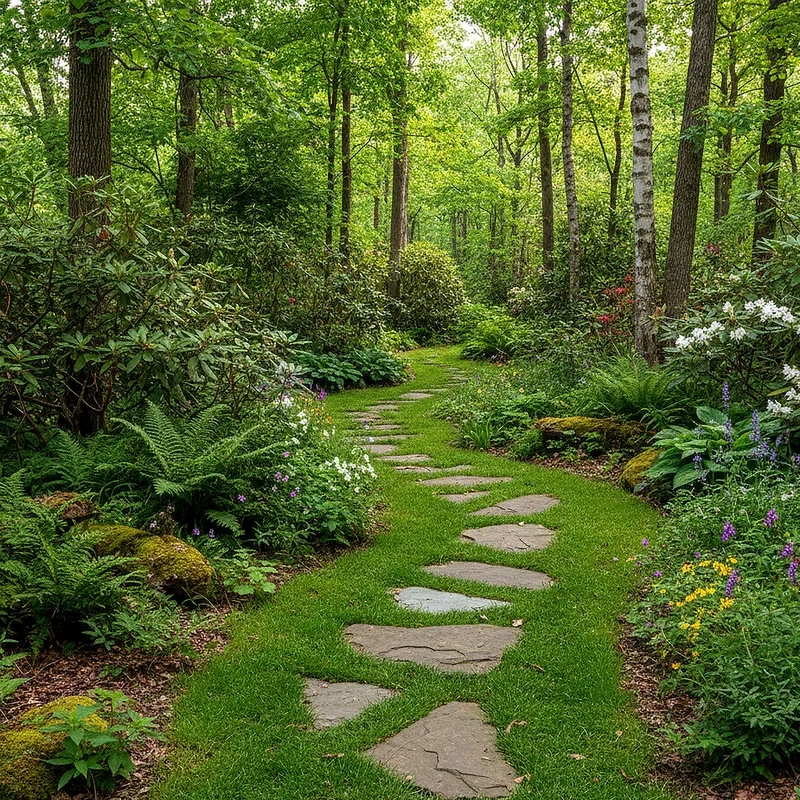
Grass strips alternating with stone pavers create dynamic pathways that blend hardscape and softscape elements harmoniously together. This design maintains green corridors for beneficial insects while providing stable footing in strategic locations along the route. Choose low maintenance grass varieties or even moss for shaded areas where traditional turf struggles to thrive. The contrast between solid stone and living plants creates visual rhythm that draws the eye forward naturally. This combination works beautifully in areas receiving moderate traffic where full paving seems excessive or visually heavy. Adjust paver spacing to accommodate your mower width for easier maintenance of grass strips between stones. The living elements soften the path while maintaining functionality and accessibility throughout changing seasons and weather conditions.
Conclusion
Creating a woodland garden path transforms your outdoor space into an enchanting retreat that beckons exploration and contemplation daily. Whether you choose simple bark mulch or elaborate stone mosaics, each pathway tells your unique garden story while connecting you more deeply with nature. These fifteen ideas offer starting points for designs that can be adapted, combined, and personalized to suit your specific landscape, budget, and vision perfectly. Remember that the most magical paths evolve over time, developing character as plants establish, materials weather, and moss colonizes surfaces naturally. Your woodland pathway isn't just about getting from point A to point B; it's about the journey itself and the moments of wonder you'll discover along the way.
Read next: 15 Woodland Garden Ideas to Create a Forest Feel
Frequently Asked Questions
Q1: What is the most budget friendly woodland garden path material?
A: Bark mulch and pine needles offer the most economical options for woodland garden pathways overall.
Q2: How do I prevent weeds from growing through my woodland path?
A: Install landscape fabric beneath materials and maintain thick mulch layers to suppress weed growth effectively.
Q3: Which pathway material works best in heavily shaded areas?
A: Moss covered stepping stones and pine needles thrive in shade and complement woodland garden aesthetics perfectly.
Q4: How often should I refresh organic pathway materials like wood chips?
A: Refresh organic materials annually or biannually depending on decomposition rates and desired appearance maintenance levels.
Q5: Can I combine different pathway materials in one garden design?
A: Absolutely, mixing materials creates visual interest and allows you to match different materials to specific garden areas.