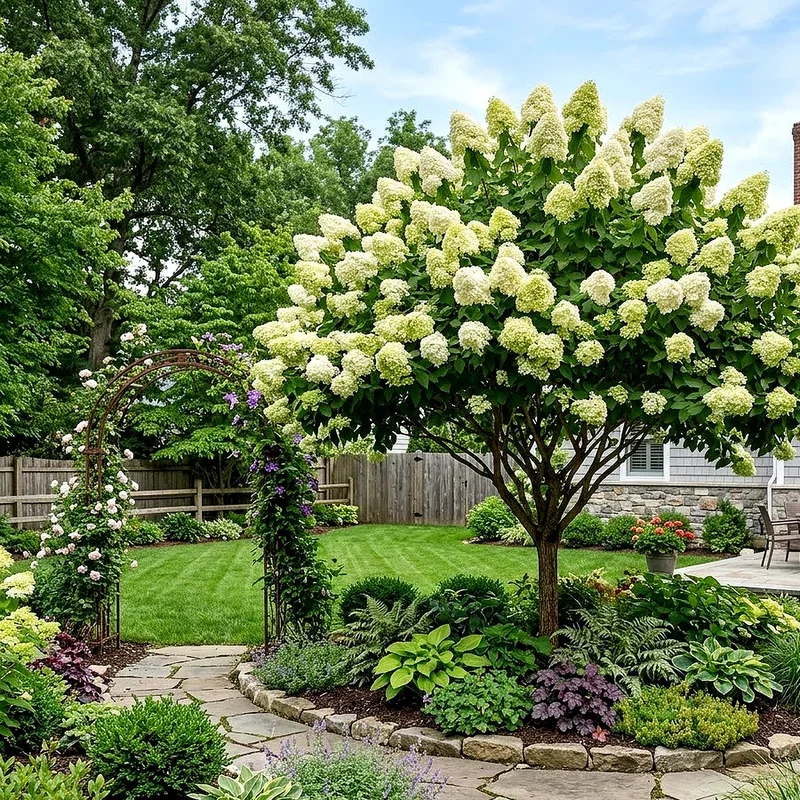
Discover 15 hydrangea tree landscaping ideas that turn any ordinary yard into a lush, blooming showpiece you will love all season long.
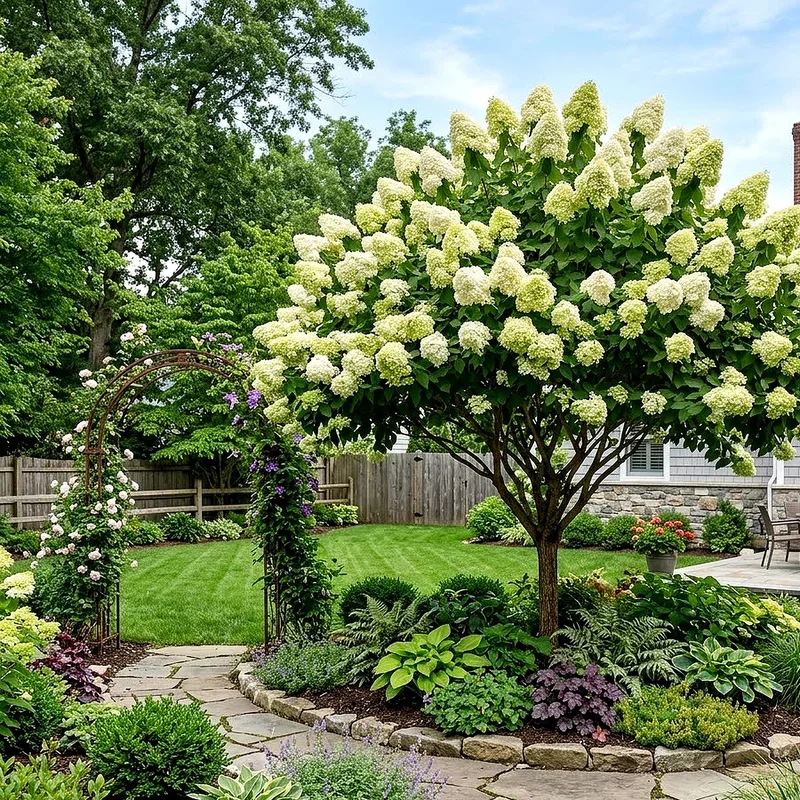
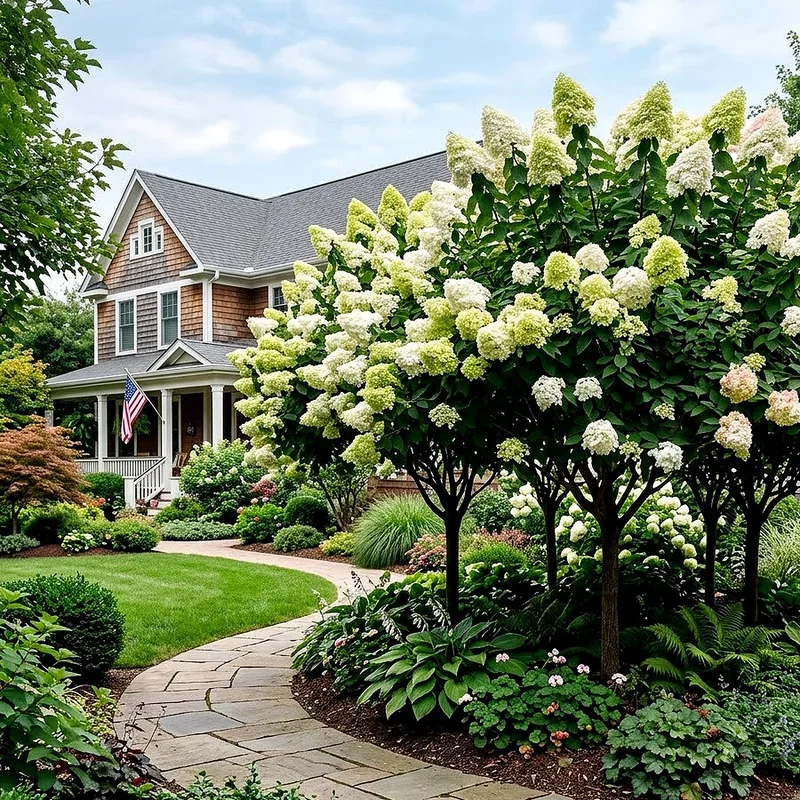
Let's be honest: most yards have potential they never quite live up to. You mow, you weed, you plant a few things, and somehow it still looks like every other lawn on the block. Hydrangea trees change that equation fast. Unlike the shrubby cousins crowding foundation beds everywhere, these are trained into a single trunk with a full round canopy on top, which means they bring height, structure, and enormous flower clusters without eating half your yard. They bloom from midsummer into fall, shift from cream to pink to rust as the season turns, and hold their shape through winter like sculpture. Best of all, they are forgiving. So where do you actually put one? That is the fun part.
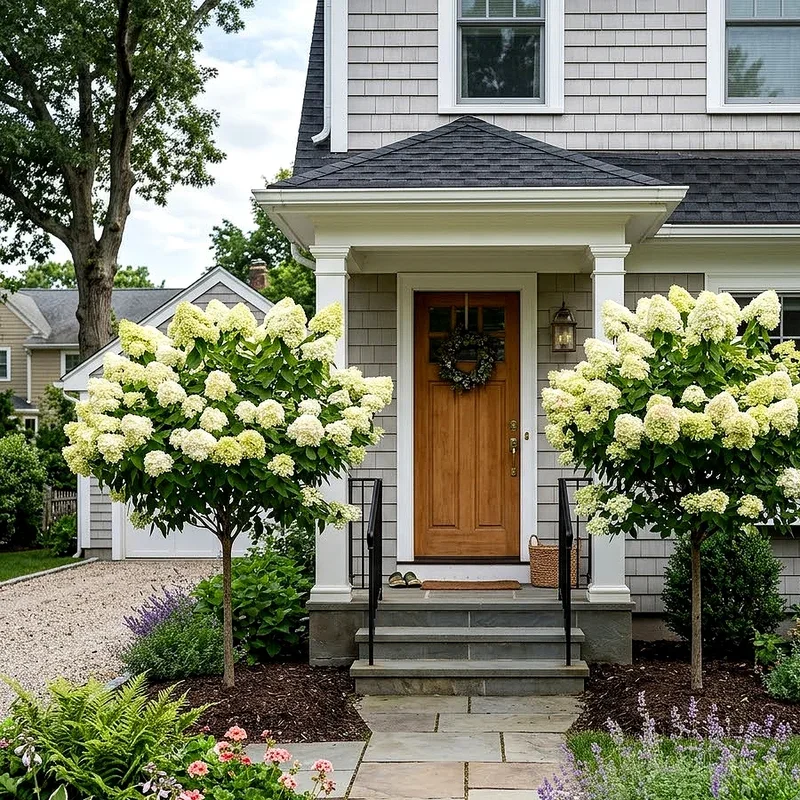
1. Frame Your Front Entry With a Matching Pair
Nothing says welcome quite like two hydrangea trees standing guard on either side of your front door. Think of them as the botanical version of a firm handshake, confident, balanced, and impossible to ignore. Plant matching specimens roughly four to six feet out from the porch so their canopies have breathing room as they mature. Panicle varieties such as Limelight or Quick Fire work beautifully here because they tolerate sun and hold their shape without flopping. Keep the trunks clean and the mulch rings tidy, and suddenly your entryway looks like it belongs in a design magazine. Want extra polish? Add low boxwood cubes at the base to ground the composition. Your guests will notice the difference before they even reach the doorbell, and honestly, so will you.
2. Build a Living Privacy Screen Along the Property Line
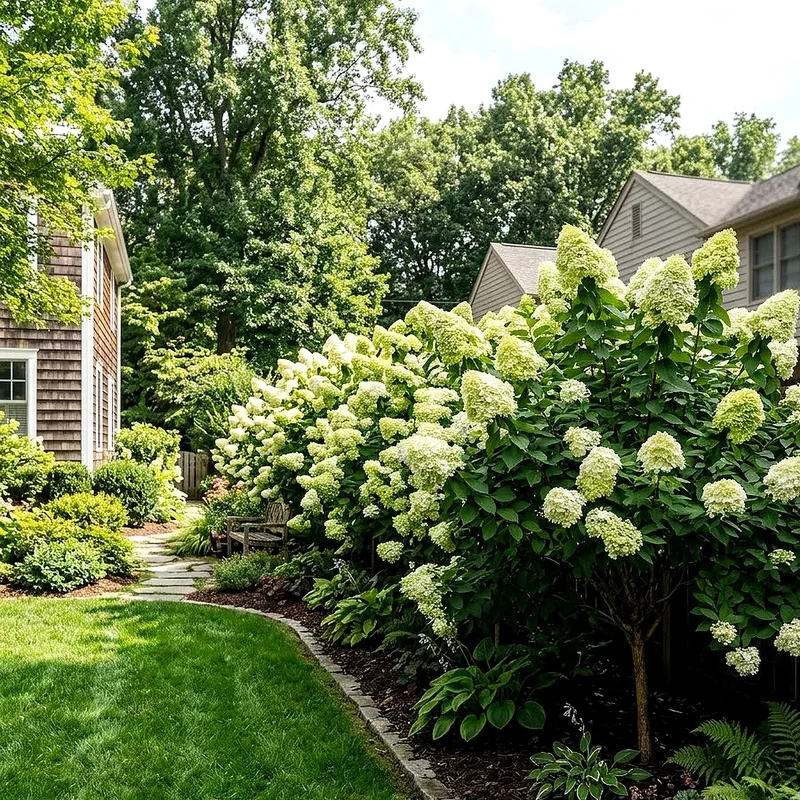
Fences do the job, but they never do it prettily. A staggered row of hydrangea trees gives you softness where a wooden panel gives you a wall. Space them about eight feet apart in a loose zigzag rather than a rigid line, and the overlapping canopies will knit together into a leafy curtain by midsummer. You get filtered privacy, pollinators, and blooms the size of dinner plates instead of splinters and peeling stain. Panicle types handle full sun and wind better than their bigleaf cousins, which makes them the smart pick for exposed property lines. Water deeply during the first two summers so the roots dig in properly. By year three, your neighbors will be admiring the view rather than watching your patio dinners unfold.
3. Turn a Single Tree Into a Backyard Focal Point
Every yard needs one thing your eye lands on first. A single hydrangea tree planted where the lawn opens up does that job better than any statue or birdbath, and it changes costume four times a year. Give it room to breathe, at least ten feet of clearance on all sides, so the shape reads as a sculpture rather than a crowded shrub. Circle the base with a generous mulch ring and resist the urge to plant anything busy nearby. Why compete with the star of the show? In July the canopy glows creamy white, by September it blushes pink, and in winter the bare branching pattern looks like ink drawn against snow. That is four seasons of interest from one plant.
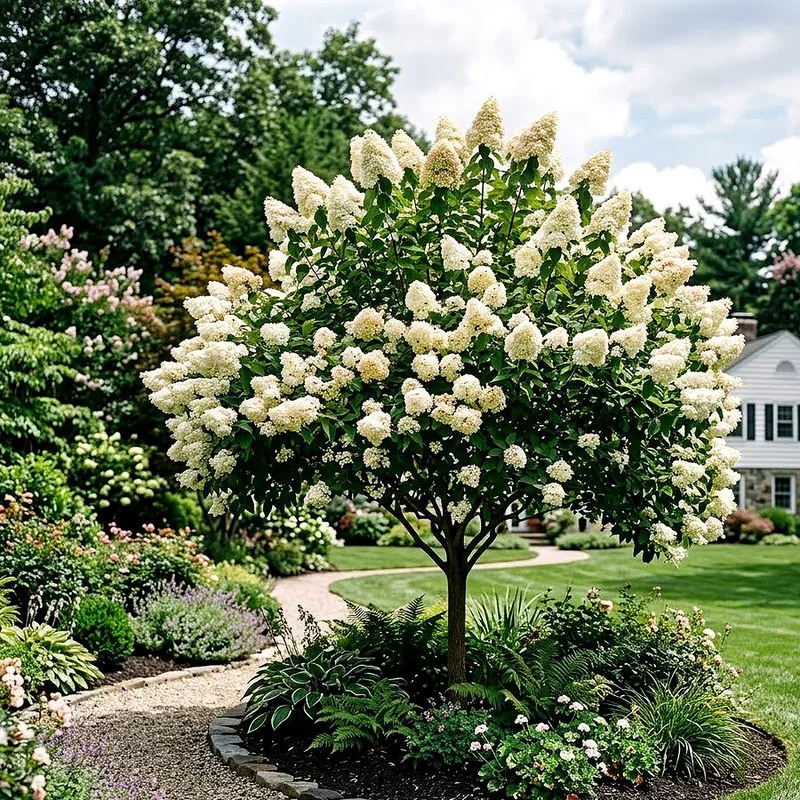
4. Line Your Driveway With a Blooming Corridor
A long driveway can feel like a runway to nowhere. Line it with hydrangea trees and it becomes an arrival. Set them roughly twelve feet apart and at least six feet back from the pavement so snowplows, car doors, and road salt do not become their enemies. The rhythm of repeated trunks pulls your gaze forward, the way fence posts pull your eye down a country road. Choose one cultivar and stick with it, because mixing varieties here scatters the effect instead of building it. Uplighting at the base turns the same corridor into something cinematic after dark. Come August, driving home means passing through a tunnel of blooms, which beats staring at cracked asphalt every single evening, does it not?
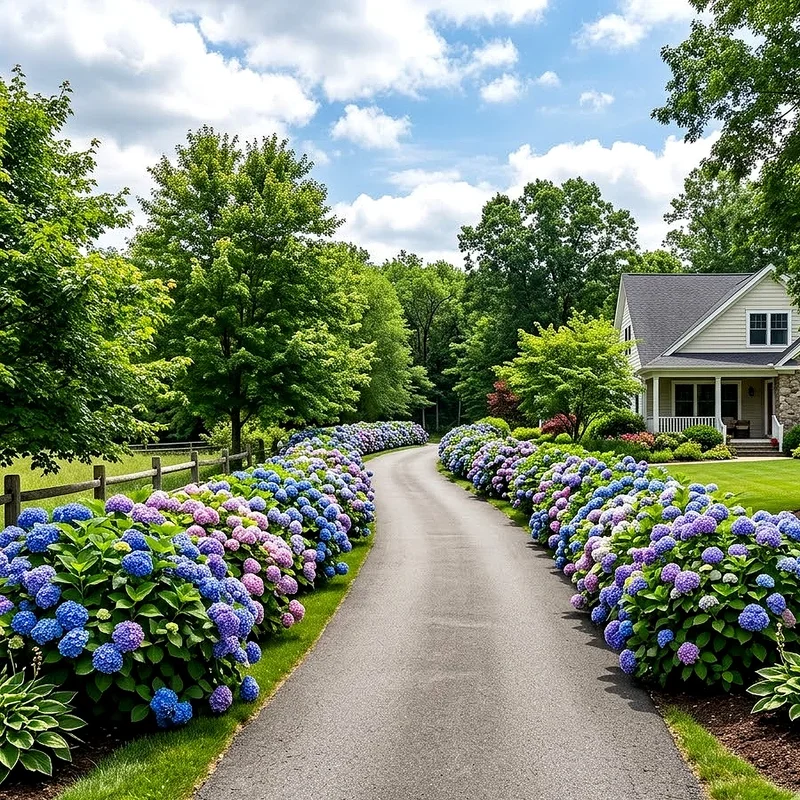
5. Anchor a Mixed Border With Height and Structure
Most mixed borders suffer from the same problem: everything sits at knee height and the whole bed reads flat. Drop a hydrangea tree into the back third and you instantly gain a ceiling. Its bare trunk keeps sightlines open underneath, so perennials still get their moment while the canopy floats above like a parasol. Try pairing it with catmint, coneflower, and ornamental grasses for a border that hums with texture from spring through frost. Repeat the tree every fifteen feet along a long bed and the eye reads rhythm instead of chaos. Prune in late winter to keep the head compact and the flowers large. One well placed tree does more for a border than a dozen impulse buys from the garden center.
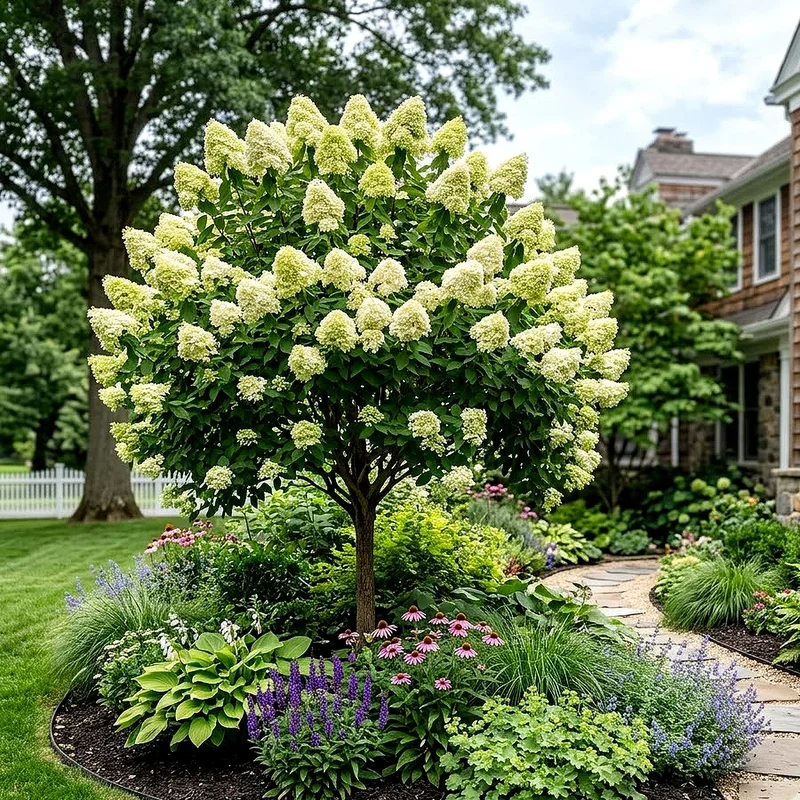
6. Grow One in a Large Container for Patios and Decks
No yard? No problem. A hydrangea tree in a big container turns a bare patio corner into a garden all by itself. Go large, at least twenty four inches wide and just as deep, because a cramped root ball bakes in summer and freezes in winter. Use a quality potting mix rather than garden soil, add slow release fertilizer in spring, and check moisture daily during heat waves since pots dry out far faster than beds. Choose a compact cultivar like Bobo or Little Lime on a standard so the proportions stay balanced. Come autumn, drag the pot against a sheltered wall or bury it in a spare bed. Think of the container as training wheels: you get the drama without committing to a permanent hole.
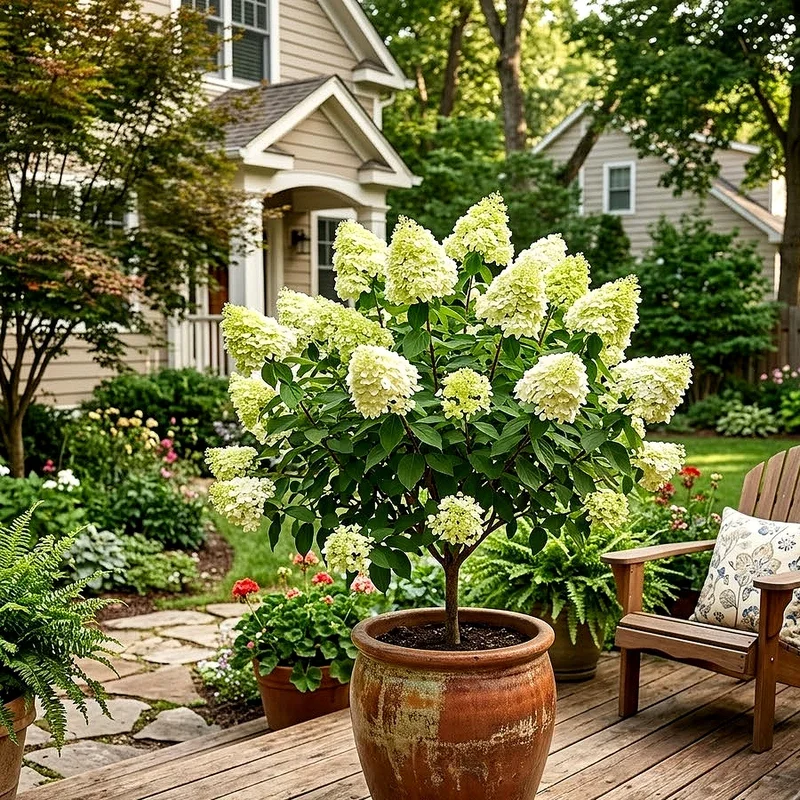
7. Create a Shaded Seating Nook Beneath the Canopy
Here is a trick most people miss: a mature hydrangea tree throws just enough shade for a bench. Tuck a small seat, a bistro table, or a pair of chairs beneath the canopy and you have carved out a private room without pouring a single foundation. The bare trunk means you can slide furniture right up close, and the flower heads hang overhead like paper lanterns someone forgot to take down. Face the seating away from the house so the view feels like an escape rather than a waiting area. Add a gravel or flagstone pad underneath to keep chair legs from sinking into damp soil. On a July afternoon, that little pocket of dappled light becomes the best seat on the property.
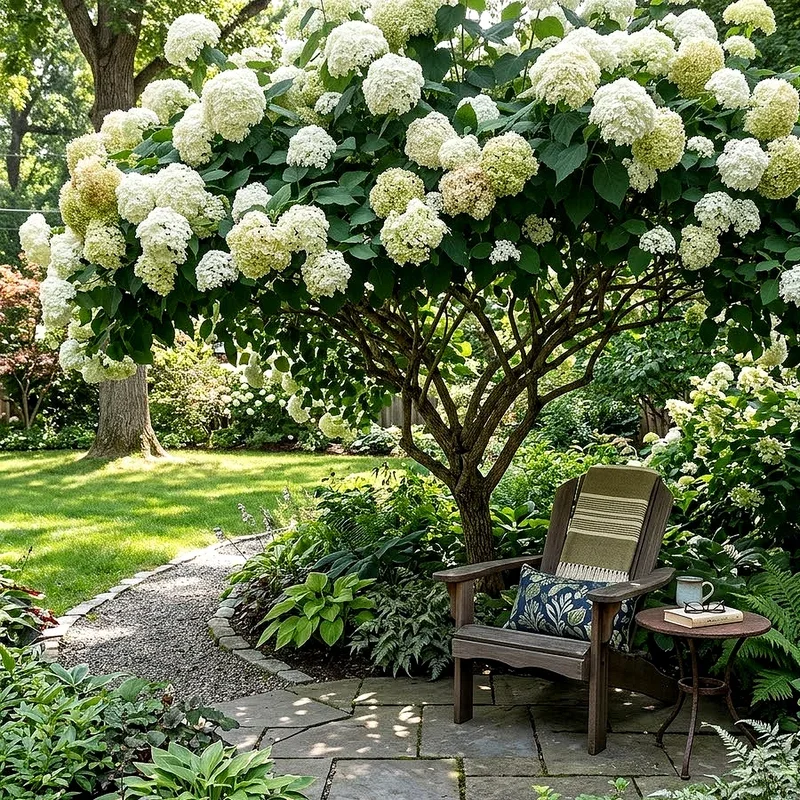
8. Underplant With Groundcovers for a Layered Look
A bare mulch ring gets the job done, but it also looks like a parking spot for a plant. Underplanting fixes that fast. Ring the base with hostas, heuchera, sweet woodruff, or creeping thyme depending on how much sun the spot gets, and suddenly the tree looks rooted in a landscape rather than dropped into one. Keep the plantings low, under eighteen inches, so they read as a skirt instead of a wrestling match. Leave four to six inches of clear space around the trunk itself to prevent rot and discourage voles. Choose one or two species and repeat them generously, because a patchwork of singletons looks anxious. The layered effect makes even a young tree feel like it has lived there for years.
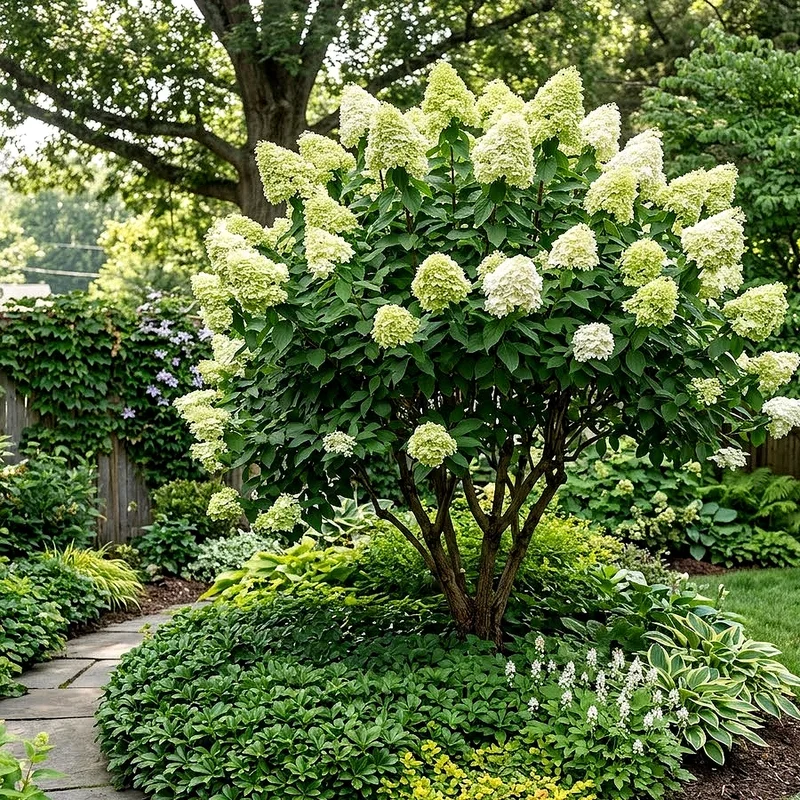
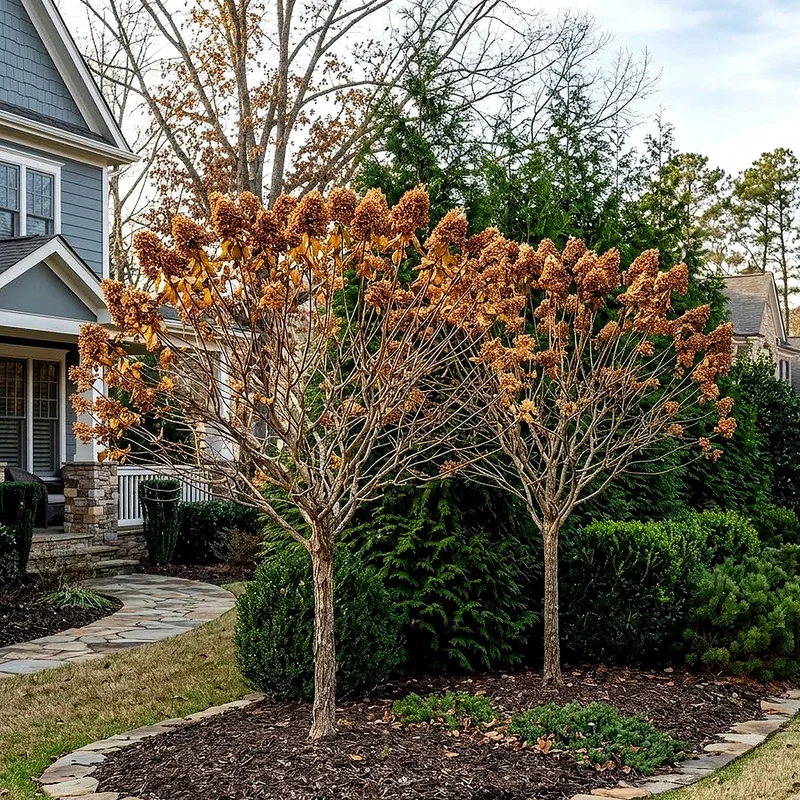
9. Pair Hydrangea Trees With Evergreens for Winter Interest
Hydrangea trees drop their leaves, and from December to April they look like elegant skeletons. Beautiful, sure, but a little lonely. Plant evergreens behind them and the problem solves itself. Dark green arborvitae, boxwood, or dwarf spruce act as a velvet backdrop that makes white blooms pop in summer and fills the gap once the leaves fall. Think of it as hanging a painting against a solid wall instead of a window. Keep the evergreens roughly four feet behind so air circulates freely and neither plant crowds the other. This combination also gives winter birds somewhere to shelter, which is a nice bonus. Come January, you will still have structure, color, and something worth looking at instead of bare sticks.
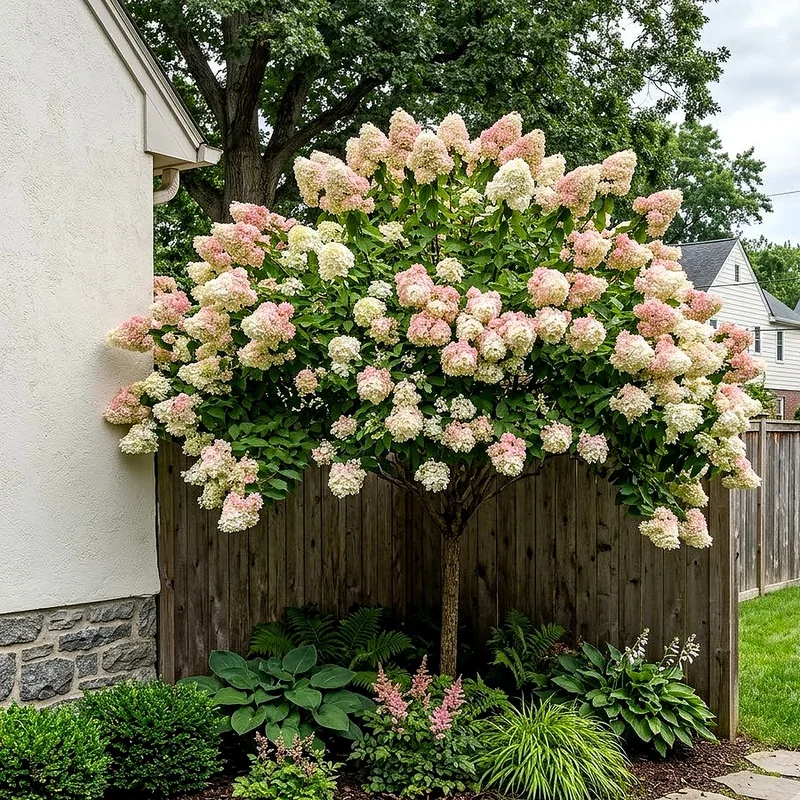
10. Soften Fences, Walls, and Blank Corners
Every property has that one dead zone: a blank stretch of siding, a chain link corner, a retaining wall nobody loves. Hydrangea trees excel at rescue work. Set one about four feet out from the offending surface, and the canopy breaks up the flat plane while the trunk keeps the base from feeling stuffed. Light colored walls work especially well because they bounce light back into the flowers and make the whole corner glow. Against dark siding, choose a white blooming variety for contrast you can see from across the yard. Give the roots room away from foundations and buried utilities before you dig. What was once the ugliest angle on your lot becomes the spot guests ask about first.
11. Design a Cottage Garden Around the Blooms
Cottage gardens thrive on happy chaos, but chaos still needs an anchor. A hydrangea tree gives that tumbling mix of roses, foxglove, phlox, and salvia something tall to lean against. Place it slightly off center rather than dead middle, because cottage style hates symmetry the way cats hate baths. Let self seeders wander around the base and resist the urge to edge everything into submission. The chunky flower heads echo the rounded shapes of peonies and alliums, which keeps the whole planting feeling intentional even when it looks wonderfully overgrown. Add a picket fence or a curved gravel path and you have built a scene that feels a century old. Isn't that the whole point of a cottage garden anyway?
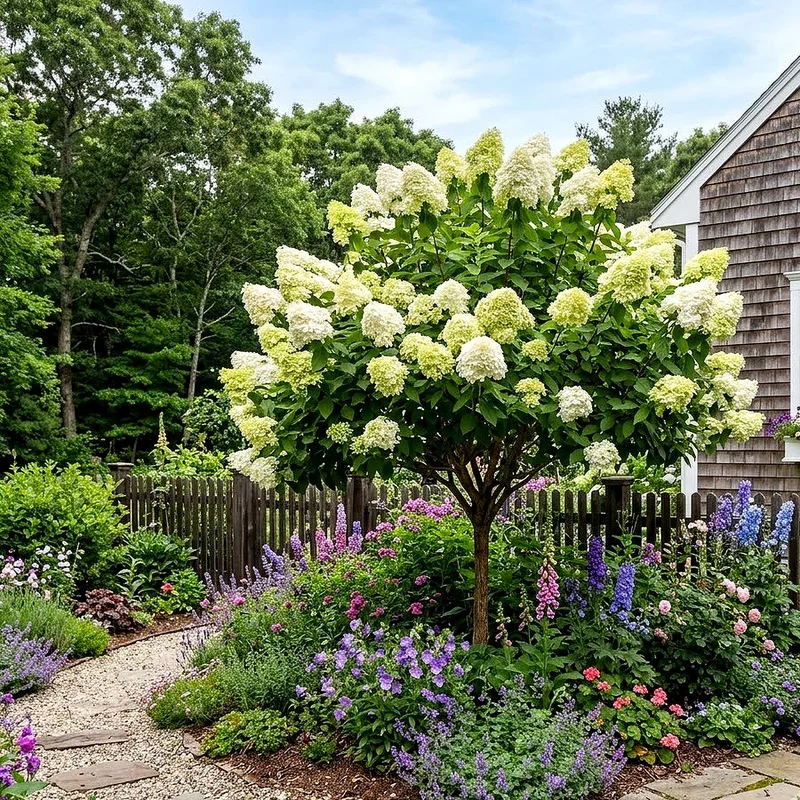
12. Use Them as a Backdrop for a Cutting Garden
If you love bringing flowers indoors, plant your hydrangea trees along the back edge of a cutting bed. They pull double duty: gorgeous in the ground and even better in a vase. Panicle blooms dry beautifully, so a single August harvest can decorate your mantel until spring. Cut stems in the morning when they are firm, strip the lower leaves, and let them sit in a shallow inch of water until the moisture evaporates naturally. Behind rows of zinnias, dahlias, and snapdragons, the trees give the bed a permanent frame so it never looks like a vegetable plot in the off season. Plant three in a row for a supply that never runs dry. Free flowers all summer long.
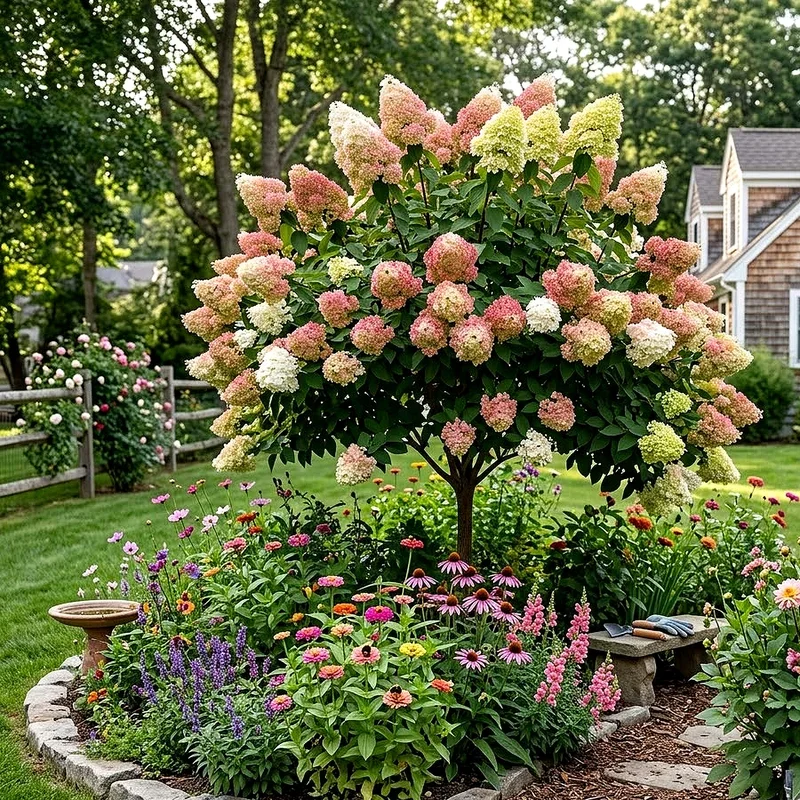
13. Highlight the Canopy With Landscape Lighting
Your yard should not clock out at sunset. Two small uplights aimed into the canopy turn a hydrangea tree into a glowing chandelier, and the effect costs less than most people expect. Place the fixtures about eighteen inches from the trunk on opposite sides, angled up through the branches, so the light rakes across the flower heads instead of blasting them flat. Warm white bulbs around 2700 kelvin flatter the creamy blooms; cool blue tones make everything look like a hospital corridor. Add a downlight in a nearby tree for moonlighting and you get soft shadows on the lawn. Solar options work if the spot gets full sun, though wired fixtures stay brighter longer. Suddenly your evening view rivals your daytime one.
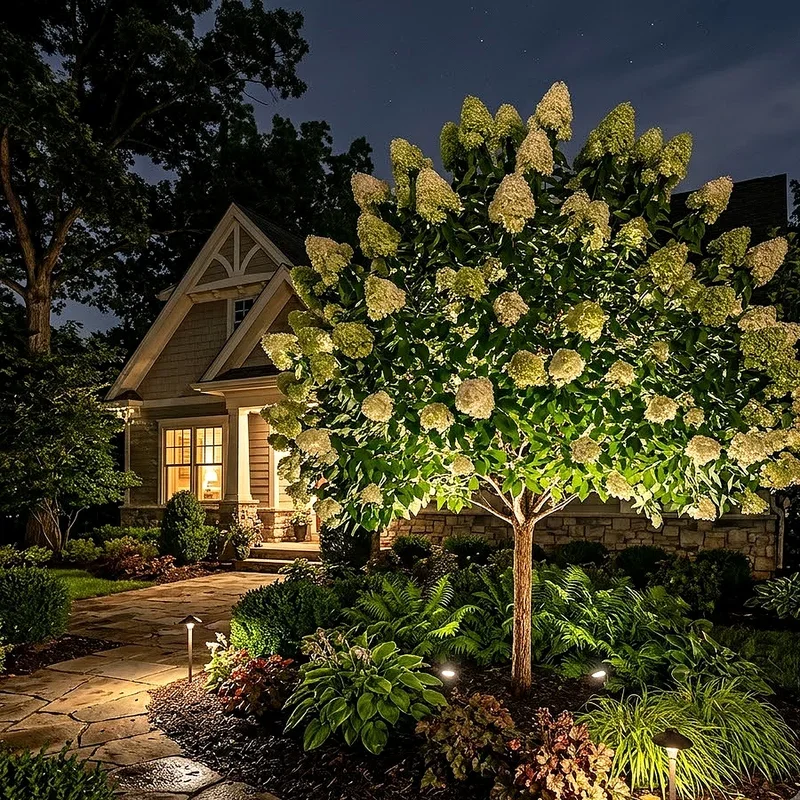
14. Edge a Pathway or Garden Walkway
Walking a garden path should feel like turning pages in a good book. Hydrangea trees set along the edges create that pacing naturally, since each trunk marks a step forward and each canopy hangs like a soft awning overhead. Keep them at least three feet back from the path edge so blooms do not slap you in the face after a rainstorm, when wet flower heads get heavy and droop. Alternate sides rather than mirroring for a relaxed, wandering feel, or plant in matched pairs if you want formality. Underplant with low mounding perennials to blur the hard edge of pavers or gravel. A ten second stroll from the driveway to the door becomes something you actually look forward to.
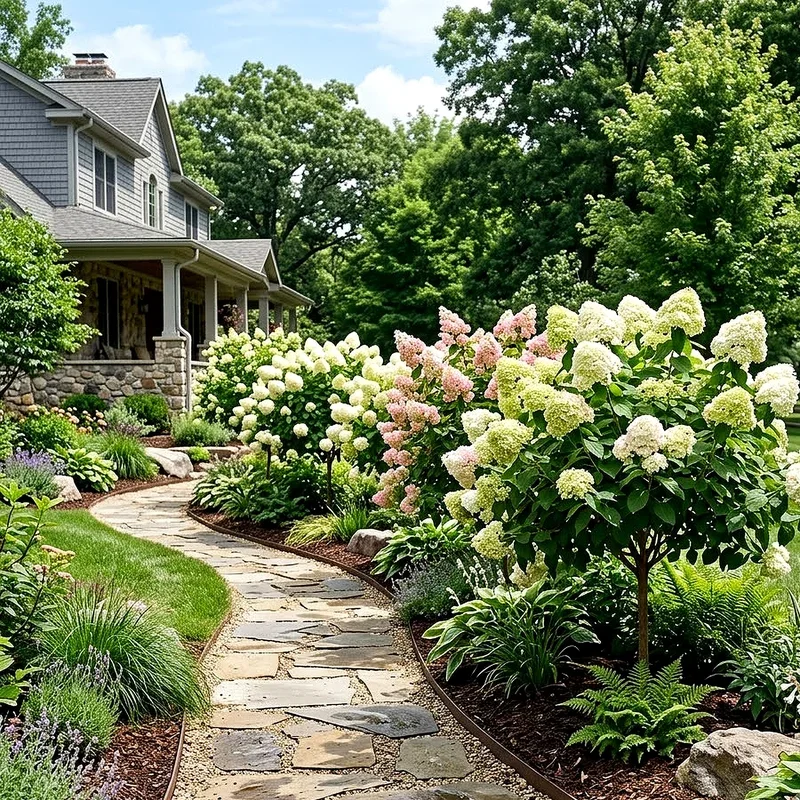
15. Plant a Small Grove for Big Seasonal Drama
Want to go big? Plant a grove. Three, five, or seven hydrangea trees clustered in an irregular group create the kind of drama a single specimen never will. Use odd numbers and vary the spacing, roughly eight to twelve feet apart, so the planting looks like it happened by accident rather than by spreadsheet. Mow a curving path through the middle or lay stepping stones and you have made a destination inside your own yard. In bloom, walking through feels like moving under a cloud bank that decided to hover at eye level. Keep all the trees the same cultivar so they bloom and fade together. It is the single most impressive thing you can do with one species.
Conclusion
So there you have it, fifteen practical ways to put hydrangea trees to work in your yard. Whether you frame a doorway, screen a fence line, or plant a grove worth wandering through, these trees deliver more payoff per square foot than almost anything else you can dig a hole for. Start with just one. See how it changes the way you look at that tired corner of the lawn. Then, if you are anything like the rest of us, start planning where the next three are going.
Read next: How to Grow and Care for Lacecap Hydrangeas
Frequently Asked Questions
Q1: How tall does a hydrangea tree actually grow in an average home landscape?
A: Most panicle varieties reach six to ten feet tall, though compact cultivars stay around five.
Q2: When should I prune my hydrangea tree for the best possible blooms?
A: Prune in late winter or very early spring, since panicle types bloom on new wood.
Q3: Do hydrangea trees need full sun or partial shade to thrive?
A: They prefer six hours of sun daily, though afternoon shade helps in hot southern climates.
Q4: How far apart should I space hydrangea trees when planting a row?
A: Space them eight to twelve feet apart, giving each canopy room to spread without crowding.
Q5: Can I grow a hydrangea tree in a container long term?
A: Yes, with a large pot, regular watering, and good winter protection in colder growing zones.