Learn how to trim a palm tree with our step-by-step pruning guide. Keep your palms healthy and looking stunning year-round!
Got a palm tree that's looking a bit shaggy around the edges? You're definitely not alone in this boat! Palm trees are stunning additions to any landscape, but they do require some maintenance to keep them looking their tropical best. The good news is that trimming a palm tree isn't as complicated as you might think, and with the right know-how, you can handle this task like a seasoned pro.
Here's the thing about palm trees. Unlike regular deciduous trees that benefit from aggressive pruning, palms have their own set of rules. Cut too much, and you'll stress your tree out something fierce. Cut too little, and you've got a fire hazard and eyesore on your hands. Finding that sweet spot is what separates the amateurs from the experts.
Understanding how to trim a palm tree with a step-by-step pruning guide saves you money on professional services and gives you complete control over your landscape's appearance. Plus, there's something deeply satisfying about stepping back and admiring a freshly groomed palm that you tidied up yourself. It's one of those homeowner wins that just feels good.
Throughout this comprehensive guide, we'll cover everything from when to prune and what tools you'll need, to the actual cutting techniques and safety precautions. Whether you're dealing with a small Mediterranean fan palm or a towering Canary Island date palm, these principles apply across the board. So grab your gloves, maybe pour yourself some lemonade, and let's get into the nitty-gritty of palm tree maintenance!
Why Palm Trees Need Pruning
Before we jump into the how-to, let's talk about why pruning matters in the first place. Understanding the reasoning helps you make better decisions throughout the process.
Dead Frond Removal
Those brown, droopy fronds hanging down aren't just unsightly; they can become real problems. Dead fronds attract pests, harbor diseases, and create fire hazards, especially in dry climates. During strong winds, they can break off and damage property or injure people below.
Fruit and Flower Management
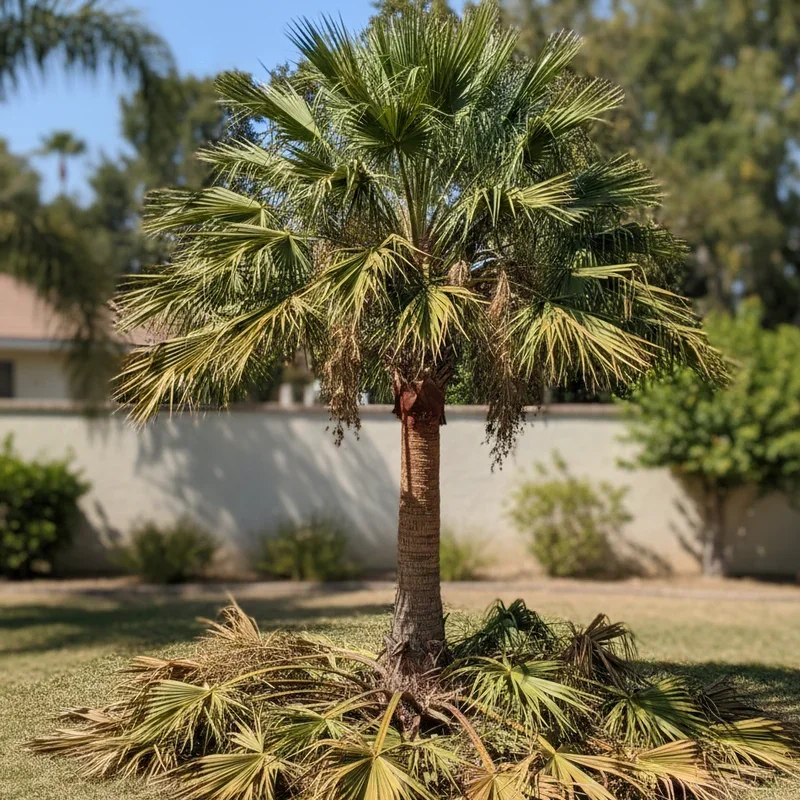
Many palm species produce heavy fruit clusters and flowers that can create quite the mess. Dates, palm berries, and seed pods drop everywhere, staining driveways and attracting unwanted wildlife. Removing these before they mature keeps your property cleaner and reduces the critter traffic.
Safety Concerns
Let's be real here. A palm tree with hanging dead fronds near walkways, driveways, or seating areas poses genuine safety risks. Those dried fronds can fall unexpectedly, and some species have sharp spines that make them downright dangerous.
Aesthetic Appeal
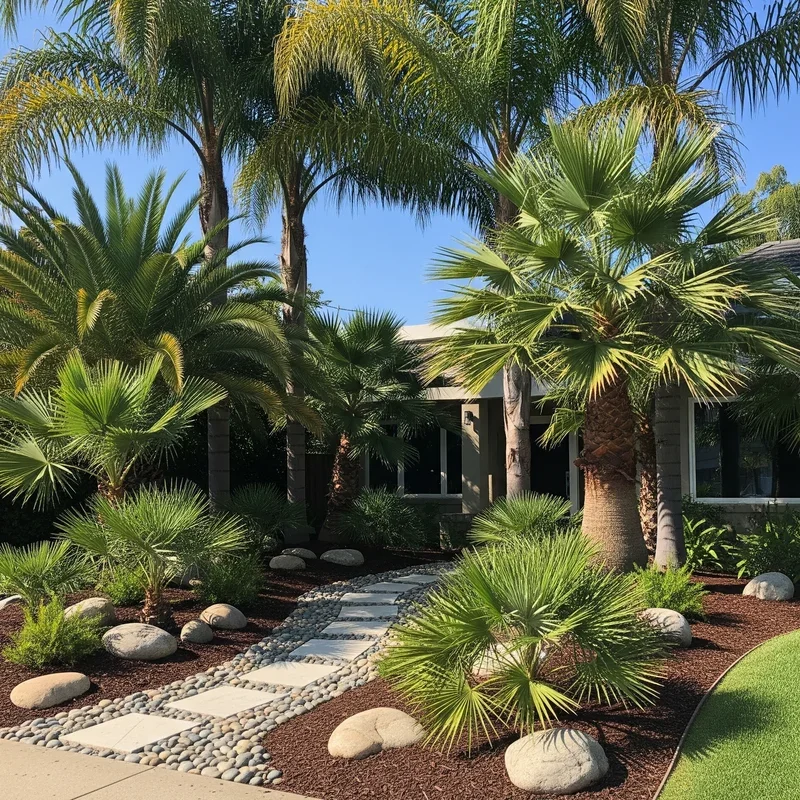
Well-maintained palms elevate your entire landscape's appearance. There's a world of difference between a scraggly, neglected palm and one that's been thoughtfully groomed. Your property value and curb appeal will thank you!
When Is the Best Time to Trim Palm Trees?
Timing matters more than you might expect. Cutting at the wrong time can stress your palm and make it vulnerable to disease or pest infestation.
Seasonal Considerations
Late spring through early fall represents the ideal window for palm tree pruning in most climates. During this period, palms are actively growing and can recover quickly from the trimming process. Avoid pruning during winter months when growth slows dramatically.
Signs Your Palm Needs Attention
Keep your eyes peeled for these indicators:
Brown or yellowing fronds that are completely dead
Fronds hanging at angles below horizontal
Heavy fruit or flower stalks weighing branches down
Seed pods that are mature or nearly mature
Any fronds rubbing against structures or power lines
How Often Should You Prune?
Most palms only need trimming once or twice per year. Over-pruning is actually worse than under-pruning! Some folks get scissor-happy and trim their palms way too frequently, which weakens the tree and slows its growth.
Essential Tools and Safety Equipment
Having the right gear makes this job safer and easier. Don't skimp on tools or safety equipment because cutting corners here can lead to injuries or damaged trees.
Cutting Tools
Depending on your palm's size and frond thickness, you'll need:
Hand pruners for small fronds and seed pods
Loppers for medium-sized fronds
A curved pruning saw for larger fronds
A chainsaw for very thick fronds (experienced users only)
Pole saw for reaching high fronds from the ground
Safety Gear
Protect yourself properly with:
Heavy-duty work gloves (leather preferred)
Safety glasses or goggles
Long-sleeved shirt and pants
Sturdy closed-toe shoes or boots
Hard hat for tall palm work
Harness and climbing equipment if ascending the tree
Additional Supplies
Round out your toolkit with:
Rubbing alcohol or bleach solution for disinfecting tools
Rope for lowering large fronds safely
Tarp or drop cloth for easy cleanup
First aid kit (better safe than sorry!)
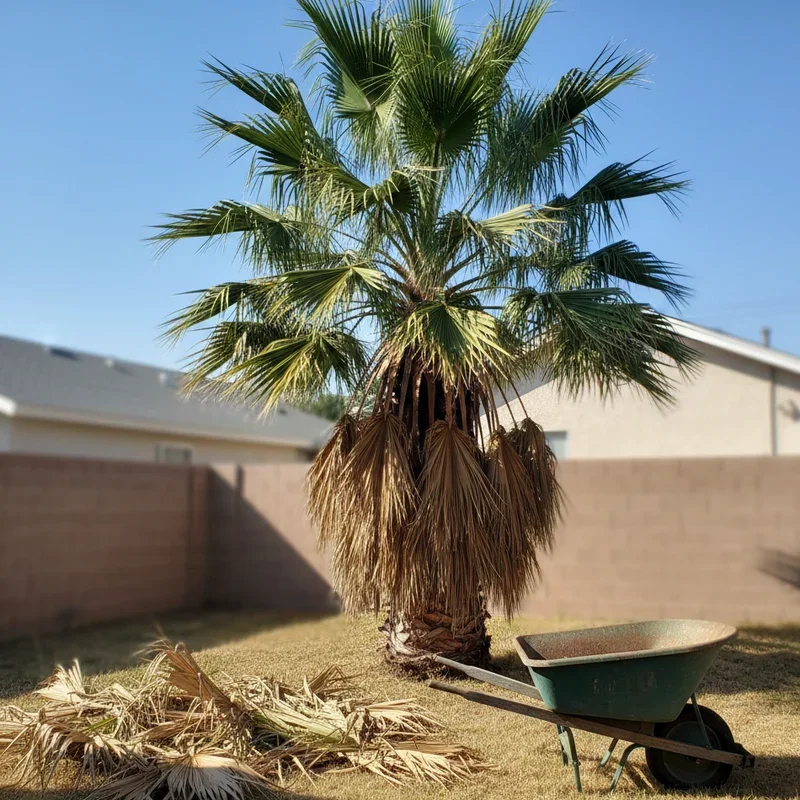
How to Trim a Palm Tree: Step-by-Step Pruning Guide
Alright, here's the main event! Following these steps carefully will ensure your palm gets the proper care it deserves.
Step 1: Assess Your Palm Tree
Before cutting anything, take a good long look at your palm. Walk around it completely and observe from different angles. Identify which fronds need removal and plan your approach. Generally speaking, you should only remove fronds that are completely brown, yellow, or hanging below horizontal.
Here's a crucial point that many people miss. Green fronds, even if they're drooping slightly, are still feeding your palm through photosynthesis. Removing healthy green fronds robs your tree of nutrients and energy. Fight the urge to give your palm an overly aggressive "haircut."
Step 2: Sanitize Your Tools
This step might seem fussy, but it's incredibly important. Palm trees are susceptible to various diseases that spread through contaminated cutting tools. Wipe your pruning equipment with rubbing alcohol or a diluted bleach solution (one part bleach to nine parts water) before starting.
If you're trimming multiple palms, sanitize between each tree. Spending an extra minute on sanitation beats dealing with a diseased palm any day of the week!
Step 3: Start with Dead and Dying Fronds
Begin your trimming at the bottom of the canopy where the oldest, deadest fronds hang. These are the easiest targets and give you a chance to warm up your technique before tackling trickier cuts.
Cut each frond close to the trunk, leaving about two inches of the stem (called the petiole) attached. Cutting too close can damage the trunk, while leaving too much creates an unsightly stub that takes forever to shed naturally.
Step 4: Remove Fruit Stalks and Flowers
If your palm produces fruit or flowers you'd rather not deal with, now's the time to remove them. Cut these stalks at their base where they emerge from the crown. This prevents messy fruit drop and reduces the energy your palm spends on reproduction.
Some folks prefer keeping the flowers for aesthetic reasons, and that's totally fine! Just be prepared for the eventual fruit and the cleanup it brings.
Step 5: Trim Loose Bark and Boot Material
Many palm species retain the bases of old fronds, creating a textured pattern called "boots" along the trunk. While some people love this look, others prefer a smooth trunk appearance.
If you're removing boots, work carefully with a sharp knife or machete, peeling them away without gouging the actual trunk tissue beneath. Never force boots that aren't ready to release naturally. On some species, like Canary Island date palms, the boots add beautiful character and are best left alone.
Step 6: Shape the Canopy Appropriately
Here's where understanding how to trim a palm tree with a step-by-step pruning guide really pays off. The shape of your palm's canopy after pruning matters tremendously for tree health.
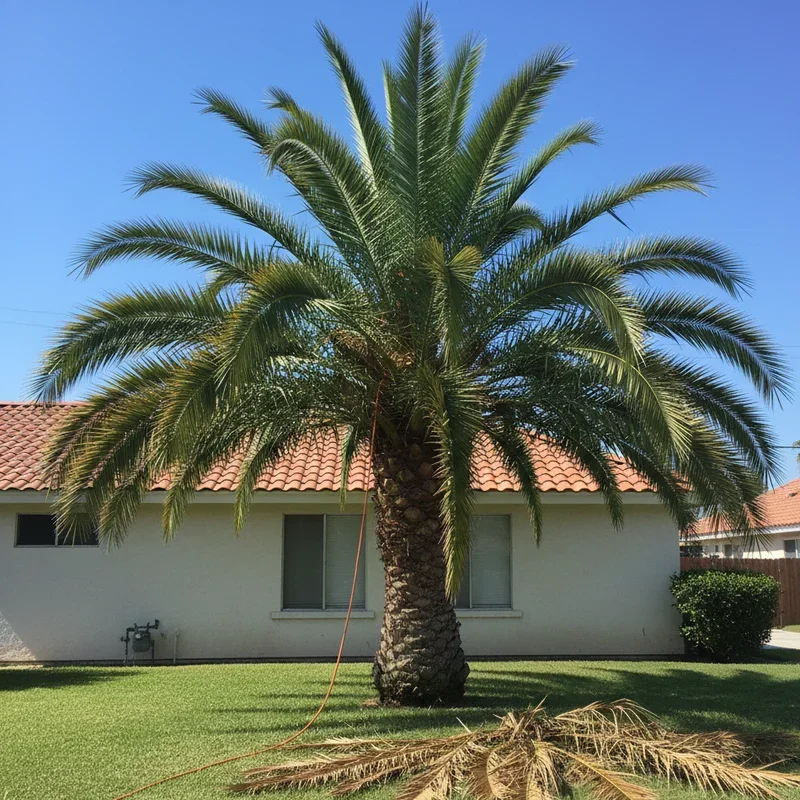
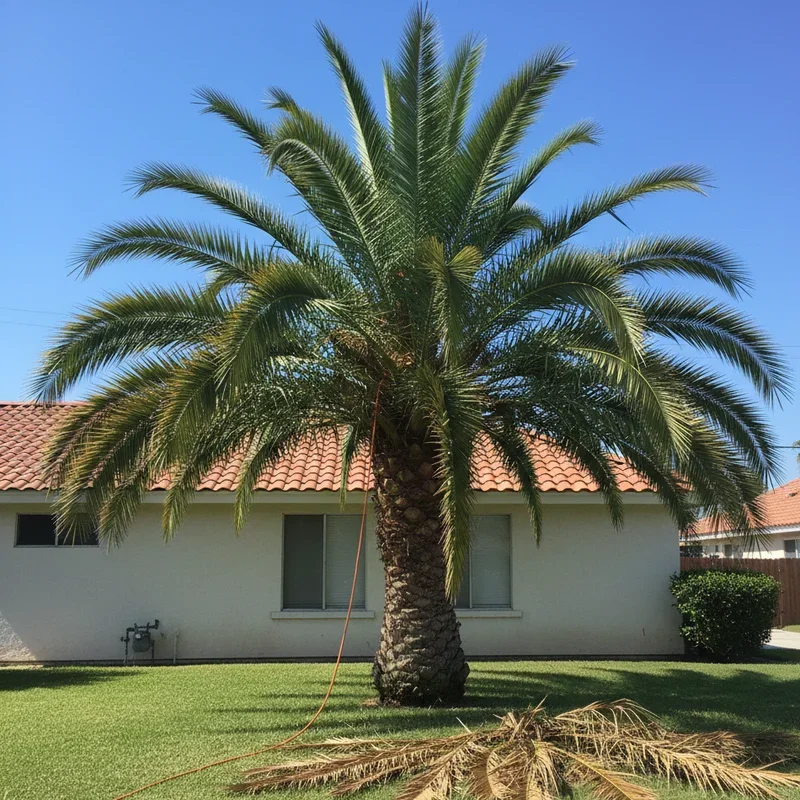
Imagine a clock face looking at your palm from the side. Healthy palms should retain fronds from at least the 9 o'clock to 3 o'clock positions, essentially from horizontal and above. Removing fronds below this line is acceptable, but never cut above it.
The dreaded "hurricane cut" or "rooster tail" look, where palms are stripped down to just a few fronds at the very top, is extremely harmful. It starves the palm, stresses its system, and makes it more vulnerable to damage during actual storms. Don't do it, no matter how trendy it might look!
Step 7: Clean Up and Final Inspection
Once you've finished cutting, step back and evaluate your work. The palm should look tidy but still full and healthy. If you've got a bare-looking canopy, you probably removed too much.
Gather all fallen fronds and debris for disposal. Many municipalities accept palm fronds in green waste bins, or you can haul them to a composting facility. Don't leave the cuttings piled around the trunk since they attract pests and can cause rot issues.
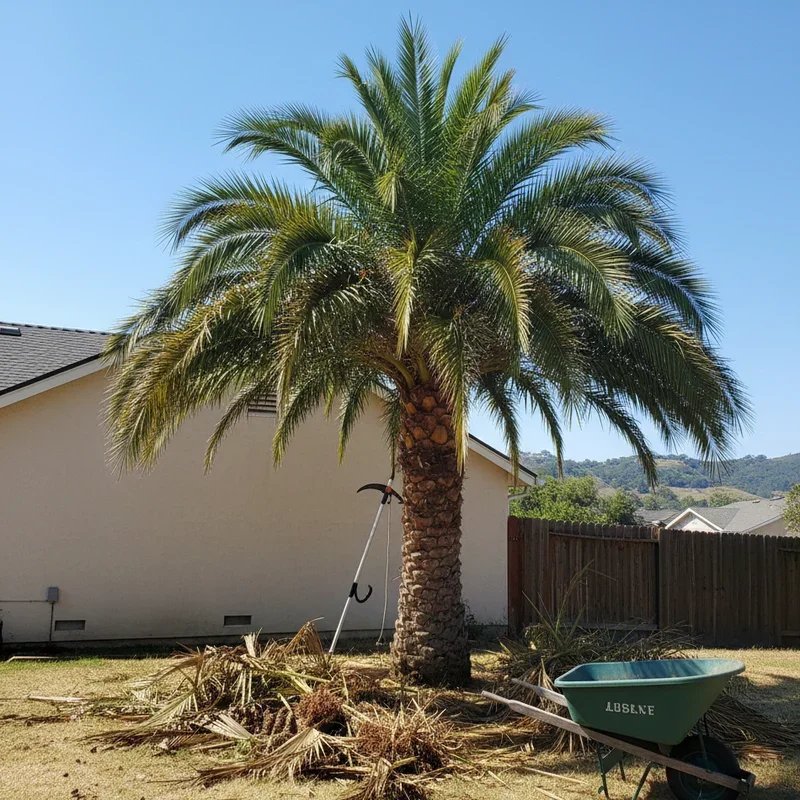
Special Considerations for Tall Palms
What about palms that tower thirty, forty, or fifty feet into the air? These require special approaches and often professional assistance.
When to Call the Pros
Be honest with yourself about your capabilities. If your palm is too tall to reach safely from an orchard ladder, or if it's near power lines, hire a certified arborist. The cost is worth avoiding a trip to the emergency room or worse.
Using Pole Tools Safely
For moderately tall palms that you can reach with pole saws and pruners, work carefully. Extended tools are harder to control, and falling fronds from height can cause serious injury. Always wear a hard hat and have a spotter helping you.
Never Use Climbing Spikes
Some folks think strapping on tree climbing spikes is a good idea for ascending palms. It absolutely isn't! Unlike other trees, palm trunks don't heal from spike wounds. Each puncture creates a permanent injury that invites disease and weakens the trunk structurally.
Common Palm Trimming Mistakes to Avoid
Learning from others' mistakes saves you headaches and keeps your palms healthier.
Over-Pruning
This is the number one mistake homeowners make. More trimming isn't better! Palms need their green fronds to photosynthesize and produce food. Removing too many leaves literally starves your tree.
Improper Cuts
Ragged, torn cuts heal poorly and invite disease. Always use sharp tools and make clean cuts. If your saw is struggling, it's time for a new blade.
Skinning the Trunk
Aggressively removing all the old frond bases and bark exposes tender trunk tissue to sunburn, disease, and pest infiltration. If you want a smooth trunk, work gradually over multiple seasons.
Ignoring Safety
People fall off ladders, get hit by falling fronds, and poke their eyes on spiny petioles every year during palm trimming season. Take safety seriously, wear your protective gear, and don't rush.
Trimming Too Frequently
Once or twice annually is plenty for most palms. Trimming more often stresses the tree and wastes your time and money.
Caring for Your Palm After Pruning
Your job isn't quite finished once the cutting stops. Proper aftercare helps your palm recover quickly and thrive.
Watering
Give your palm a deep watering after pruning, especially if conditions are hot and dry. The stress of losing fronds increases water needs temporarily.
Fertilization
If you haven't fertilized recently, applying a quality palm fertilizer a few weeks after pruning supports healthy new growth. Look for formulations specifically designed for palms with the right micronutrient balance.
Monitoring for Problems
Keep an eye on your palm over the following weeks. Watch for signs of stress, disease, or pest activity. Catching problems early makes them much easier to address.
Conclusion
Mastering how to trim a palm tree with this step-by-step pruning guide keeps your tropical beauties healthy and looking fantastic. Remember, the key lies in pruning conservatively, removing only dead or dying fronds while leaving the green canopy intact. With proper tools, safety precautions, and technique, you'll maintain stunning palms that enhance your landscape for years to come. Take your time, respect the tree's natural growth patterns, and enjoy the satisfaction of a job well done!
Read next: 15 Palm Tree Lighting Ideas to Brighten Your Backyard
Frequently Asked Questions
1. How often should I trim my palm tree?
Most palm trees only need pruning once or twice per year for optimal health.
2. Can over-pruning kill a palm tree?
Yes, removing too many green fronds can starve and eventually kill palm trees completely.
3. What is the best season to trim palm trees?
Late spring through early fall offers ideal conditions for palm tree pruning activities.
4. Should I seal the cuts after trimming my palm?
No, palm trees heal better naturally without wound sealants or paints applied to cuts.
5. Is it safe to trim palm trees myself?
Smaller palms are DIY-friendly, but tall palms near power lines require professional service.